
Low Fat Gecko Diet
Wild crested geckos stay lean because finding food takes work. In captivity, food is easy to access and usually in the same place every day, so weight gain becomes a real risk.
Every Blue River Diet is built to keep fat in check, so geckos get the energy and nutrients they need without the surplus that settles as body fat.
Fat and protein at a glance
4.1–4.8%
Crude fat across our crested gecko flavours
5.5%
Crude fat in Phelsuma Passion, for day geckos
18.9–26.2%
Crude protein across the range
Figures from current packaging. Each pouch shows the analysis for its flavour.
On this page
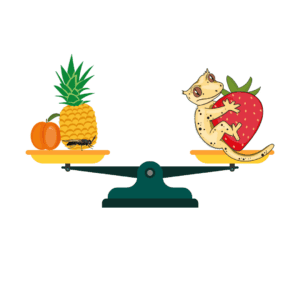
Why Captive Geckos Gain Weight
A wild crested gecko’s food changes with New Caledonia’s seasons, and every meal has to be found. A captive gecko is fed on a schedule in a much smaller space, so it uses far less energy for the same amount of food.
In the wild
- Crested geckos eat a mix of fruit, nectar and insects that changes with the seasons
- They forage every night, climbing through the forest to find their food
- Crested geckos usually have a lean body condition
In captivity
- Your gecko gets regular meals with very little effort needed to find them
- There’s far less space to climb and explore
- Any spare energy gets stored as body fat
Want to see the wild habitat for yourself? Read what we found on our 2024 wet season expedition.

The Risks of Obesity
Extra weight builds up slowly, so it is easy to miss. Over time it can lead to serious health problems.
Fatty Liver Disease
Fat can build up around the liver and other organs. Fatty liver disease (hepatic lipidosis) can lead to organ failure.
Reduced Mobility
Extra weight makes climbing harder, so geckos become less active and gain weight even more easily.
Egg Binding
In females, excess fat can contribute to egg binding, where eggs cannot be laid normally. Without treatment it can be fatal.
Breeding Problems
Overweight geckos can be less active and less successful at breeding.
Shortened Lifespan
Over time, these problems add up and can shorten a gecko’s life.
Top tip from the crew
We feed our adult geckos just 2–3 times a week, and we keep them moving by changing up their climbing routes and moving food bowls around the enclosure. It’s the simplest way we’ve found to keep weight off.
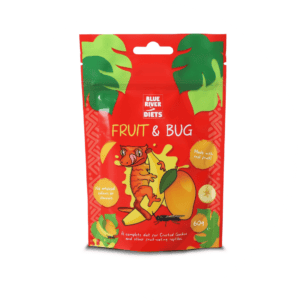
How Our Recipes Keep Fat in Check
Low fat doesn’t mean low energy. The secret is the coconut in every one of our recipes.
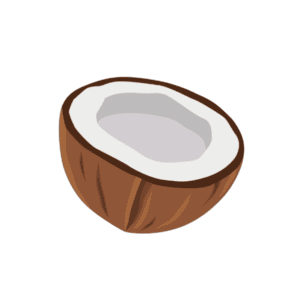
Coconut
Coconut contains medium-chain fatty acids, which your gecko’s body handles differently from the long-chain fats found in many other ingredients. They’re generally easier to digest, relying less on bile and digestive enzymes, and rather than taking the slower route through the lymphatic system, they travel more directly to the liver, where they can be quickly used for energy. Fat is also a concentrated energy source, with around 9 calories per gram compared with 4 for protein or carbohydrate, so a little coconut goes a long way. That’s how our recipes keep crude fat between 4.1% and 4.8% without leaving your gecko short on energy.
Fat and Protein by Flavour
Every crested gecko flavour sits between 4.1% and 4.8% crude fat. Phelsuma Passion, made for day geckos, is slightly higher at 5.5%.
| Flavour | Fat | Protein |
|---|---|---|
| Peach Paradise | 4.1% | 19.1% |
| Strawberry Swirl | 4.1% | 19.4% |
| Watermelon Burst | 4.2% | 19.5% |
| Mango Madness | 4.2% | 18.9% |
| Pineapple Crush | 4.4% | 19.3% |
| Fruit & Bug | 4.8% | 22.5% |
| Phelsuma Passion (day geckos) | 5.5% | 20.2% |
| Melon Quest (limited edition) | 4.2% | 25.1% |
| Lychee On Earth (limited edition) | 4.2% | 25.1% |
| Blueberry Planet (limited edition) | 4.6% | 26.2% |
Top tip from the crew
We weigh our geckos every month or so on a set of digital kitchen scales, just to keep an eye on things. Some weight gain is completely normal, especially in growing juveniles and gravid females. What matters is getting to know your gecko and spotting any sudden or unexpected changes, so you can adjust feeding if you need to.
Gecko Diet guide · Part 2 of 8