
Expedition New Caledonia: 2024 Wet Season
In March 2024, Blue River Diets visited New Caledonia to conduct research and observations on the habitat and environmental conditions inhabited by wild crested geckos. Spread across the Isle of Pines and Grand Terre, the expedition aimed to paint a good picture of how best to care for captive crested geckos.
Field data at a glance · Isle of Pines, March 2024
85%+
Humidity, rarely lower
90%+
Humidity from 6am to 10am
24℃
Average daytime temperature, up to 28℃
<1
UVI for almost every reading
8–9pm
Peak crested gecko activity
1–4m
Height geckos were found
Getting to New Caledonia
New Caledonia is not easy to get to from Europe. Even though it is a French territory and the people of New Caledonia are French citizens, flight paths are not straightforward. Most travellers will have to pass through Paris, Singapore, Brisbane or Tokyo to reach this Pacific nation. New Caledonia is comprised of Grand Terre (the main island), Isle of Pines (off the south coast) and the Loyalty Islands (off the east coast), as well as many more tiny islands and islets.
There are a handful of known populations of Correlophus ciliatus. One on Isle of Pines, one in Blue River Provincial Park, one at the base of Mount Dzumac on Grand Terre and a more recently discovered population in the Northern Province of Grand Terre. The population on the Isle of Pines is known to be the strongest in terms of visibility for researchers and visitors. In fact “herping” on Grand Terre is notoriously difficult, which we would later find out.
Once in New Caledonia, we split our expedition into two parts; the Isle of Pines to search for crested geckos and other herpetofauna, and Grand Terre, where we explored Blue River Provincial Park to understand the parallels in habitats and populations of crested geckos on each island.
The Isle of Pines is a two-hour ferry ride south of Grand Terre and these ferries only run a few times a week. It is possible to fly between Grand Terre and Isle of Pines, but with additional luggage fees, this works out to be an expensive endeavour. However, determined to find wild crested geckos and faced with extreme storms and a rather predictable bout of sea sickness, we made our way to Isle of Pines.

The Isle of Pines
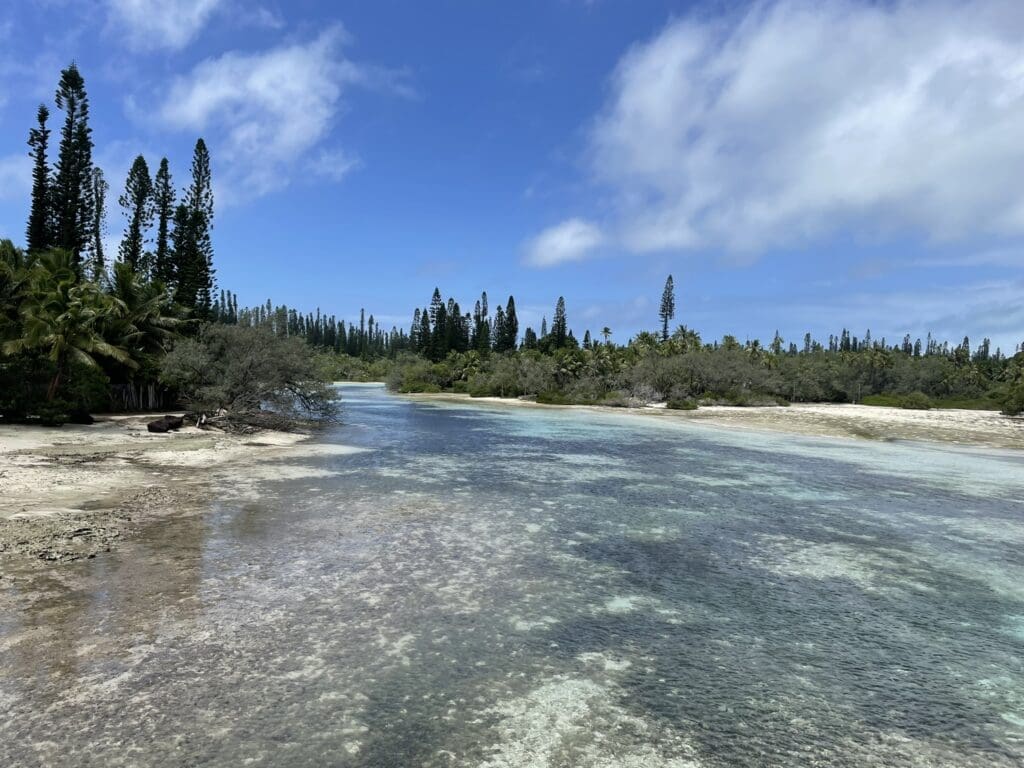
The Isle of Pines (Ile de Pins) has several islands and islets around its main landform. Of course, when we first arrived we asked some local people about the geckos we were searching for and most had never seen any geckos on the island (perhaps unsurprising as they were missing to science for almost 150 years!). A few hotel staff mentioned Isla Brosse, a small island famed for its snorkelling, where it is also possible to find Rhacodactylus leachianus. However, there are no recorded Correlophus ciliatus on this island. R. leachianus, Mniaragekko chahoua and Eurodactylodes viellardii can be found on the Isle of Pines, however, Rhacodactylus auriculatus and Correlophus sarasinorum cannot. These species are found only on Grand Terre.
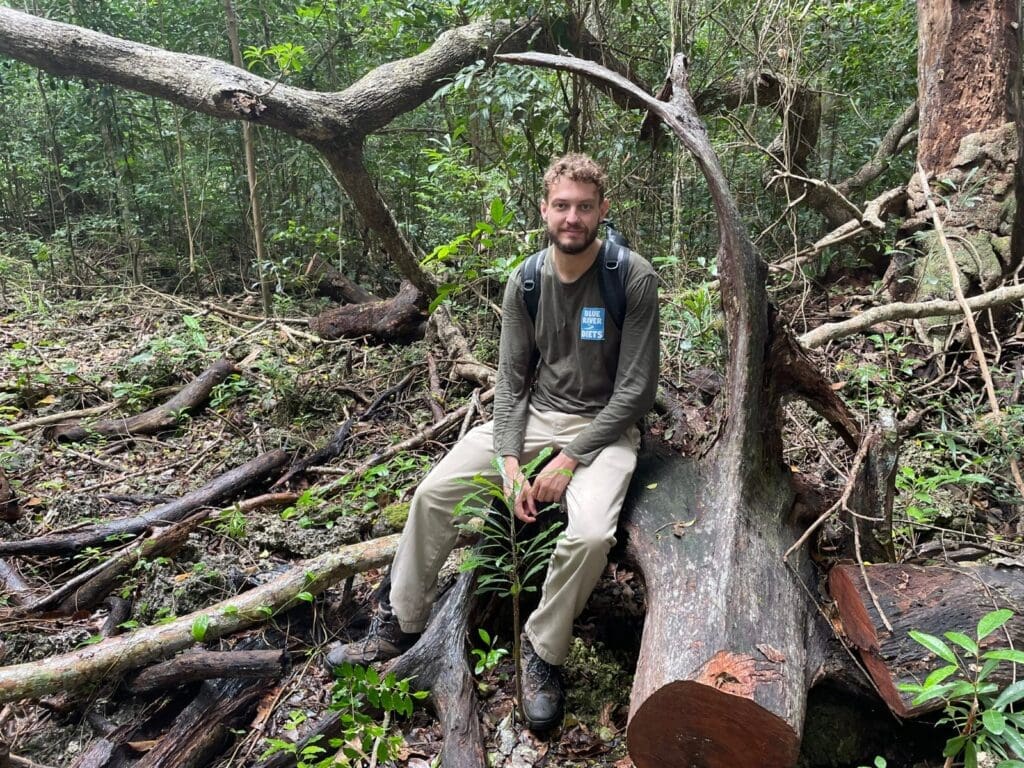
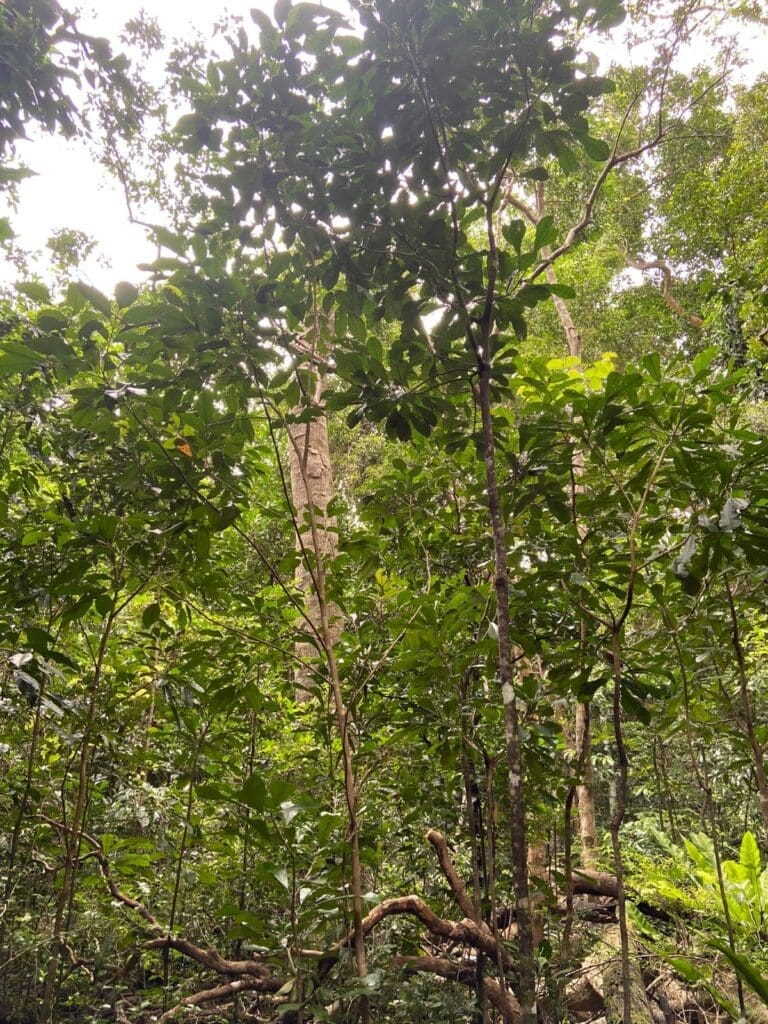
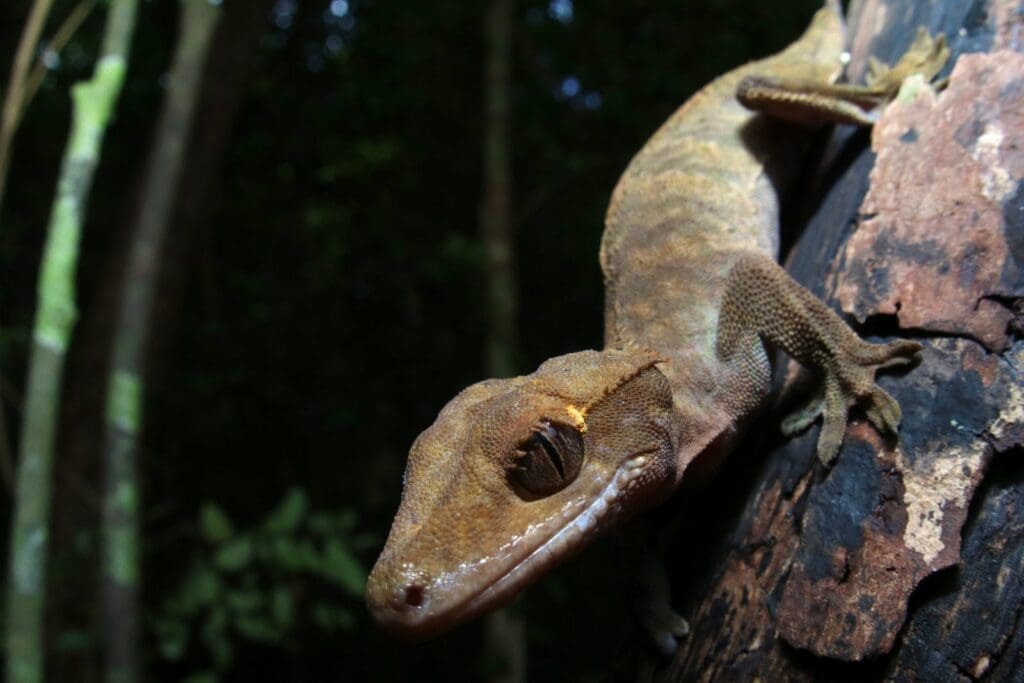
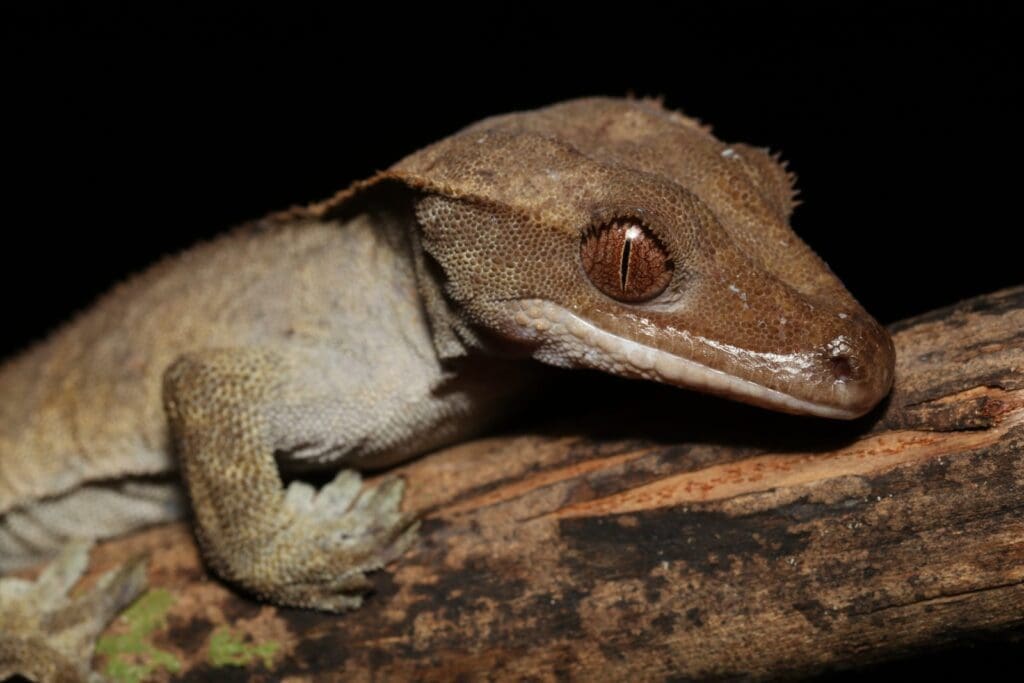
Crested geckos are found between 1 – 4m off the ground in thin trees, whereas Chahouas are much more difficult to spot and usually rest 4 – 8m off the ground. I did keep my eyes peeled for Leachianus right up into the forest canopy, but the area where we had the most success in finding crested geckos did not have a tall canopy at all. Leachianus geckos will predate upon wild crested geckos and whilst some patches of forest are sure to have both species living sympatrically, searching forests with a greater density of shorter trees proved more successful in finding our target crested geckos.
Climate and Temperature
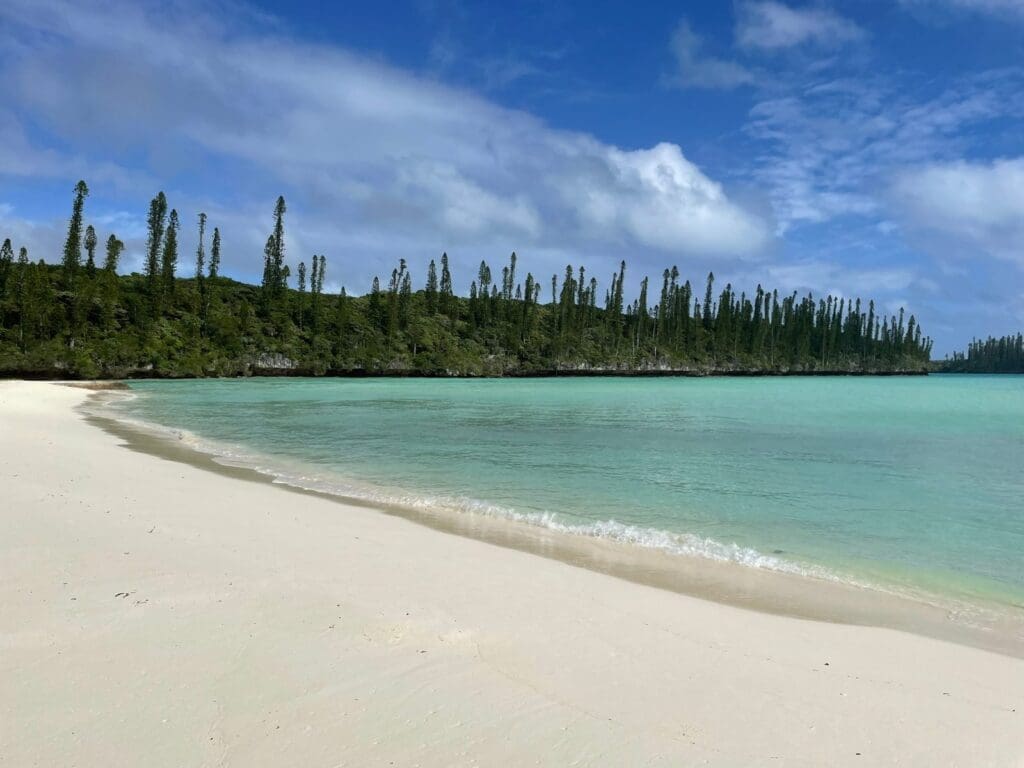
The New Caledonia expedition ran from 7th – 27th March. This is the height of the wet season. As any herpetology enthusiast knows, increased rain typically means increased reptile activity. Wet seasons are also usually warmer than dry seasons and tend to be when trees produce most fruit. Whilst the wet season was great for geckos, it was less than ideal for us and sadly we received less than 2 hours of sunshine for the entire time spent searching for geckos. This ruled out any time spent on Isle of Pines’ pristine beaches, but did lead us to make some interesting observations.
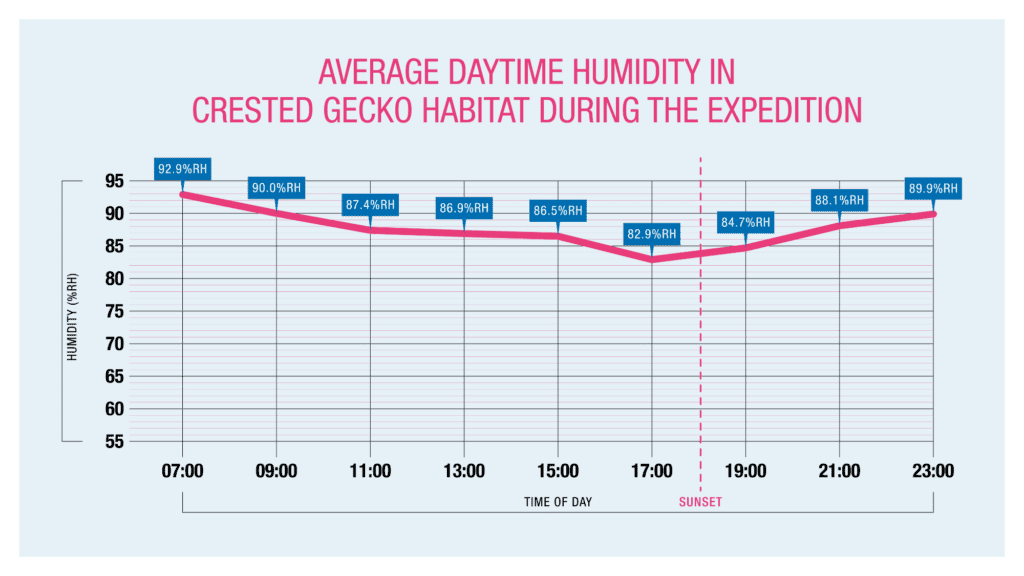
Firstly, humidity levels fluctuated throughout the day and night, with no obvious or stark trajectory across 24 hours. This humidity rarely dropped below 85%. In fact, from 6am to around 10am humidity never dropped below 90%. From 11am until 3pm humidity typically dropped slightly, averaging around 80 – 85%. 3pm until 9pm was very sporadic, depending on the weather. From 9pm until 11pm, humidity generally stayed above 88% (reaching 95% during light showers). We expect that throughout the night, humidity remains high, resulting in our consistent morning readings.
Interestingly, temperatures gradually increased throughout the day and in some cases, into the night. Average daytime temperatures would sit at around 24℃. Mornings were a little cooler and afternoons and evenings could reach 28℃. On several occasions that we found crested geckos active at night, the temperatures sat at 26℃, which was warmer than the average daytime temperature of those days. Strangely, Isle of Pines saw ambient temperatures remain steady as the sun went down. This coincided with the optimal activity hours of crested geckos that were most frequently found between 8PM and 9PM (the sun would set at 6.20PM).
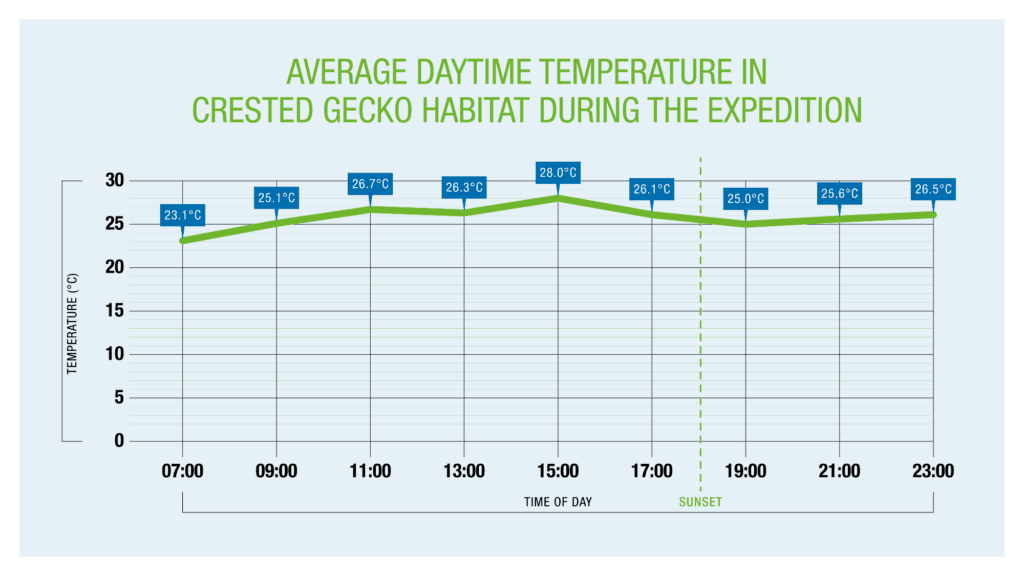
Perhaps the reason temperatures remain so steady during the rainy season in New Caledonia is that there is not much sunlight to have any bearing on surface temperatures or microhabitats. In fact, UVI retained a steady >0.5 for every single reading, apart from two very important measurements. The clouds broke for a brief window of around two hours on one morning on the Isle of Pines. During this window, we recorded 11UVI. This was on the 10th March at 11.40AM. Three hours later, we also found a crested gecko exposed and resting against a tree trunk in a patch of forest. The UVI at the resting point was only 0.5 by this time (and under the canopy cover), but as the only diurnally active gecko we found during the trip, it is interesting to consider a potential link between the observation and the conditions that morning.
Rain, Wind and Captive Management
One thing I had not anticipated when visiting New Caledonia was the extent to which it rains. Rainfall is not restricted to intense downpours sandwiched between sunny spells like it is in most of the tropics. Instead, rainfall can last for days on end without stopping. Light rain brought in by dark clouds and dispersed across the central highlands of Grand Terre and the isolated Isle of Pines was unyielding throughout the expedition. Cast into the Pacific Ocean, clouds move rapidly across the islands and certainly throughout March (though the rainy season can last well into June) rain is almost constant. Personally, I experienced more rain on the New Caledonia expedition than any other travel (including Central and South America, Southeast Asia and Madagascar during rainy seasons). This would make me inclined to suggest that crested geckos (and other New Caledonian species) should receive hourly misting for at least three months of the year. A daily, light misting to maintain a high humidity is simply not representative of the wild habitats that they occupy.
The first crested geckos that ever entered the hobby came from the Isle of Pines. Whilst there are populations found at mid-altitude in the centre of Grand Terre, our best method of understanding the needs of captive crested geckos is to analyse those found on the Isle of Pines. These animals occupy coastal forests. These coastal forests are sparse with strong winds blowing through them. Strong sunlight shining through dense clouds and near-constant rainfall keeps ambient humidity high even when airflow is increased. Unfortunately, this is difficult to simulate in captivity as more ventilation will usually result in difficulties maintaining high humidity. However, with a suitable misting system, it may be possible to replicate the coastal forest environments that wild crested geckos live in.
What this means for your crested gecko
- Mist far more than once a day during a simulated wet season. Our observations suggest hourly misting for at least three months of the year.
- Pair high humidity with airflow. Wild Isle of Pines geckos live in breezy coastal forest kept humid by near-constant rain, which a misting system can help recreate.
Movement
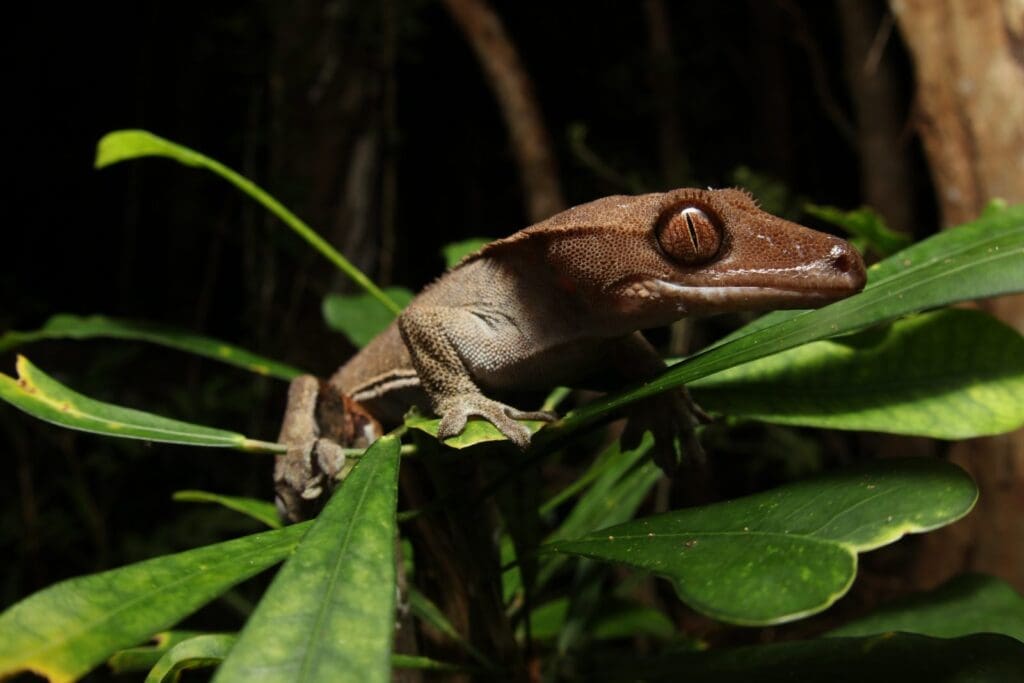
We found crested geckos during the day and night. The individual found during the day was resting on a large tree trunk (some herpetologists have found them in tree ferns during the day) but the others were using the trees (mostly yellow tulip trees) to navigate the understory at night. They would move small distances to the edge of branches, and then position themselves perpendicular to the branch to wait for prey. They are also very adept at jumping, suggesting that their tendency to leap from the grasp of a keeper is a natural behaviour that allows them to navigate the forest understory and escape predators, such as Leachianus geckos that are possibly too large to pursue a leaping crestie.
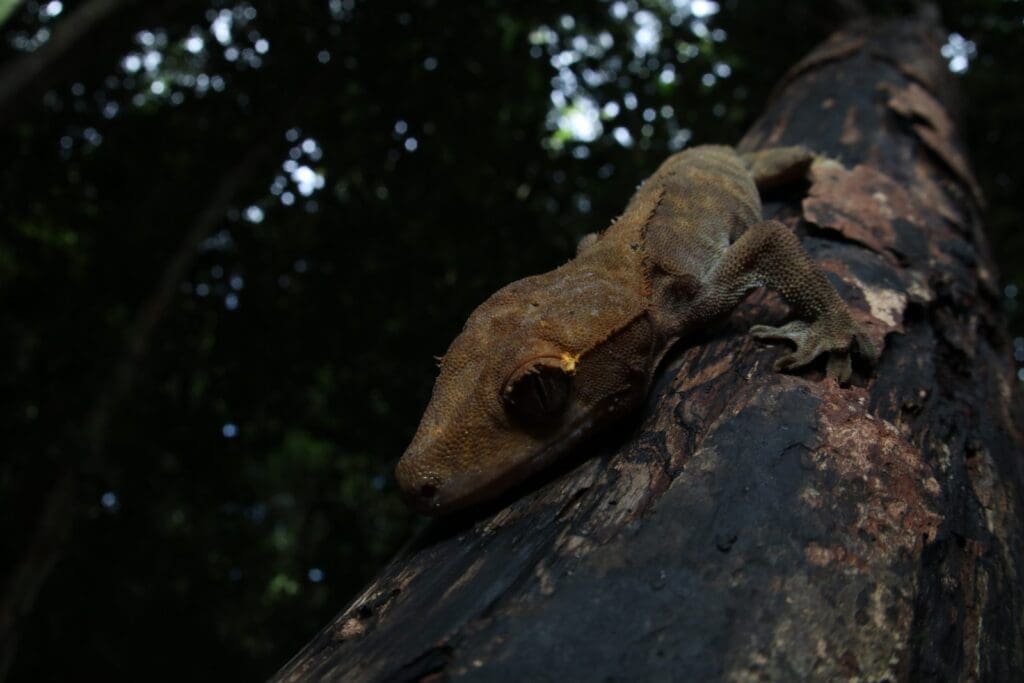
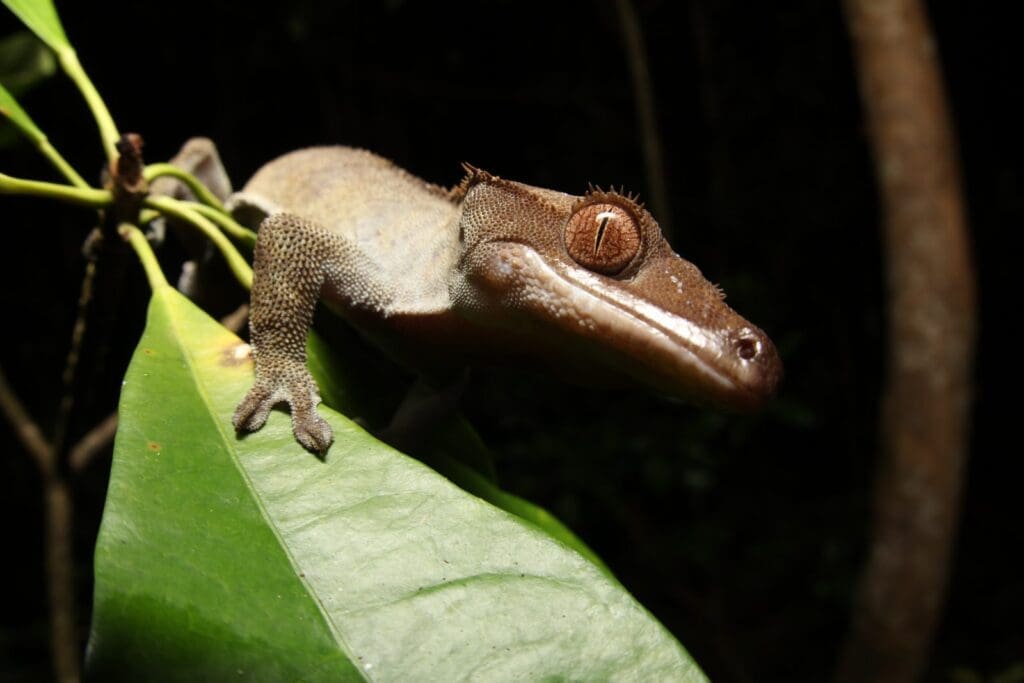
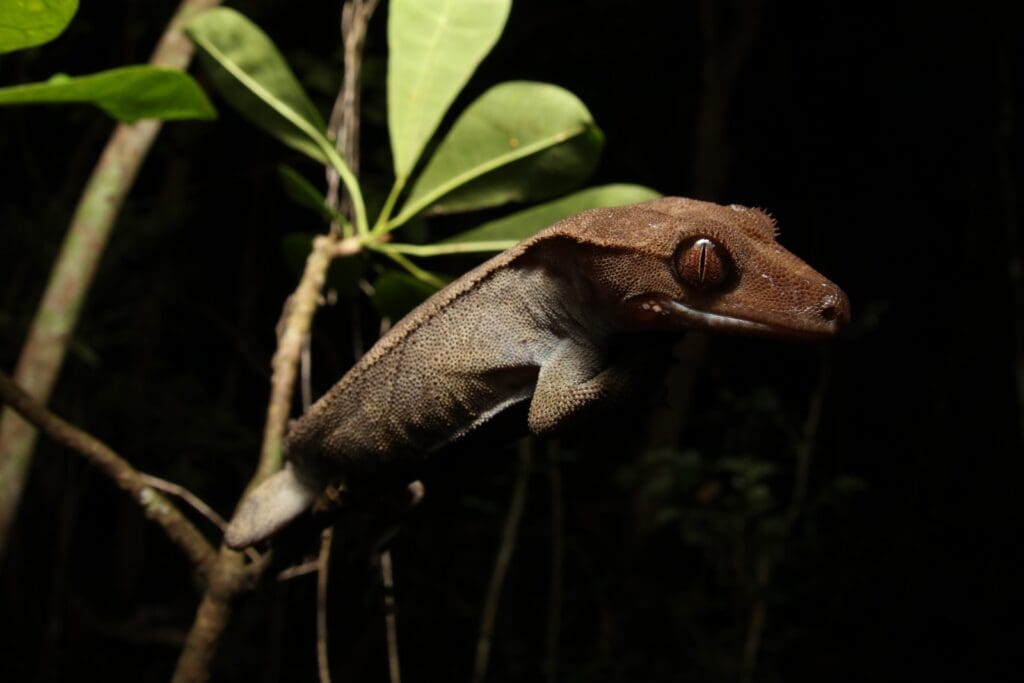
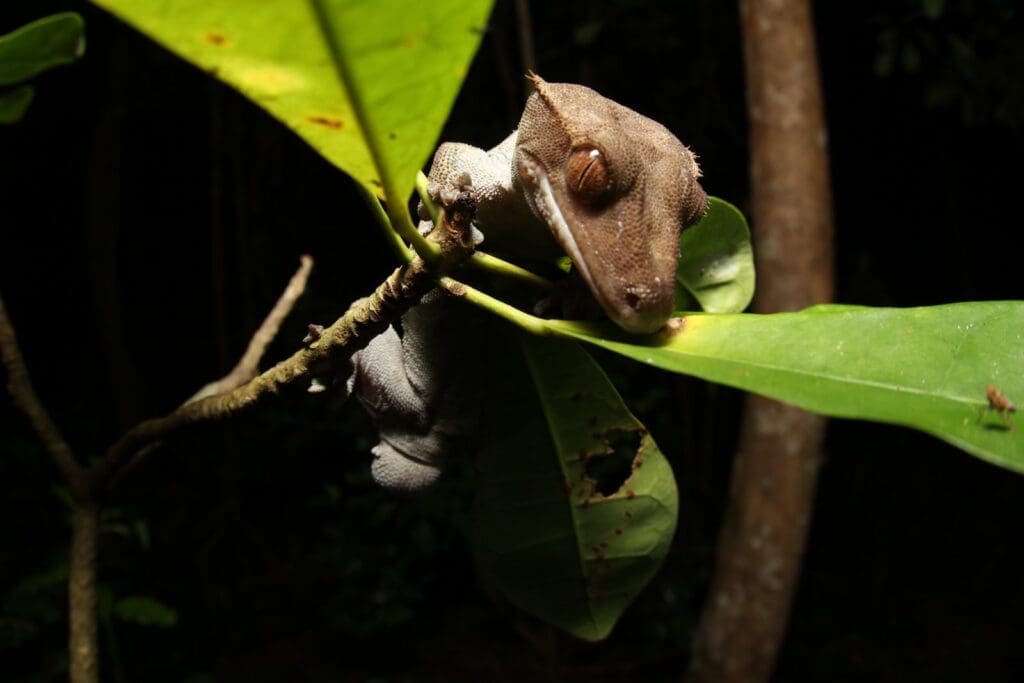
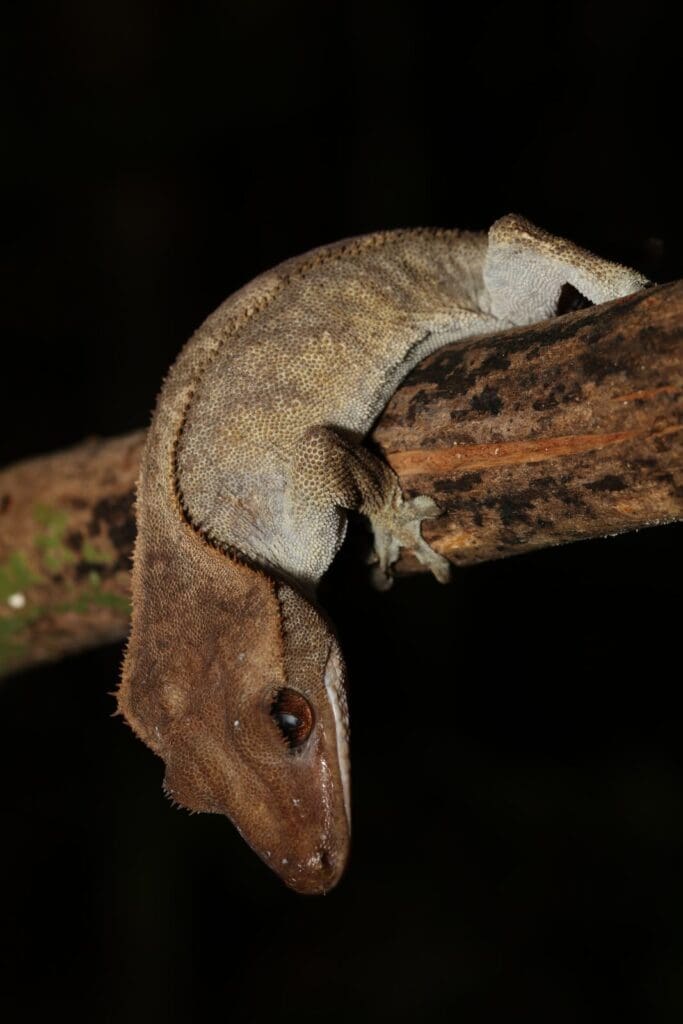
When alarmed, the geckos will move upwards into the canopy. At any height in the tree and irrespective of where the threat is coming from, the crested geckos that we observed, would always move upwards to evade perceived threats. It could be argued that crested geckos receive a greater sense of security in a taller enclosure with a denser canopy than a dedicated “hide”.
Crested geckos typically move slowly. As relatively large-bodied lizards, this methodical movement is likely to be an adaptation to the reasonably cool conditions that they inhabit. Crested geckos were found higher in the trees after dry conditions. After rainfall, storms or wind, they appear to move down to the 2 – 3-meter point, whereas on dry evenings they were found around 4 – 5 meters high.
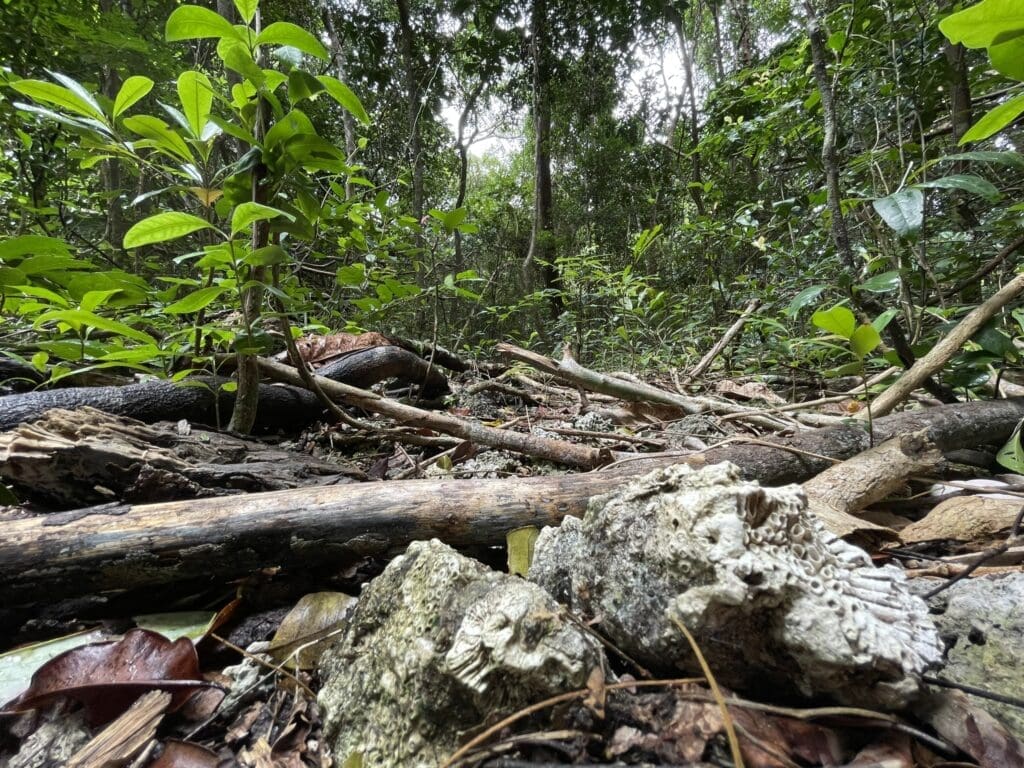
Crested geckos were only found within large patches of forest (although most search efforts were focused there). We did not find them on forest edges, in gardens or anthropogenically altered habitats, in small patches of forests on accommodation grounds, or crossing roads. The search area was concentrated on the North and East coastal forests of the island. In these areas, the substrate was comprised mostly of dead coral and carbonate rocks (likely limestone) with a layer of decomposing plant matter and leaf litter. Soil was reasonably scarce. It may be possible that the limestone (a compound rich in calcium) substrate adds a calcium boost to the berries that grow within it. I am not a geologist or botanist, but similar effects happen to plants elsewhere in the world.
What this means for your crested gecko
- Prioritise height. Alarmed geckos always moved upwards, so a tall enclosure with a dense canopy may offer more security than a dedicated hide.
- Offer thin branches that reach out into the foliage. Geckos moved to the ends of branches to wait for prey.
Flora & Fauna
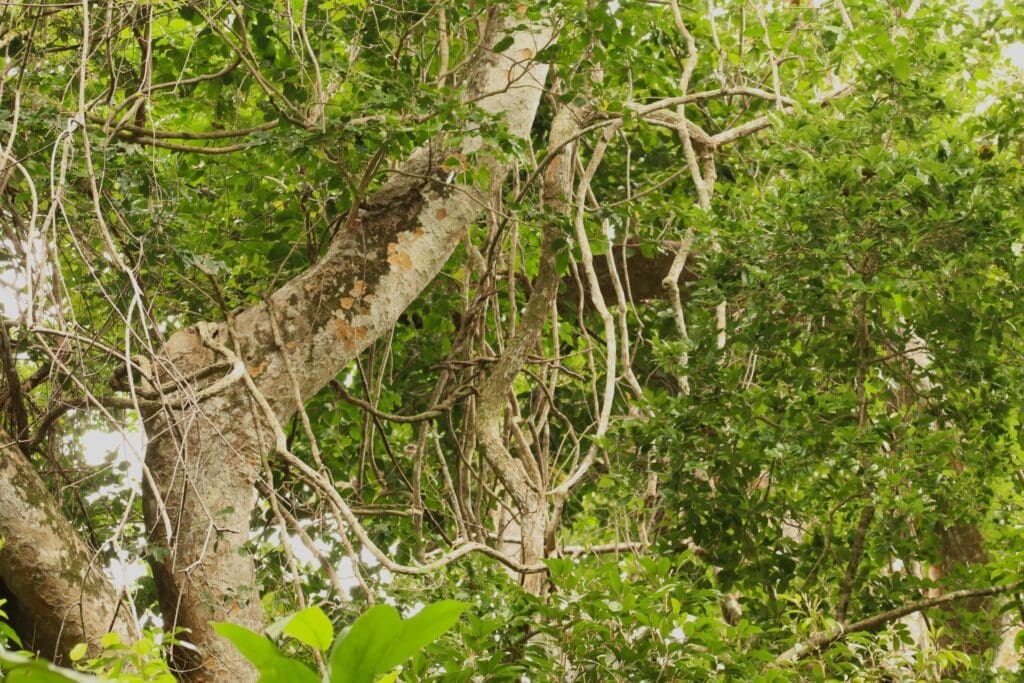
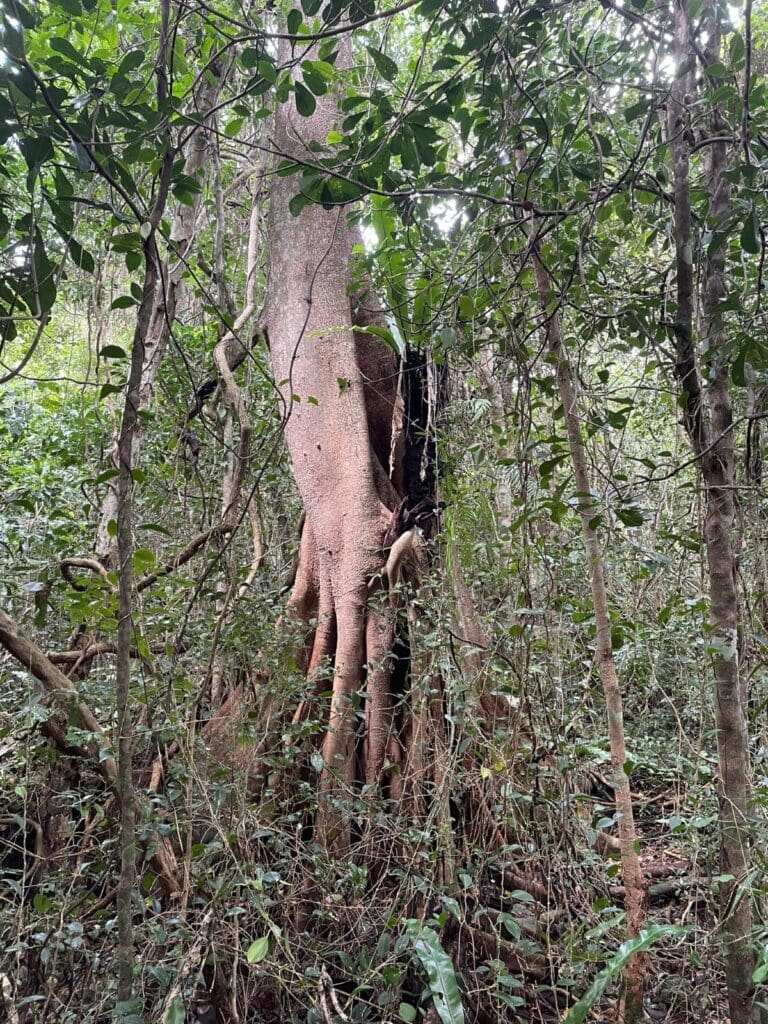
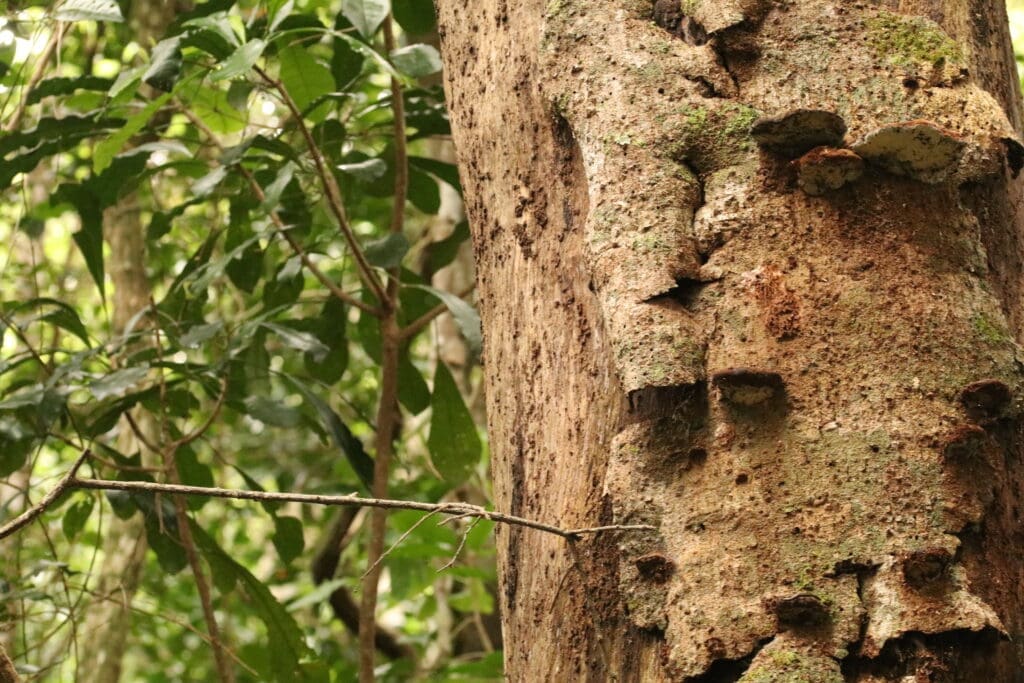
Crested geckos live in tropical coastal deciduous forests. In the regions where we were finding crested geckos, most of the trees were limited to the following species: Grey boxwood (Drypetes deplanchei), Australian red cedar (Toona ciliata) and Australian tallowwood (Eucalyptus microcorys). Fig trees are also common in New Caledonia. They are extremely impressive and eye-catching and likely to be home to Leachainus geckos given their enormous size, but were not frequented by crested geckos in our experience.
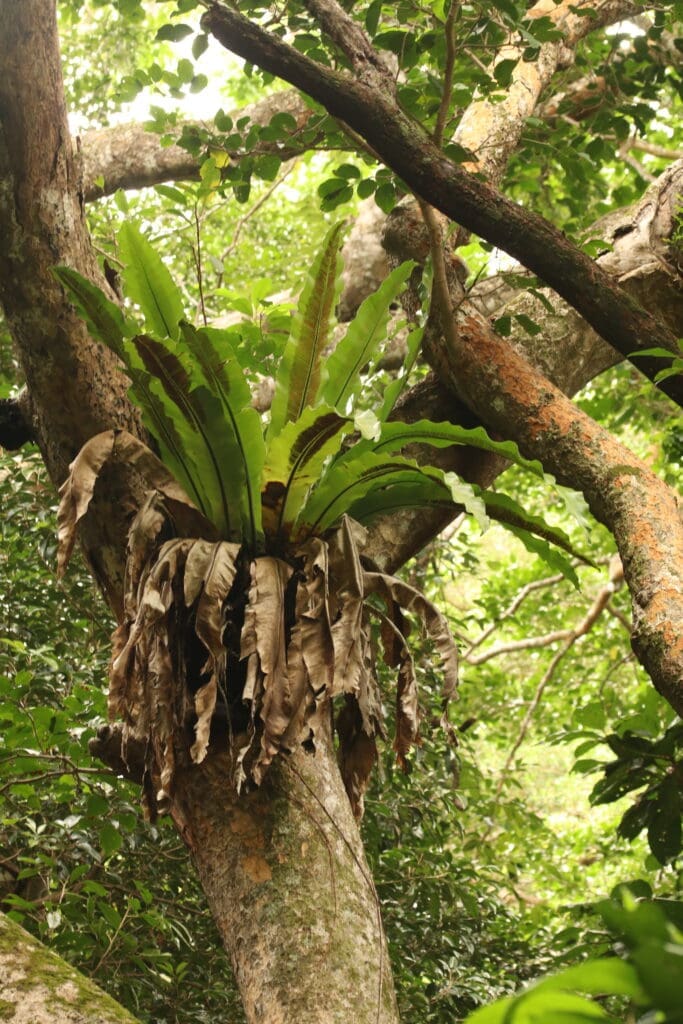
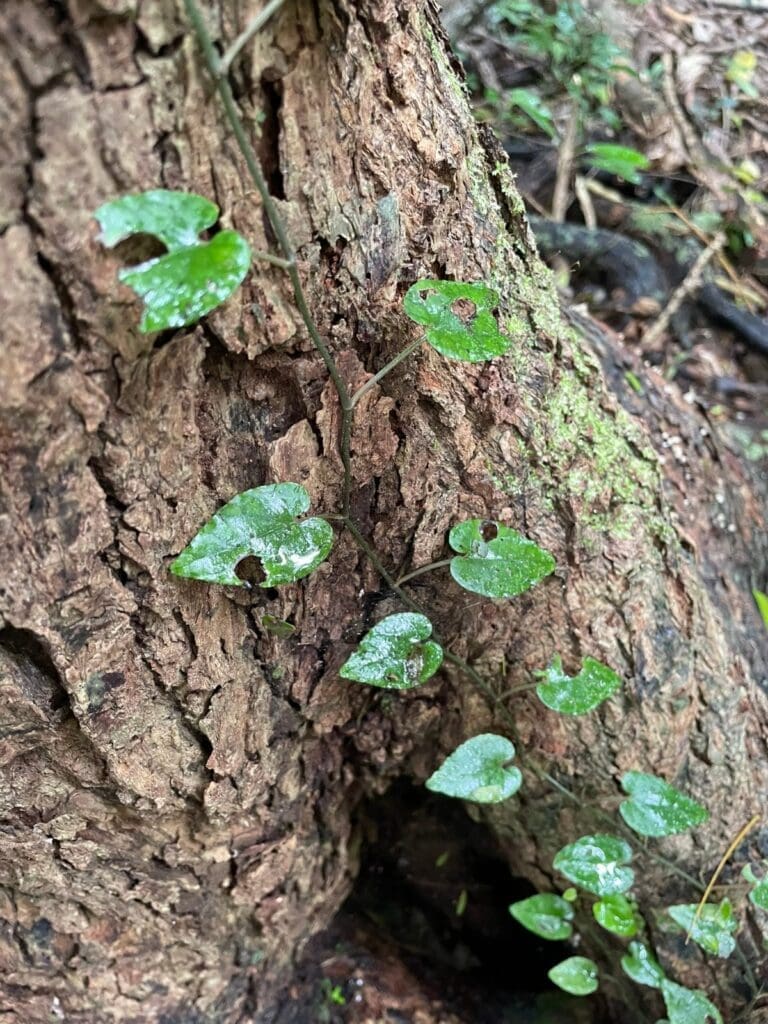
Various creeping plants also covered the lower halves of the trees. Many of these are invasive or difficult to identify. However, we did record Cissus (Cissus repens) and Chilean bellflower (Lapageria rosea). Lots of vines and trailing branches, as well as fig trees, create a vertical environment. This allows crested geckos to easily navigate the understory layers as they move up and down robust vines.
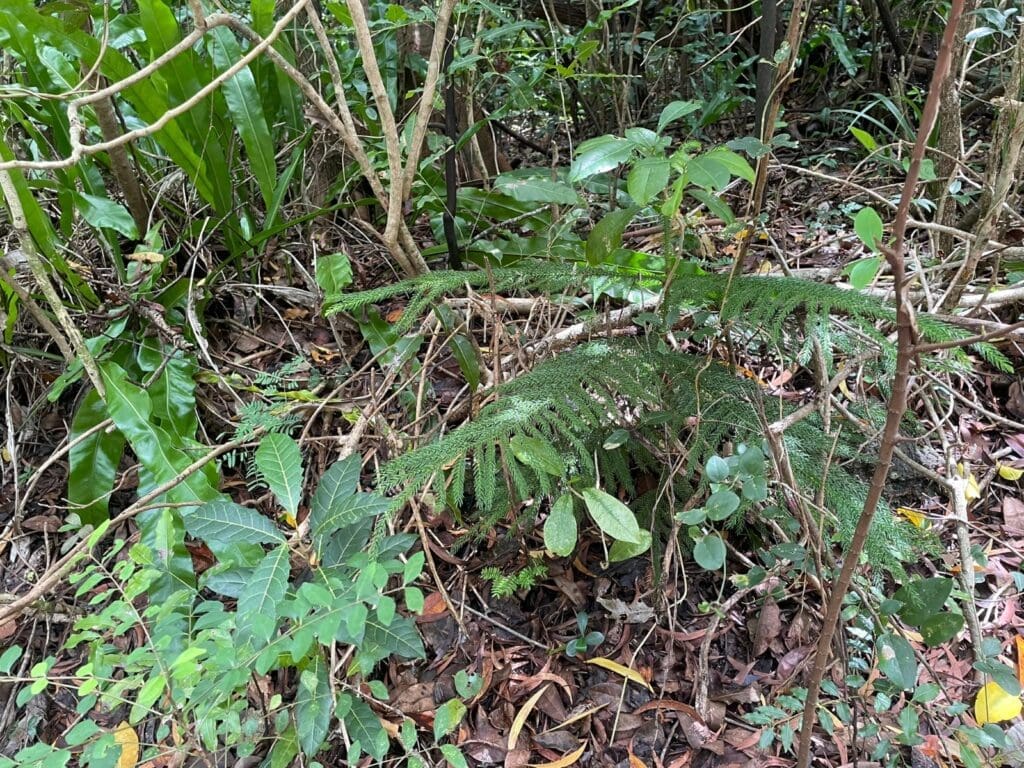
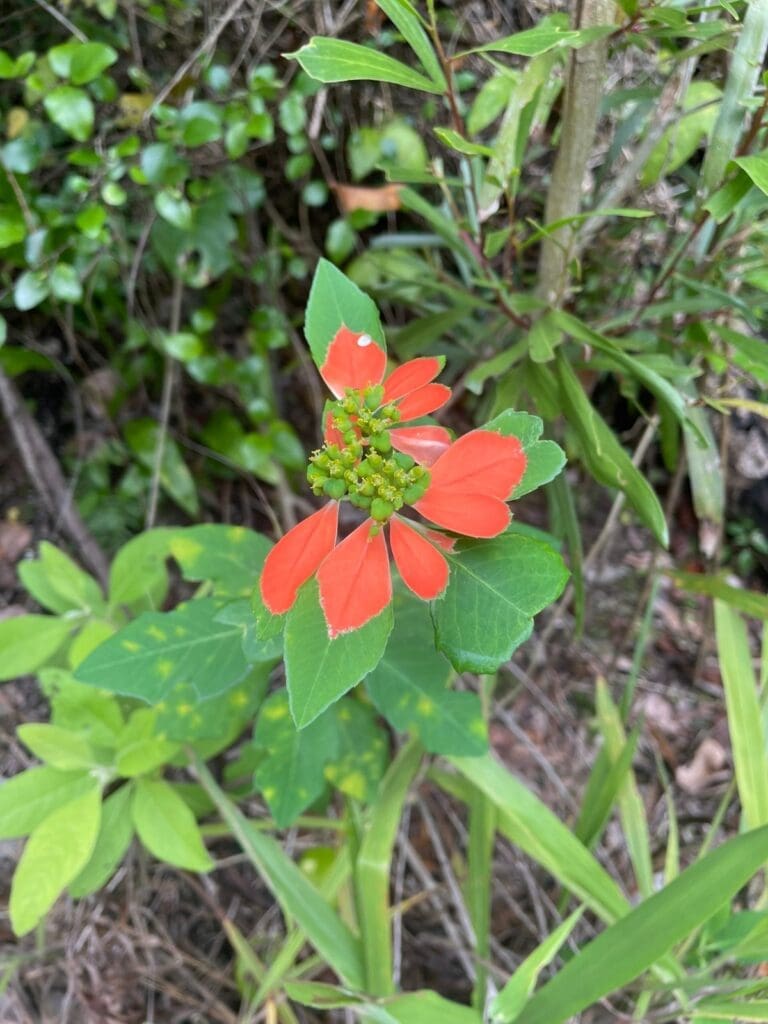
Ground cover was extremely diverse, although the most populous and eye-catching were Cook’s pine (Araucaria columnaris), Monarch fern (Phymatosorus scolopendria), Ipil-ipil (Leucaena leucocephala), birdnest fern (Asplenium serratum), branched comb fern (Schizaea dichotoma) and various schefflera-like plants (which are used as resting places for smaller geckos). How often crested geckos will physically encounter this low-lying vegetation is hard to tell. However, it could be incorporated into an extremely tall vivarium to simulate the forest floor.
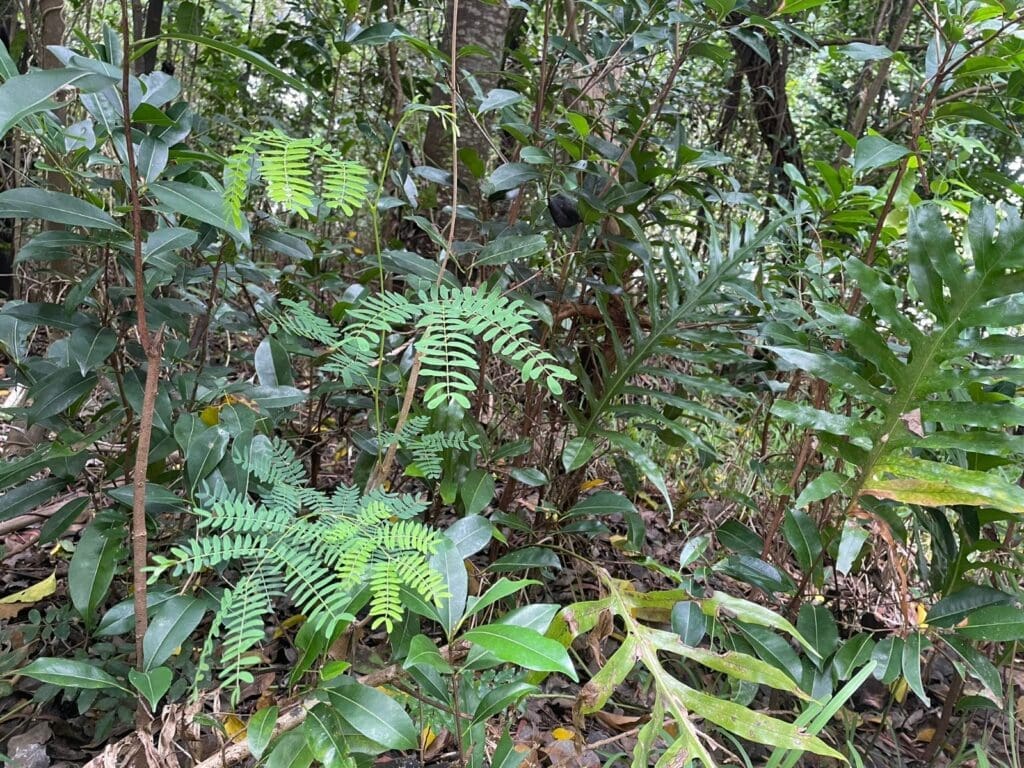
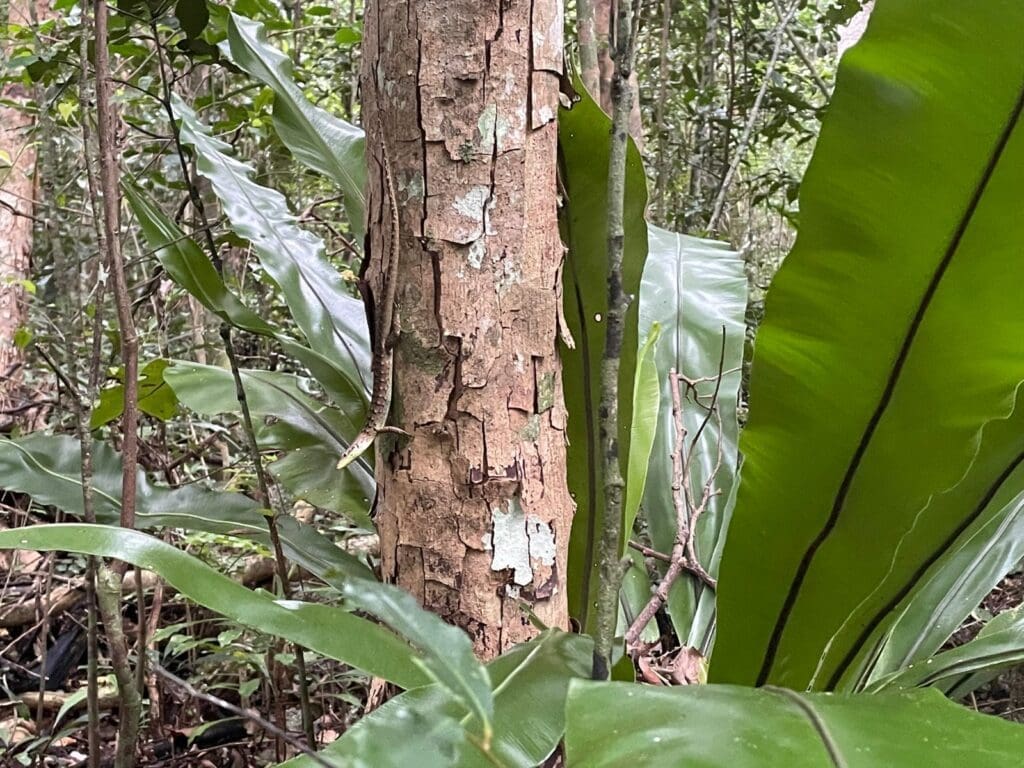
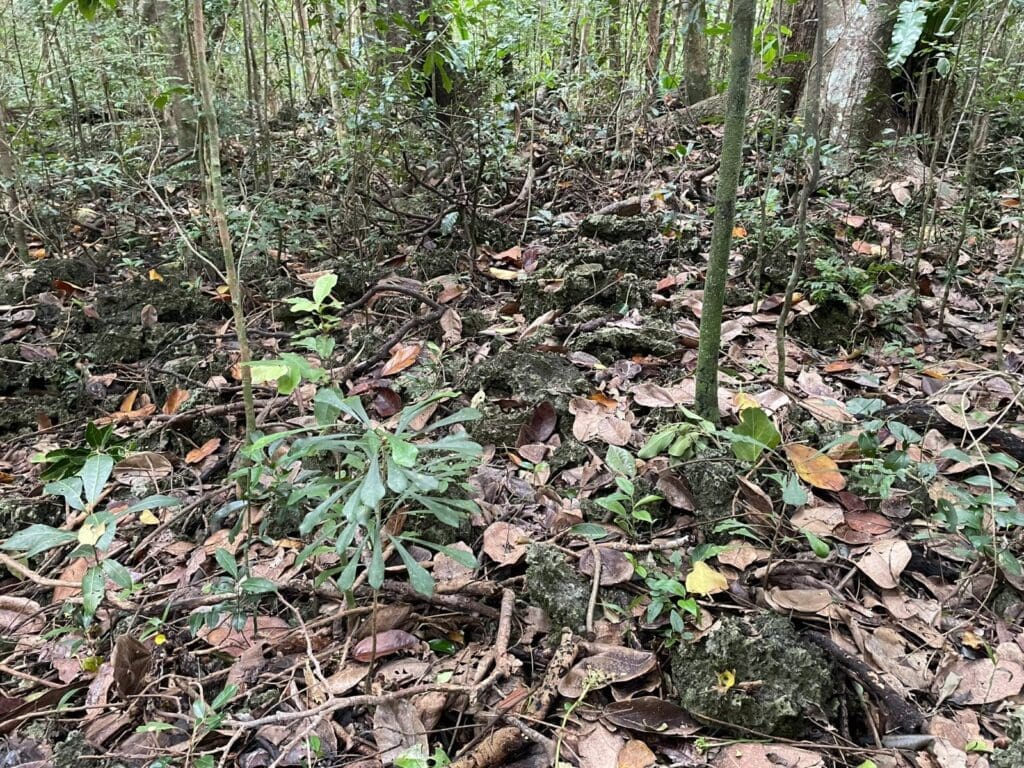
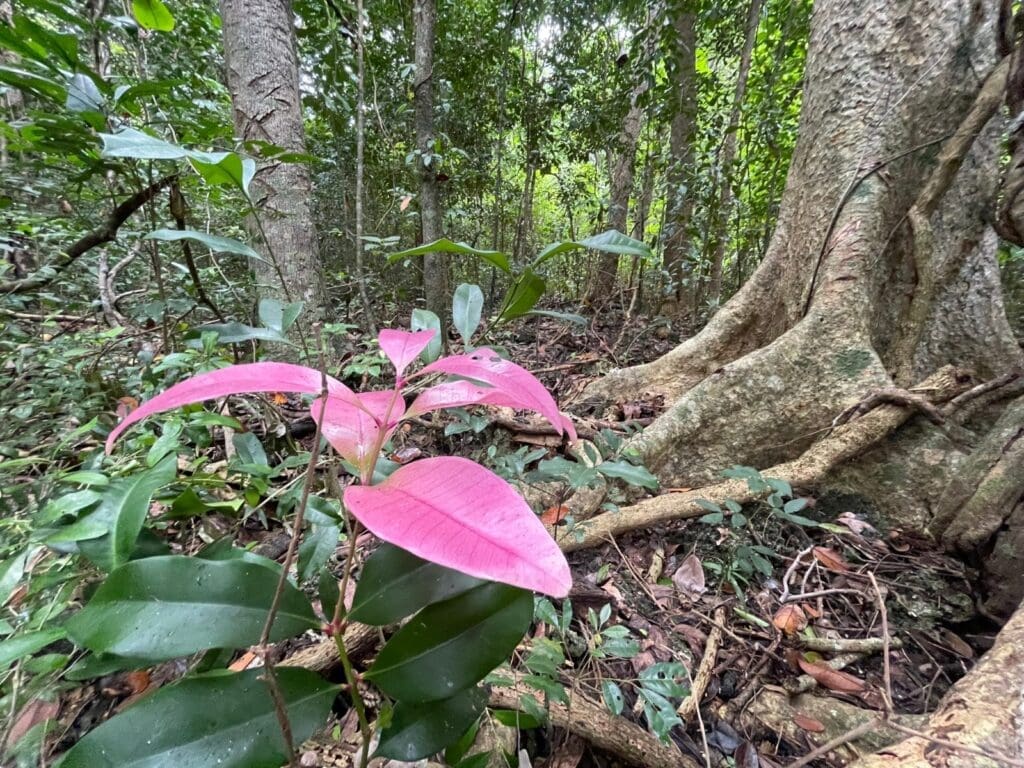
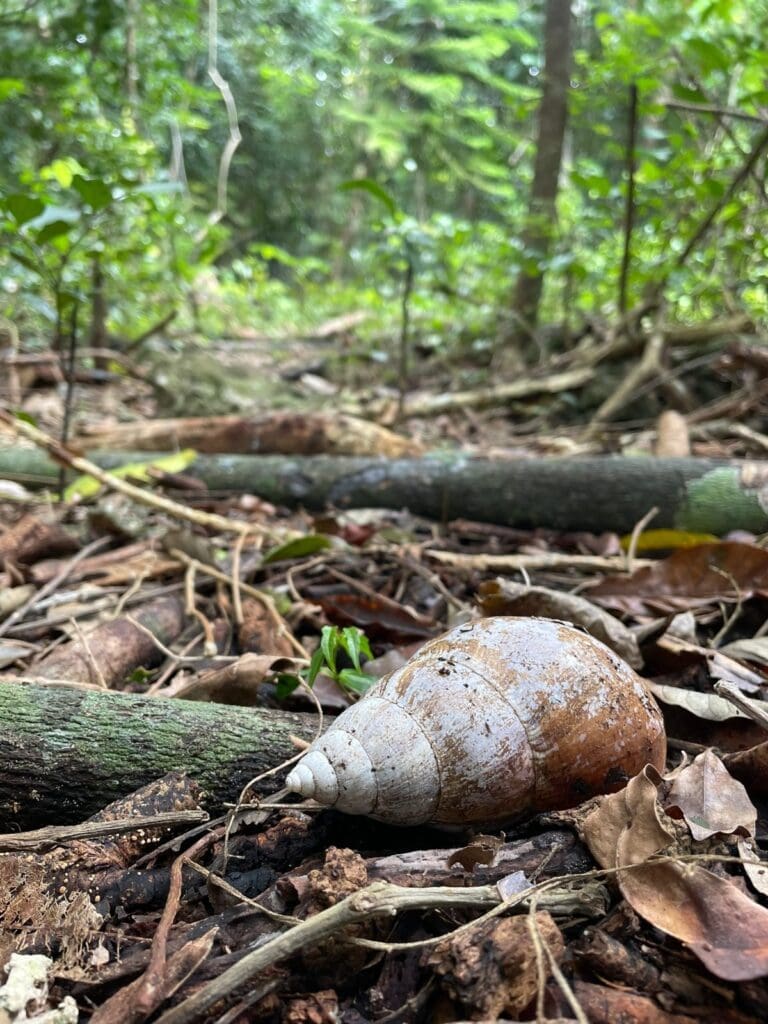
At night, insects were abundant. Crickets would sit and the end of leaves, cicadas were extremely common and became a nuisance under torchlight and various flies and small moths were also highly visible. Perhaps these are the most obvious insects for us to observe as they are attracted by lights, but the crickets and katydids were seemingly more populous than spiders, beetles or soft-bodied worms and caterpillars. Giant snails are also extremely common on the Isle of Pines, and while they are primarily terrestrial, juvenile snails could be found on tree trunks feeding on creeping plants. It is well documented that arboreal geckos that are fed on young snails typically produce healthier clutches of eggs thanks to the natural calcium in the shell and the fat and moisture in the body. It would be interesting to investigate further whether snails make up part of a crested gecko’s diet and if so, whether captive breeding collections are likely to benefit from snails being incorporated into their diets.
Invasive rats and domestic cats were a common sight on Isle of Pines. Two female geckos found on the island had suffered trauma to their eyes. Whilst it is difficult to say exactly why this was, predatory rats, hungry electric ants and curious cats could all have a role to play. Sadly these threats do pose a significant risk to the continuation of remote island populations such as the Correlophus ciliatus on Isle of Pines. Currently, the species is listed as Threatened by the IUCN. This is largely due to the fragility of island populations and the small number of individual populations left on Earth. Whilst one population does occur within protected areas within the Blue River Provincial Park boundaries, the geckos on Isle of Pines and Mount Dzumac may be susceptible to exploitation.
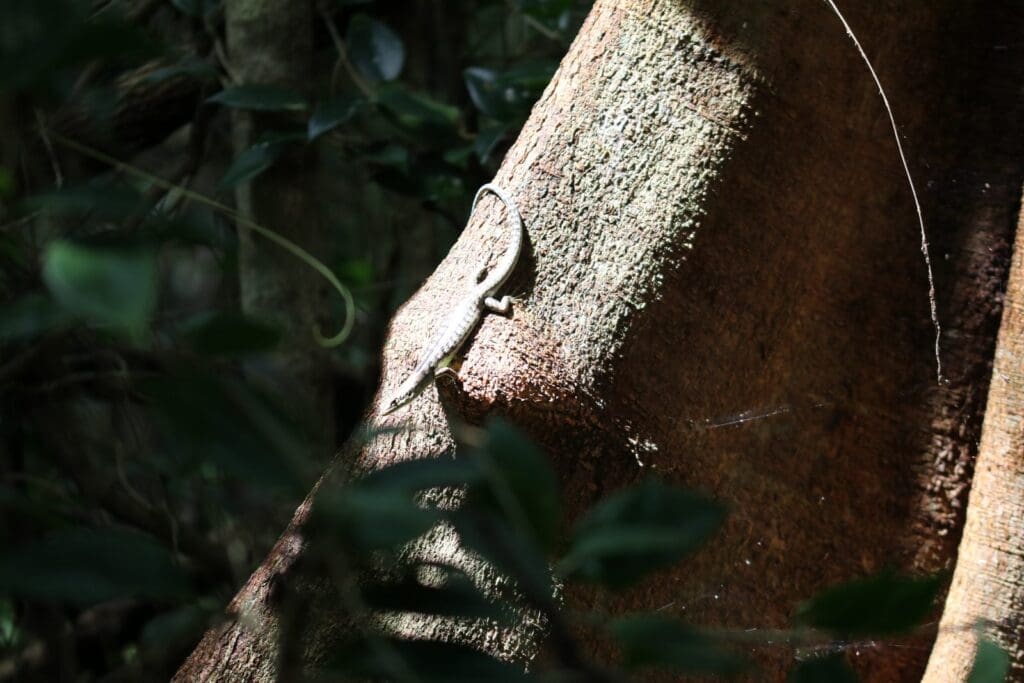
The most common species found living sympatrically with crested geckos are the very common forest bavaiya (Bavaiya cyclura), the green-bellied tree skink (Epibator nigrofasciolatus) and the common litter skink (Caledoniscincus austrocaledonicus). Records show that Viellard’s chameleon geckos (Eurydactylodes viellardii) can also be found in the ground cover of crested gecko habitat but unfortunately, we did not observe this species on this expedition. All these species are endemic to New Caledonia. The most reptile diversity within a particular group is the sea snakes. There are over a dozen species of sea snakes and kraits that frequent New Caledonia’s coral reefs.
Diets
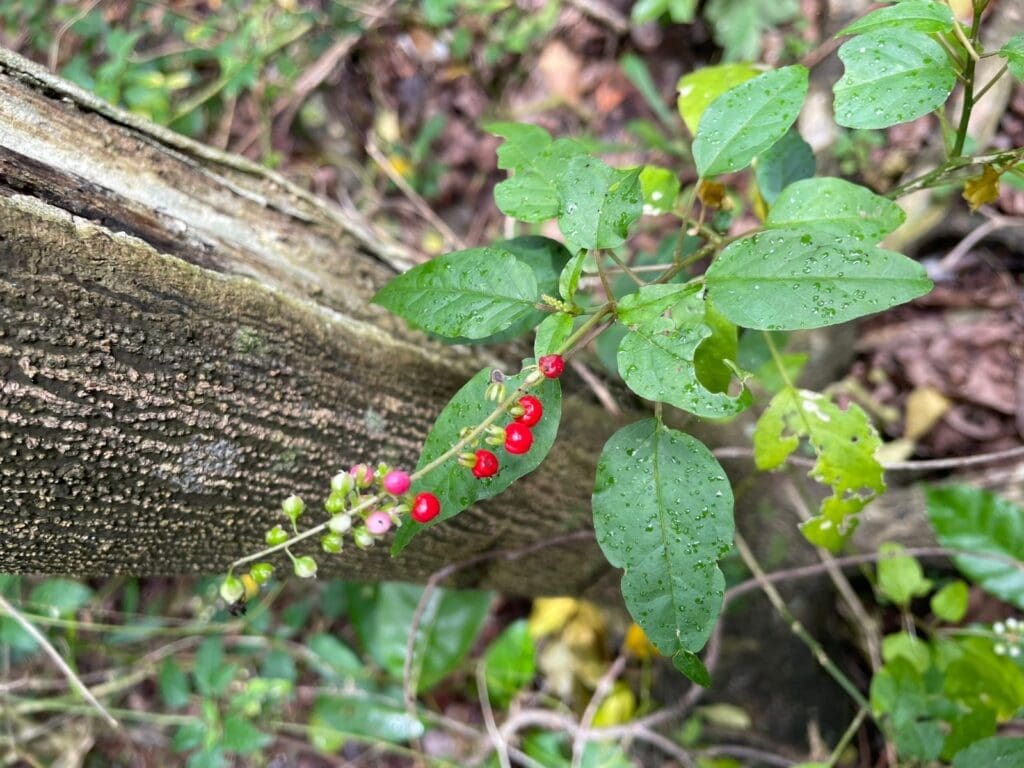
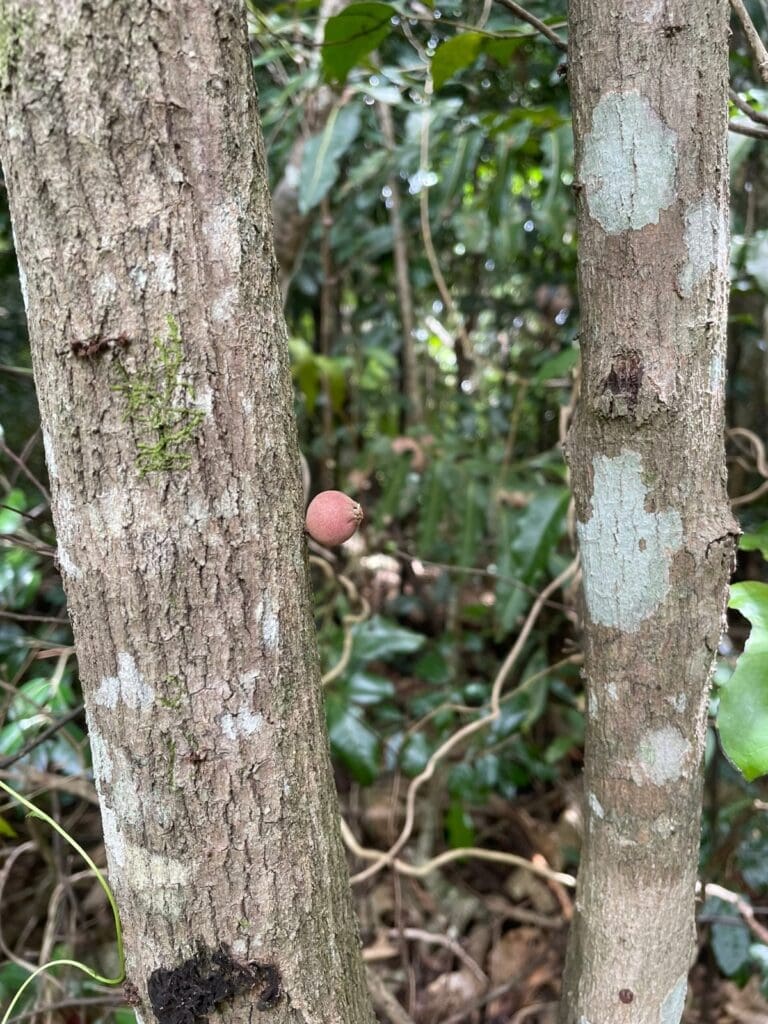
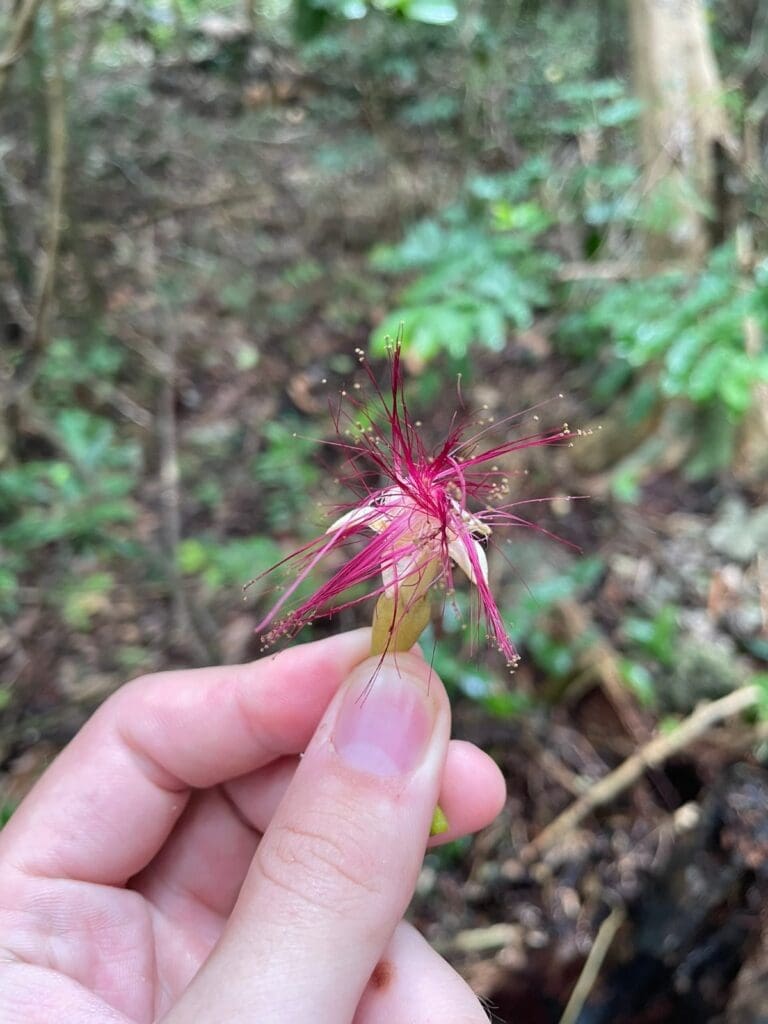
It is extremely difficult to paint a holistic image of the natural diets of a species without conducting invasive research techniques such as stomach content analyses. However, our observations suggest that ripened berries may make up a significant part of the crested gecko’s diet. Furthermore, extremely fragrant fruits such as cheese fruit and figs are common in the forest, whereas other fruits are reasonably rare. We did not find concentrations of geckos on fruiting trees, nor did we find crested geckos crossing anthropogenically altered habitats to feed on cultivated fruits. This may suggest that they are moving through the forest understory, feeding on a variety of sweet-smelling foodstuffs, such as ripe fruit, overripe berries, nectar-rich flowers and more. This matches with stomach content analyses from other researchers’ studies. Blue River Diets is currently assessing all the flora that we documented to help create even more naturalistic formulas for their product range.
Next Caledonia
Between 2013 and 2019, New Caledonia saw a 17.5% increase in tourism which made 2019 the busiest year on record. What that means for the flora and fauna is unknown. But, with ecotourism taking centre stage in the travel industry in recent years and New Caledonia’s biodiversity already internationally recognised, the wild geckos of this island should hopefully find some security. As for our much-loved pets in the private sector, the future seems very bright. Captive bred animals are abundant, meaning responsibly sourced pets are never an issue. Advancements in product development are making husbandry much easier and although we might see competition for top spot in the pet trade, the crested, gargoyle and New Caledonia giant geckos will be with us for many years to come.
Wet Season vs Dry Season
We returned in October 2025 to see the same habitat in the dry season. This is how the Isle of Pines compared across both visits.
When
Wet season 2024: March (end of the wet season)
Dry season 2025: October (dry season, before the wet)
Daytime humidity
Wet season 2024: Rarely below 85%; around 80–85% at midday
Dry season 2025: Around 50%, rising to 75% late at night
Temperature
Wet season 2024: Around 24℃ average, up to 28℃
Dry season 2025: Over 30℃ by midday
UVI
Wet season 2024: Below 1 almost all the time, with brief peaks of 10–11 when the cloud broke
Dry season 2025: Rising sharply from sunrise to an average of 6.7 by 11am
Crested geckos
Wet season 2024: Fewer sightings; one found exposed during the day
Dry season 2025: More sightings, later at night and higher in the trees; none by day
Flying insects
Wet season 2024: Abundant at night
Dry season 2025: Far fewer
Small geckos (Bavaiya, Nactus)
Wet season 2024: 2–5 seen most evenings
Dry season 2025: None seen
Giant geckos
Wet season 2024: Not recorded
Dry season 2025: At least four R. leachianus and one R. chahoua
Keep exploring
- Expedition New Caledonia: Dry Season 2025 – our return visit, at the opposite end of the season
- Expedition Plant Reference – the plants we recorded in crested gecko habitat
- Crested Gecko Planting Guide – turning these observations into a planted enclosure