
Should I Still Feed Live Food to My Gecko?
Why the hunt still matters, even on a complete diet
Yes. A complete gecko diet such as Blue River Diets should be the staple, but live insects are still worth offering. They don’t replace the diet; they add the hunt, the exercise and the variety that a food dish can’t.
This guide explains what wild crested geckos really eat, why live food still matters in captivity, and how to offer it without overdoing it.
In this guide
What Wild Crested Geckos Eat
Crested geckos are omnivores. A 2007 stomach-content study, reported by Exotics Keeper, found wild crested geckos had eaten about half insects, around a third fruit, pollen, seeds and juices, and the rest small vertebrates, including other lizards. Their diet shifts with the seasons, from overripe fruit to berries and sap to insects.
What we saw on the Isle of Pines
- Insects everywhere at night: crickets and katydids sat at the ends of leaves, with cicadas, flies and small moths all around.
- Geckos hunting from branch tips: they moved small distances to the edge of a branch, then sat perpendicular to it, waiting for prey to come within reach.
- Plenty of berries and fragrant fruit, but no geckos gathered on fruiting trees. They forage as they travel.
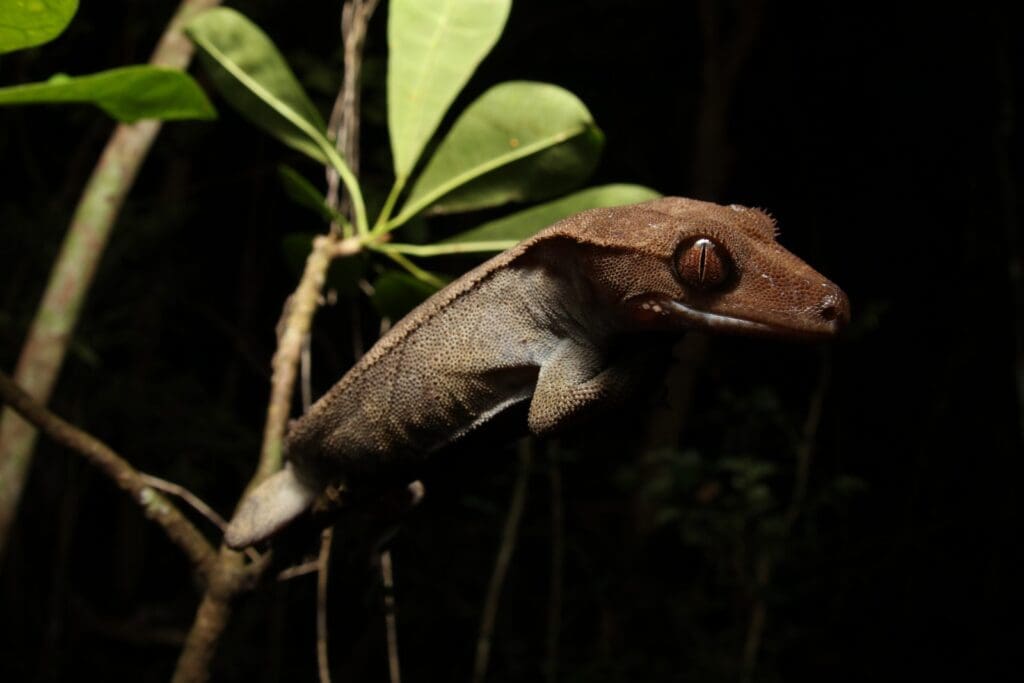
Sources: our Wet Season 2024 and Dry Season 2025 expeditions, with Exotics Keeper.
Why Live Food Still Matters
Blue River Diets are made as a complete and balanced daily diet. Live insects are about everything else a meal can give a gecko.
The hunt
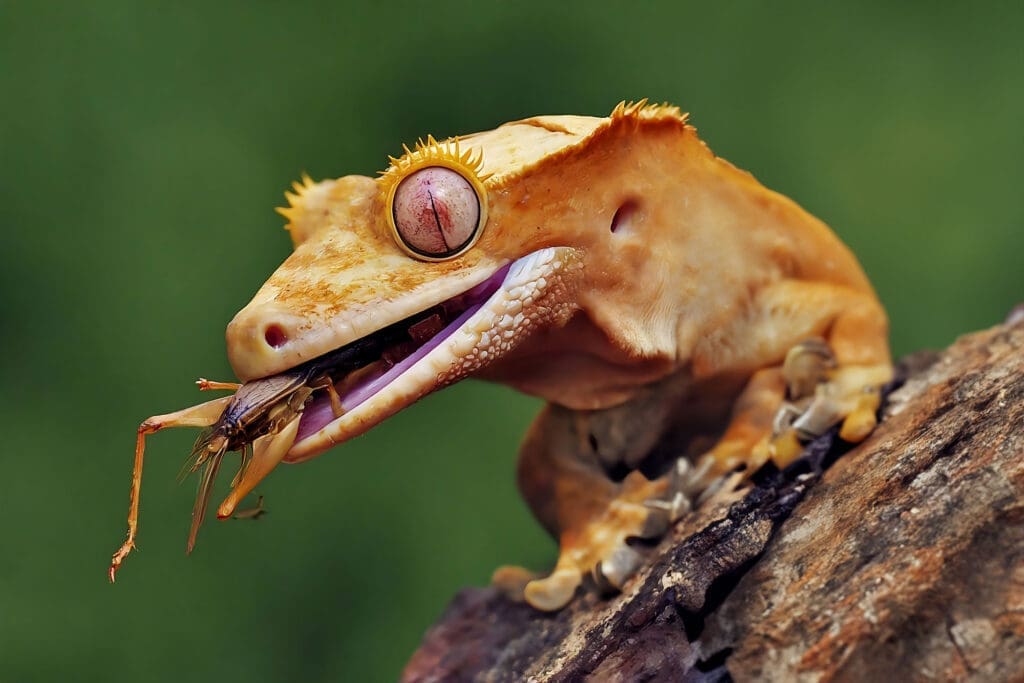
Stalking and catching prey switches on natural behaviour that a dish of diet never does. Insects that climb, such as locusts, are especially good at getting a gecko moving.
Exercise
Captive geckos move far less than wild ones. Chasing a few insects a week keeps muscles working and helps prevent obesity.
Variety
Different insects bring different textures and nutrients, and a gecko used to variety is less likely to become a fussy eater.
Live food is not a replacement
Insects alone don’t give a crested gecko a balanced diet, and too many make it overweight. Keep the complete diet as the staple and treat insects as the extra.
How Often and How Much
An easy rule: livefood makes up about 20% of an adult’s diet, and 40% for hatchlings and juveniles, which are still growing. Release insects in the evening, when crested geckos wake up to hunt.
Hatchlings and juveniles
2–3 times a week · 40% of the diet
A few small insects per feed, alongside fresh complete diet every evening.
Adults
About once a week · 20% of the diet
Fewer if your gecko is gaining weight. Complete diet every 2–3 evenings.
- Let them hunt. Release insects into the enclosure in the evening and let your gecko catch them. Crested geckos hunt overnight, so most of the action happens after dark.
- Size: no insect wider than the gap between your gecko’s eyes. Too large risks choking or impaction.
- A few at a time: offer only a few insects per feed, and don’t keep adding more. Check the next day that they’re being eaten.
- Remove stragglers: if insects are still roaming the enclosure after a day or more, take them out before offering any more.
- Watch your plants: uneaten insects, locusts especially, will eat live plants in a planted or bioactive enclosure. Another reason to make sure they’re being caught.
The Best Insects for Crested Geckos
Rotate between a few staples. Variety gives a broader spread of nutrients and keeps feeding interesting.
Crickets
Brown or black crickets
Active and easy to find. They trigger a strong hunting response. Gut-load well and remove any not eaten.
Locusts
Climbing feeder
Locusts climb, so they draw geckos up and around the enclosure. Choose small sizes for crested geckos.
Roaches
Dubia and other species
High in protein with a good calcium to phosphorus balance, and they keep well between feeds.
Calci-worms
Black soldier fly larvae
Naturally high in calcium (a Ca:P ratio of about 1.5:1). A great variety food, especially for growing geckos.
Silkworms
Soft-bodied, easy to digest
Around 54% protein and 76% moisture, lower in fat than most “worms” and rich in calcium.
Treats only
Waxworms, morio worms and mealworms
High in fat and easy to overdo. Offer them rarely, and never as a staple.
Nutrition figures from Exotics Keeper’s Ultimate Guide to Alternative Livefoods.
Preparing Insects
An insect is only as good as what it has eaten. Two simple steps make live food far more useful.
Step 1
Gut-load
Feed insects a quality insect diet or fresh greens for 24–48 hours before they go to your gecko, so they arrive full of nutrients rather than empty.
Step 2
Dust
Lightly dust insects with calcium just before feeding, alternating with a vitamin and mineral supplement. Feed them straight away, before the powder falls off.
Watch the Weight
Overfeeding, not underfeeding, is the biggest dietary risk for pet crested geckos, and fatty insects are the quickest way to get there.
- Weigh monthly on kitchen scales. A healthy adult is around 35–45 g.
- Look for warning signs: fat pads bulging at the armpits or a thick, rounded tail base.
- If your gecko is gaining, cut insects first, then space out meals.
- Don’t feed pinkie mice. Wild geckos do eat small lizards, but mammals are nutritionally very different and some lizards can develop gout from a single pinkie.
Where Fruit & Bug Fits
Our Fruit & Bug formula contains 15% black soldier fly larvae powder, bringing insect protein into the everyday diet. It is a great choice for keepers who want an insect element in every meal, but it is still a powdered diet: live insects remain the best way to give your gecko the hunt.
Keep reading
Sources
Expedition New Caledonia, Blue River Diets · The Ultimate Guide to Alternative Livefoods, The New New Caledonia, Crested Gecko Care Guide and In the Wild: Crested Geckos (May 2024), Exotics Keeper · Crested gecko care factsheet, Royal Veterinary College