
Choosing plants for a crested gecko enclosure should not start with what looks good on day one. It should start with what the enclosure needs to do.
A good naturalistic enclosure should provide cover, humidity, climbing routes, shaded resting areas, feeding access and long-term stability. The best plants are the ones that help create those functions without quickly overwhelming the enclosure.
This guide uses New Caledonian habitat observations as inspiration, then translates those observations into practical plant choices that are easier to find and maintain in captivity.
In this guide
Ground Cover and Leaf Litter Plants
Ground cover helps create a natural base layer and supports humidity. It should be used carefully, leaving enough open space for maintenance and clean-up crew activity.
Good options include
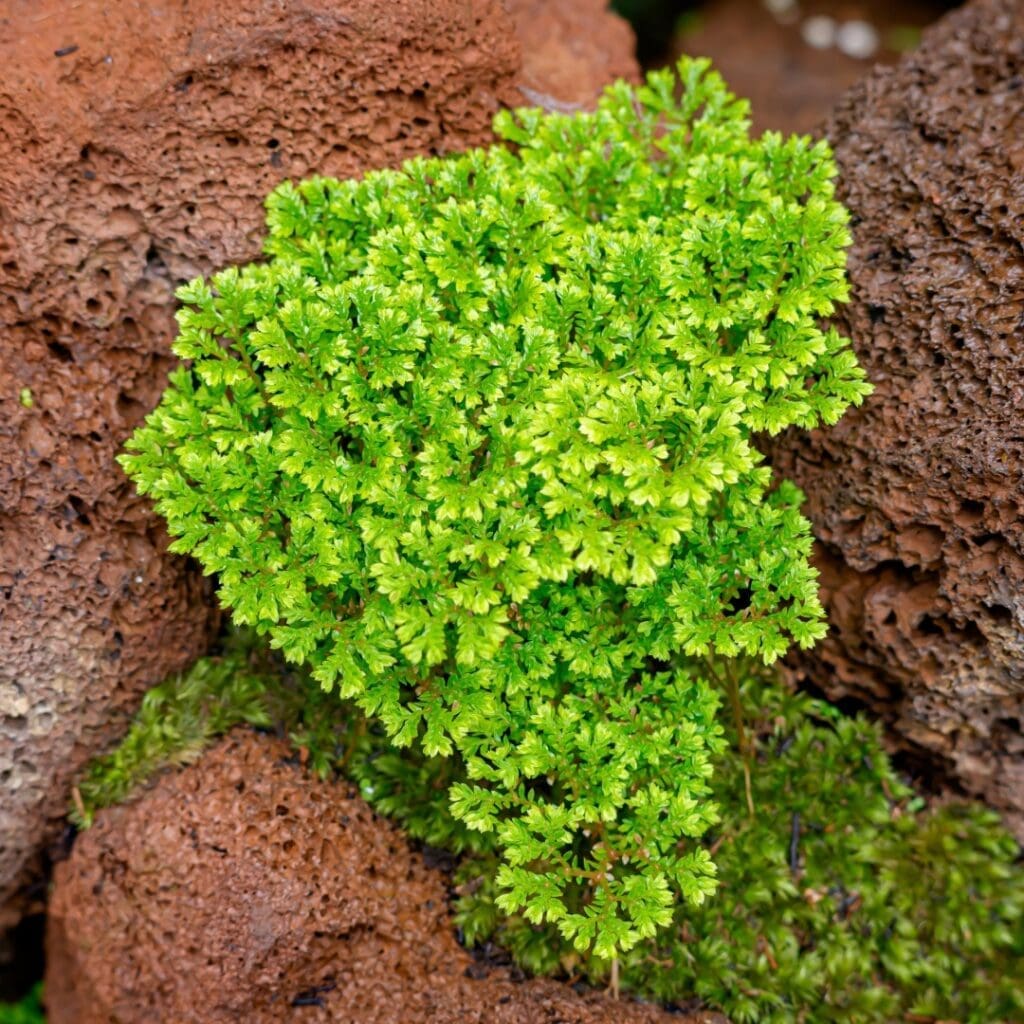
Krauss’ Spikemoss
Selaginella kraussiana · also sold as African Clubmoss
Growth: Fast, spreading mat
Use: Humid lower corners and around cork bases. Trim it back where it creeps into feeding areas.
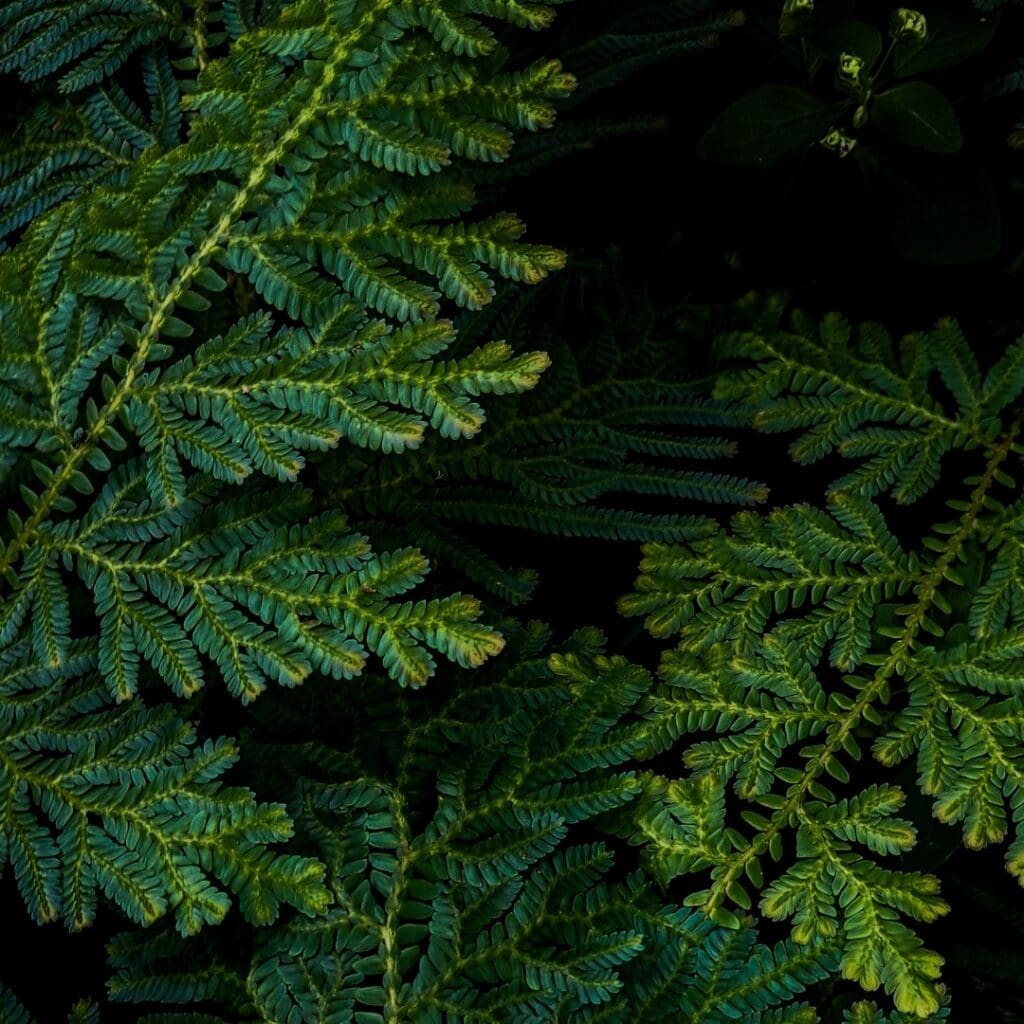
Peacock Moss
Selaginella uncinata · also sold as Peacock Spikemoss
Growth: Fast, low trailing growth
Use: Shaded humid areas. The blue-green sheen shows best against cork and dark leaf litter.
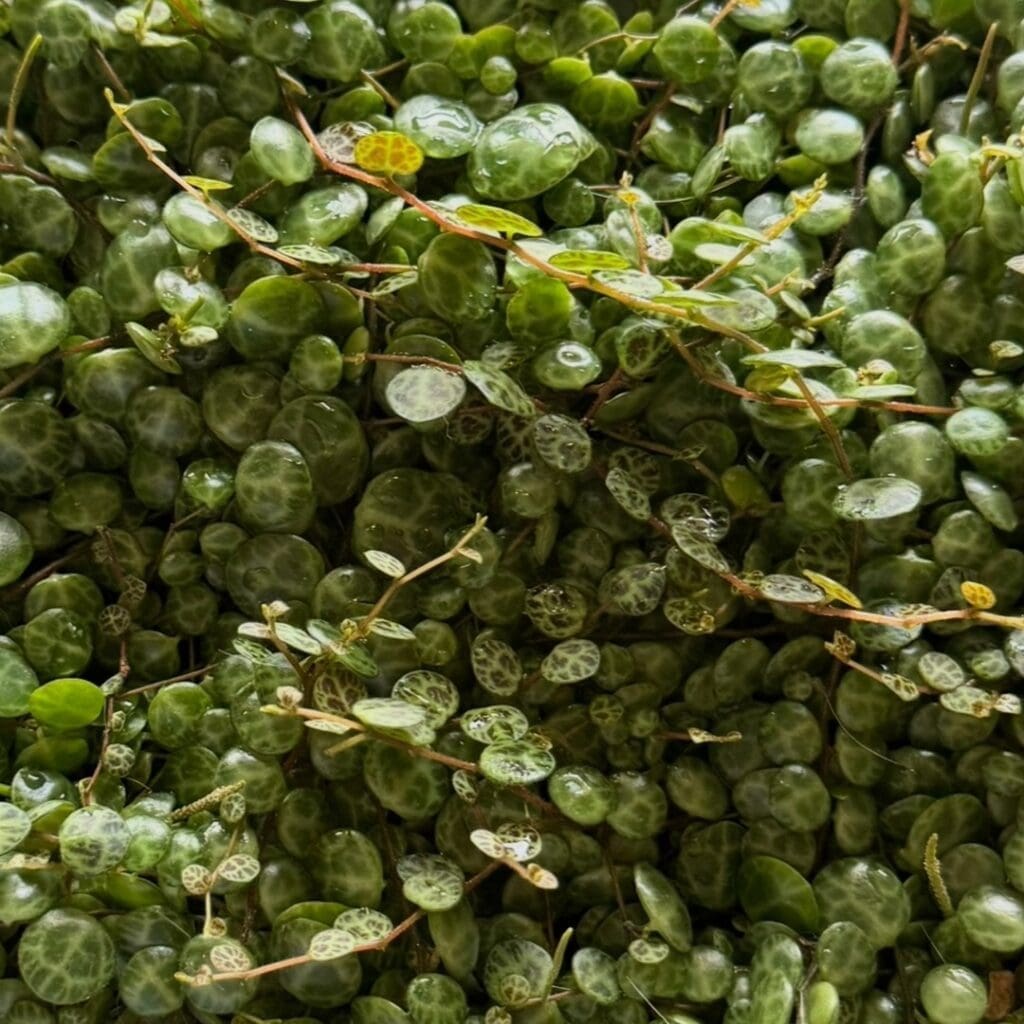
String of Turtles
Peperomia prostrata
Growth: Slow
Use: Raised pockets and ledges where it can trail. Needs light and dislikes sitting wet.
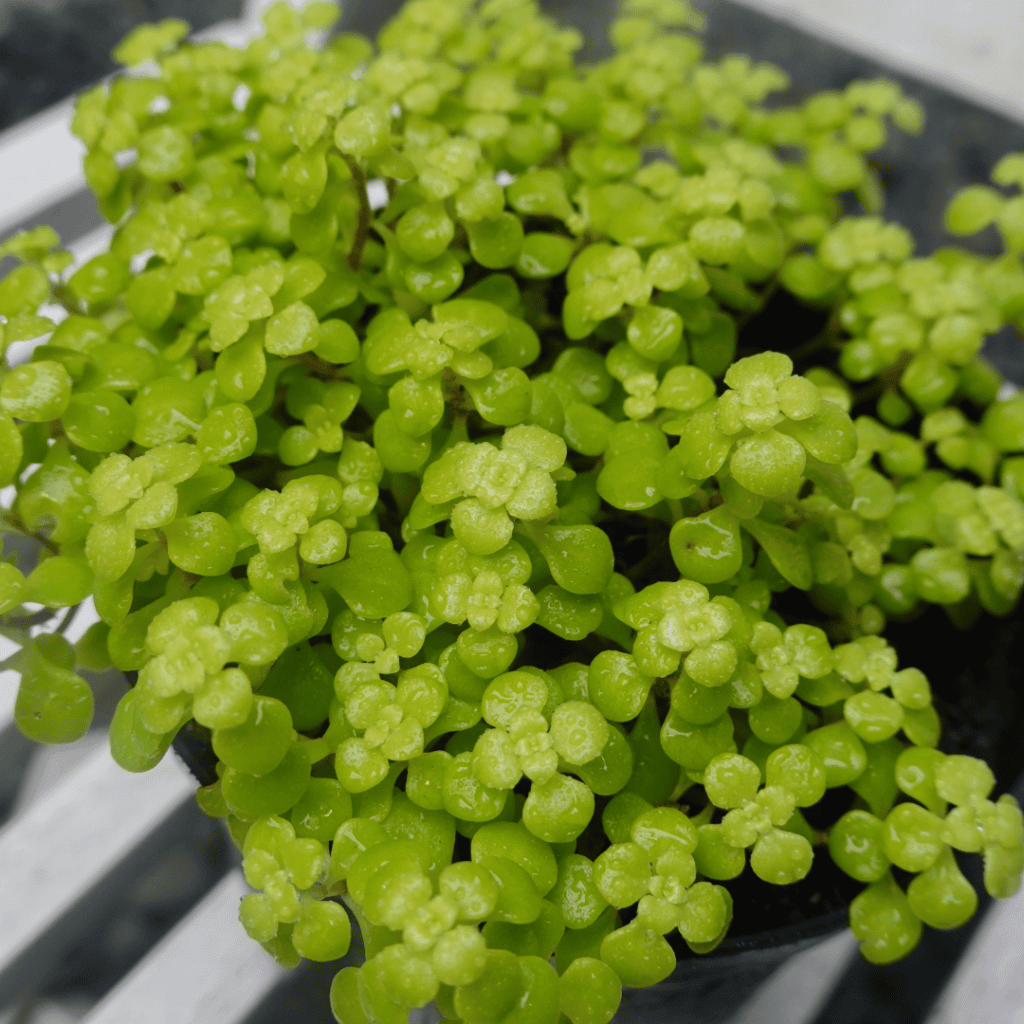
Baby Tears Pilea
Pilea depressa · also sold as Depressed Clearweed
Growth: Fast, dense mat
Use: Ground level and low planting pockets. Prune before it smothers slower neighbours.
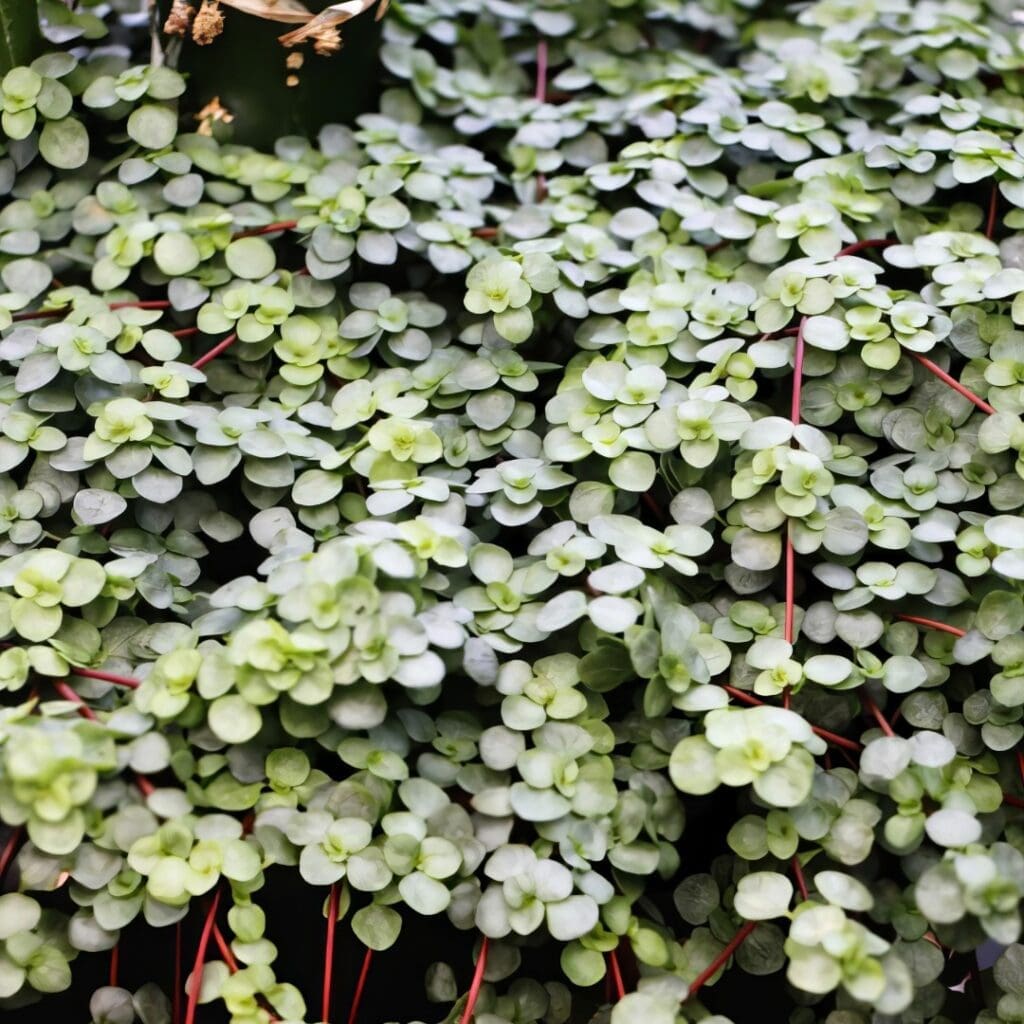
Silver Sparkle Pilea
Pilea glauca · also sold as Grey Artillery Plant
Growth: Fast, trailing
Use: Edges of raised pockets and ledges where the silver foliage catches the light.
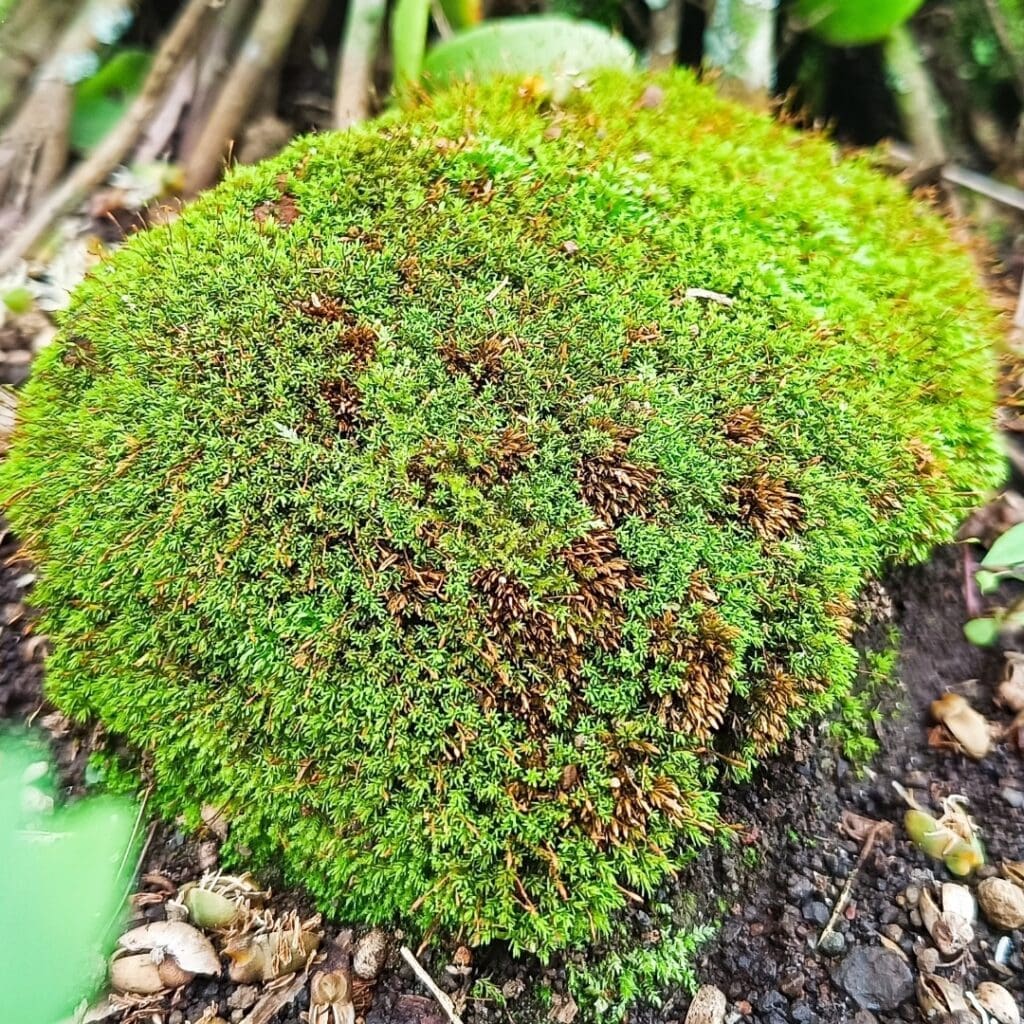
Cushion Moss or Sheet Moss
Used only where moisture levels are reliably high
Growth: Slow, no true roots
Use: Only in reliably humid spots. It will brown off in dry or low-light areas.
Replicates in habitat
- Spike Moss, Selaginella species
- Small creeping plants
- Humid lower habitat cover
Use with
- Natural leaf litter
- Cork bark
- Branch bases
- Moisture-retentive substrate
Keeper note
Do not try to carpet the entire floor from day one. Leave space for plants to grow and for custodians to work through the leaf litter.
Mid-Level Foliage Plants
Mid-level foliage helps crested geckos feel secure by breaking up open space. It should create cover without blocking all climbing routes.
Good options include

Emerald Ripple Peperomia
Peperomia caperata · also sold as Radiator Plant
Growth: Slow, compact clump
Use: Rear and mid-level planting areas. The textured leaves hold their shape well in humid conditions.
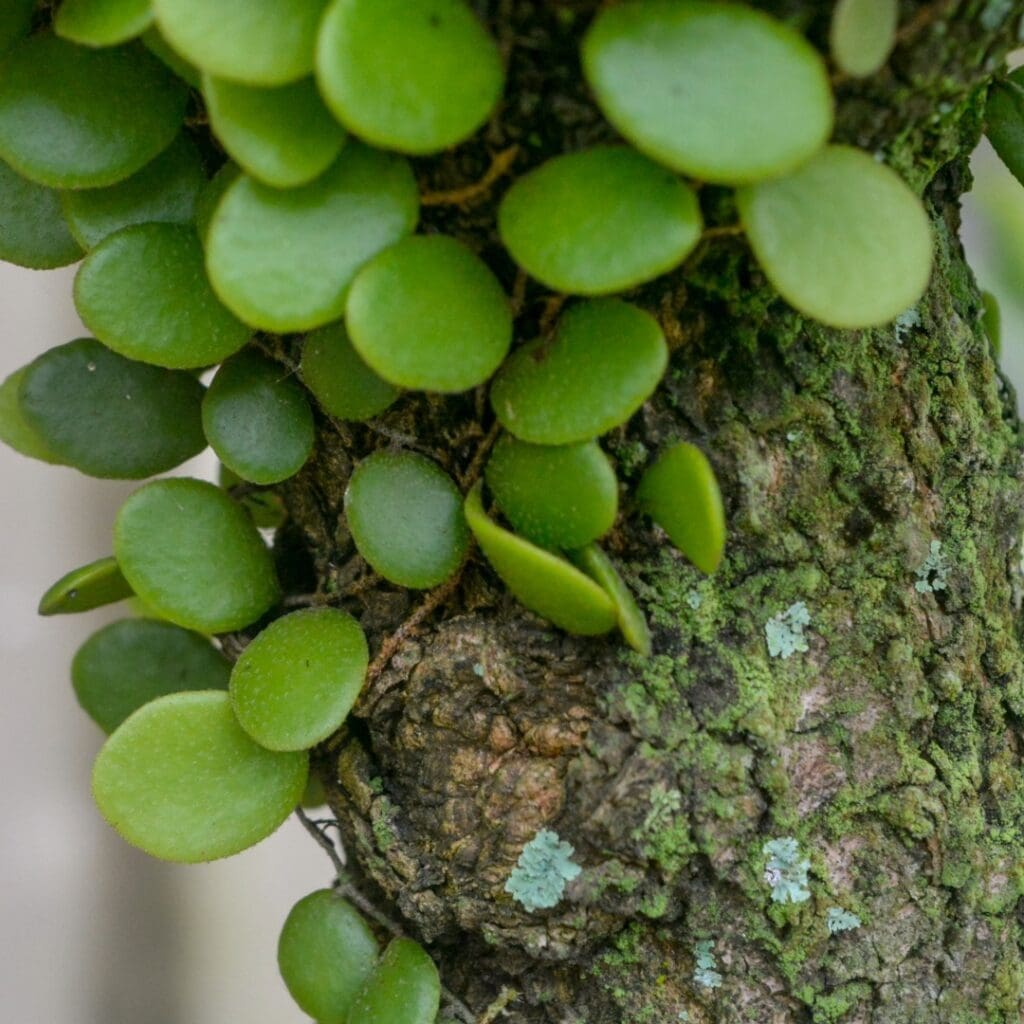
Trailing Jade Peperomia
Peperomia rotundifolia · also sold as Round-Leaf Peperomia
Growth: Moderate, trailing
Use: Ledges and planting pockets where it can spill over cork.
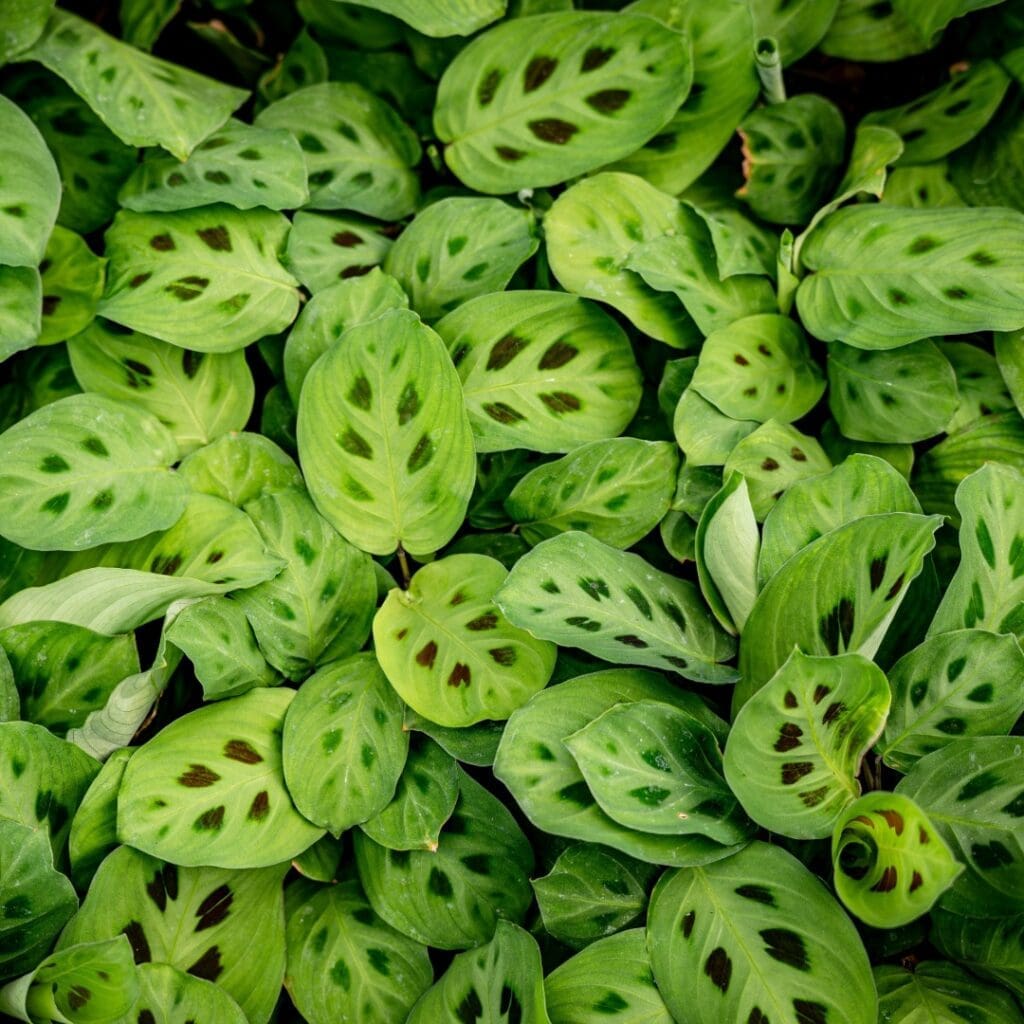
Prayer Plant
Maranta leuconeura
Growth: Moderate, low spreading
Use: Shaded lower and mid-level cover. Leaves fold upward at night.
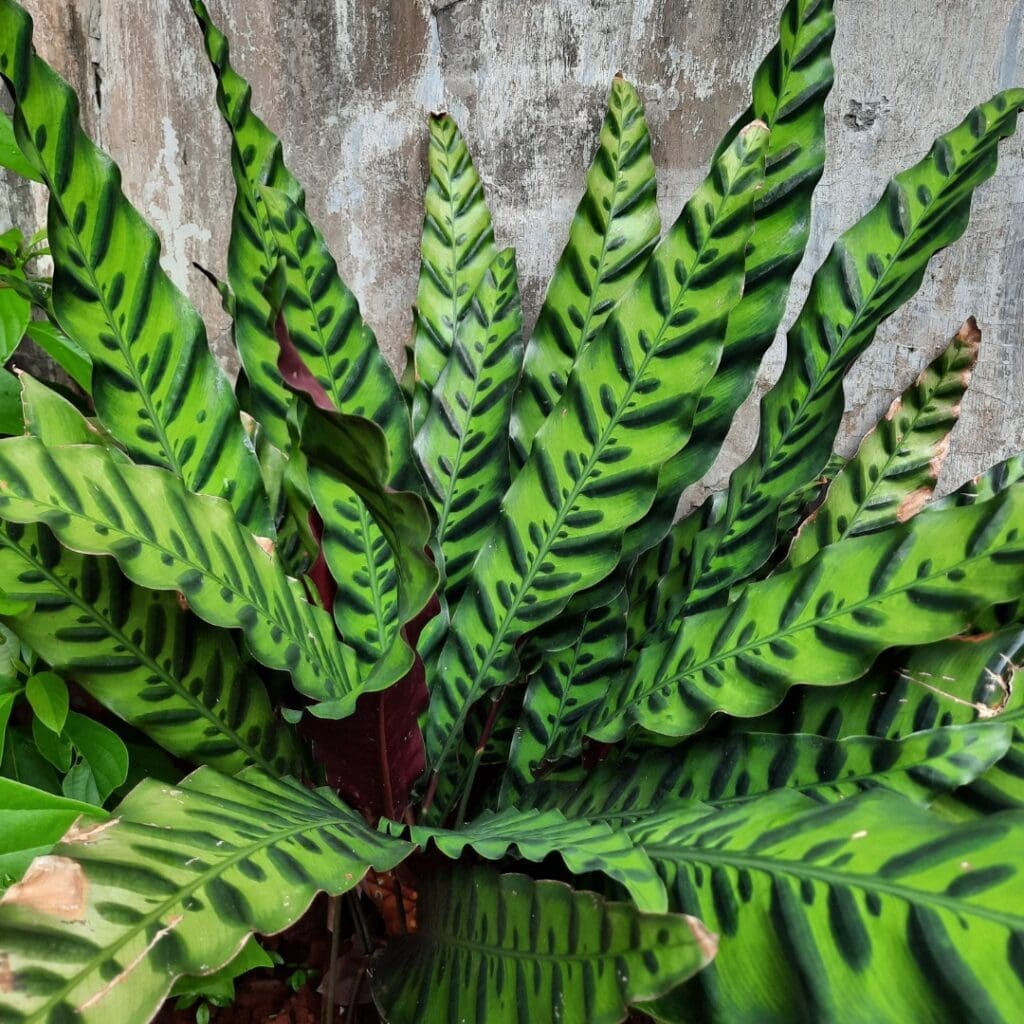
Rattlesnake Plant
Goeppertia insignis · formerly Calathea lancifolia
Growth: Moderate, upright
Use: Rear corners for broad-leaf cover. Prune older leaves to keep it compact.
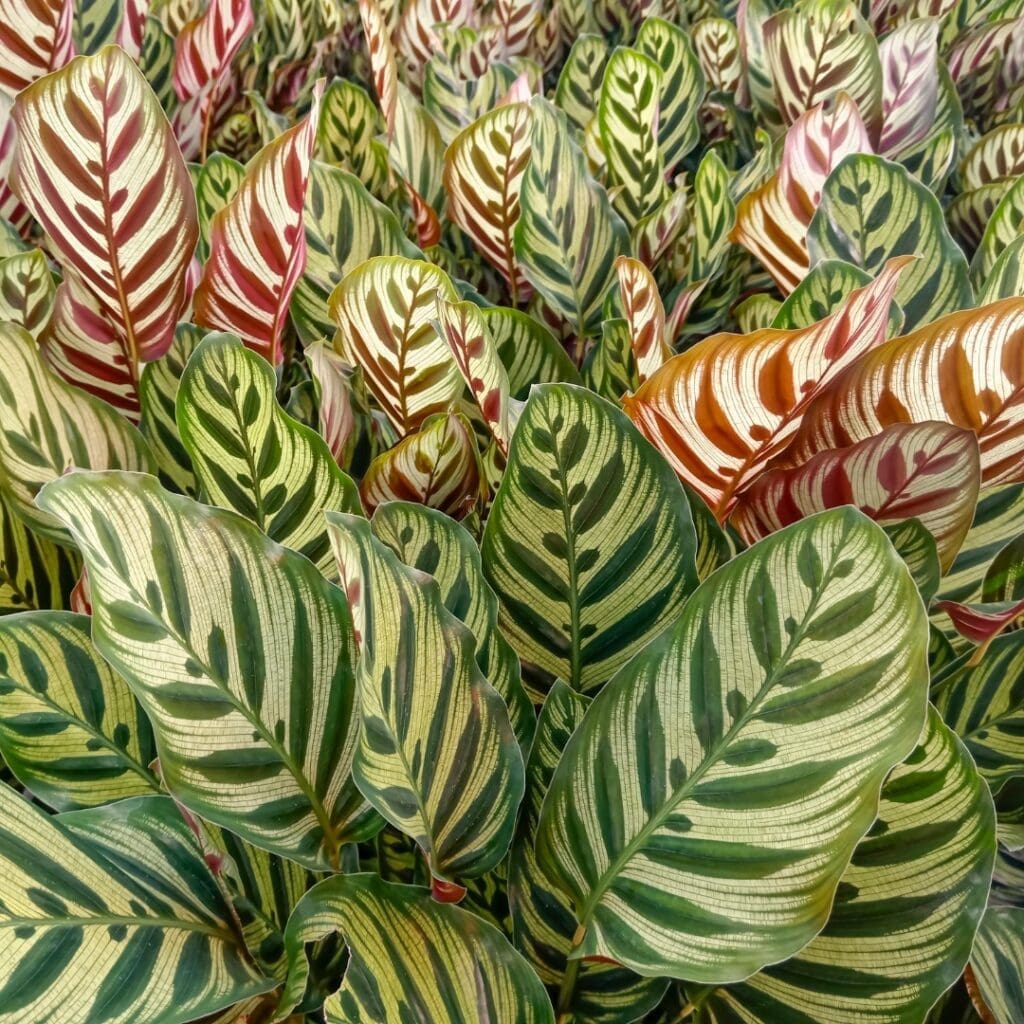
Peacock Plant
Goeppertia makoyana · formerly Calathea makoyana
Growth: Moderate, upright
Use: Mid-level cover beside humid hides. Dislikes dry air.
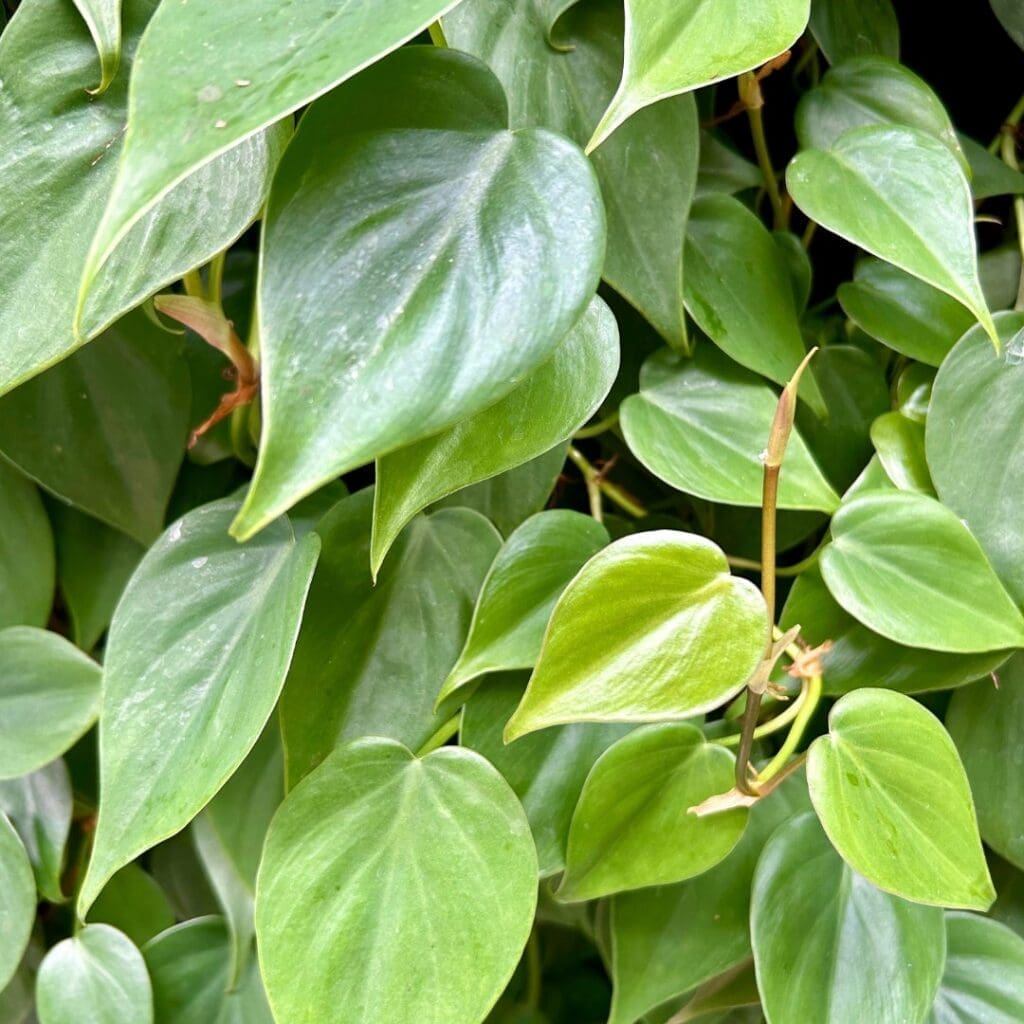
Small Philodendron species
Use with caution and regular pruning
Growth: Fast, will outgrow the space
Use: Only where you can prune it back. Left alone it blocks airflow and shades out slower plants.
Replicates in habitat
- Peperomia species
- Broad understory leaves
- Low and mid-level forest foliage
Use with
- Rear planting areas
- Around branch bases
- Beside humid hides
- Lower and mid-level cover zones
Keeper note
Broad-leaf plants can look impressive but may become too large or block airflow. Choose compact plants and prune regularly.
Climbing and Trailing Plants
Climbing and trailing plants are useful for connecting branches, backgrounds and planting areas. They help create the tangled vertical structure associated with humid forest habitat.
Good options include

Dragon Tail Plant
Epipremnum pinnatum · also sold as Centipede Tongavine
Growth: Fast, vigorous climber
Use: Cork backgrounds and branch networks. Needs a pruning plan from the start.
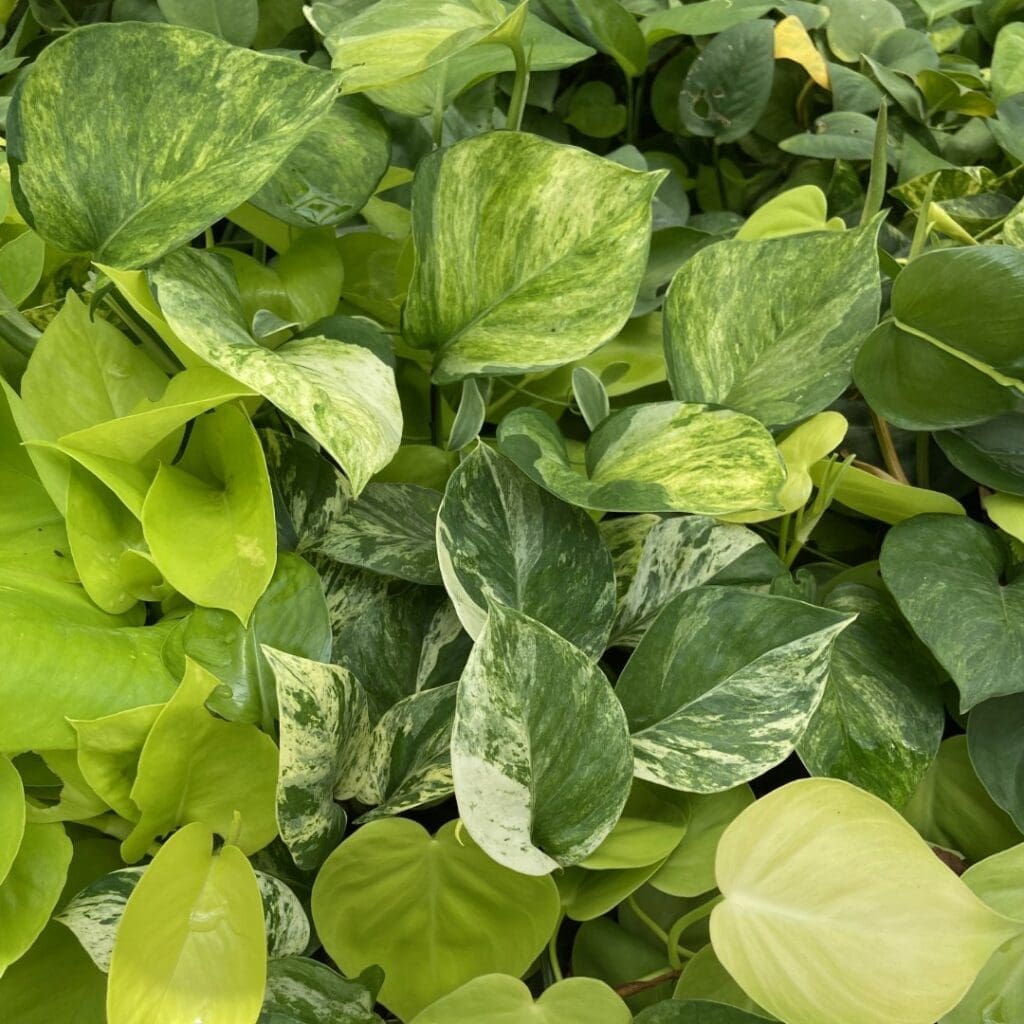
Devil’s Ivy / Golden Pothos
Epipremnum aureum
Growth: Very fast
Use: Rear and side walls. Will dominate the enclosure if left unpruned.
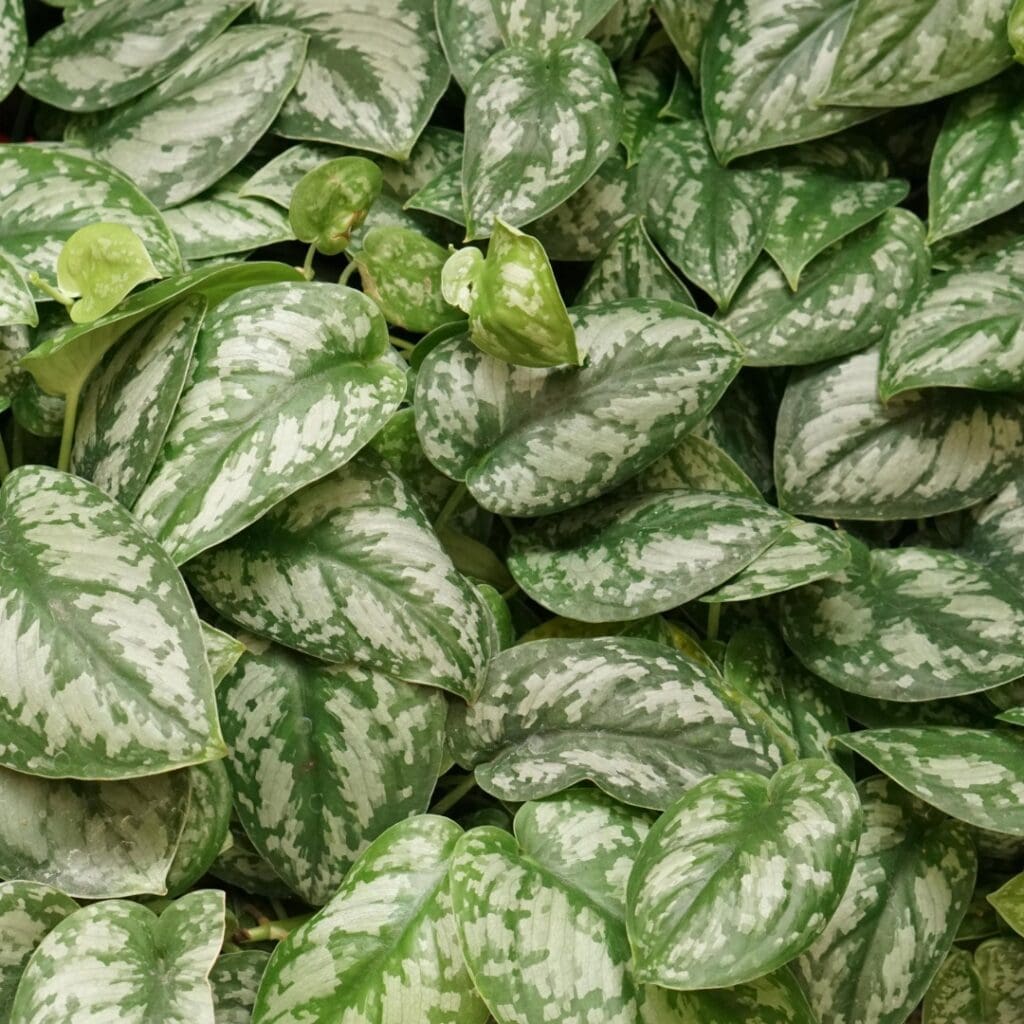
Satin Pothos
Scindapsus pictus · also sold as Silver Vine
Growth: Moderate to fast
Use: Trained up cork. The silver markings show well against dark bark.
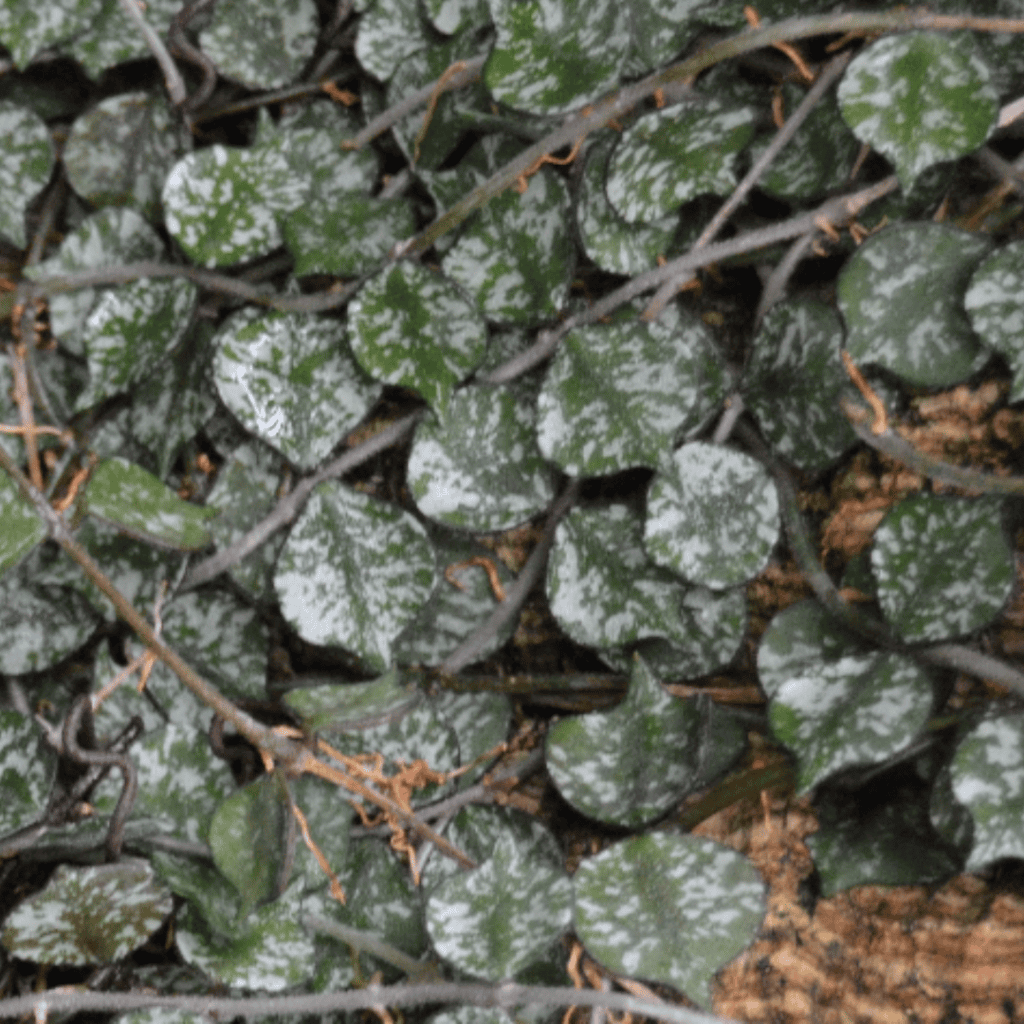
Small-Leaf Wax Plant
Hoya curtisii
Growth: Slow
Use: Elevated pockets and branch junctions. Keep it away from vigorous climbers.
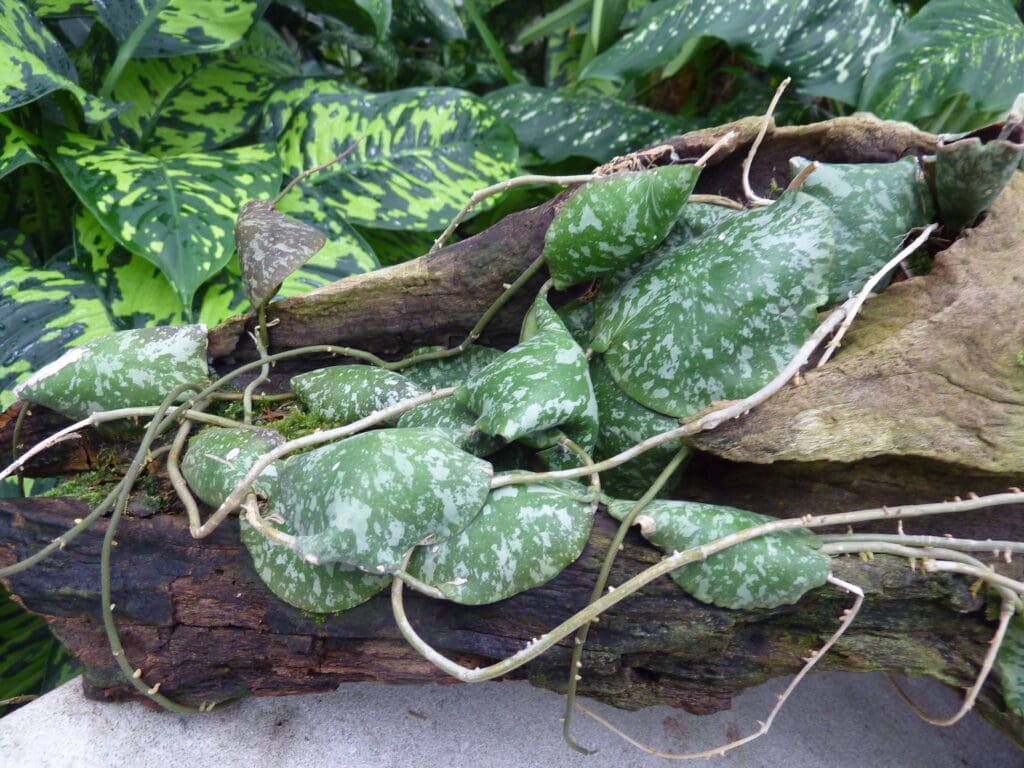
Shingling Hoya
Hoya imbricata
Growth: Slow, flattens against bark
Use: Mounted on cork where it can shingle upward. Needs surface contact to climb.
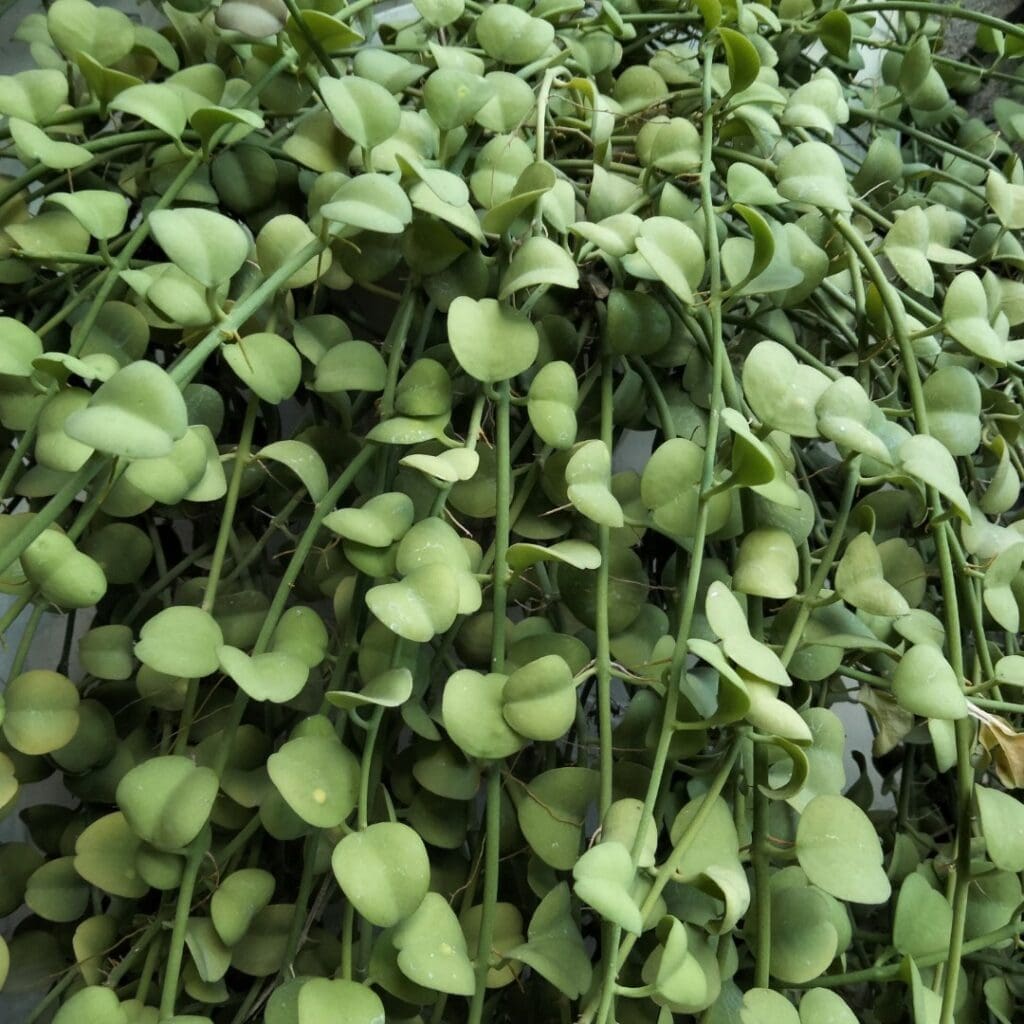
String of Nickels
Dischidia nummularia
Growth: Moderate, trailing
Use: Mounted high where stems can hang. Prefers airflow around the roots.

Creeping Fig
Ficus pumila
Growth: Fast, self-clinging
Use: Backgrounds only where you will prune. It sticks tight to surfaces.
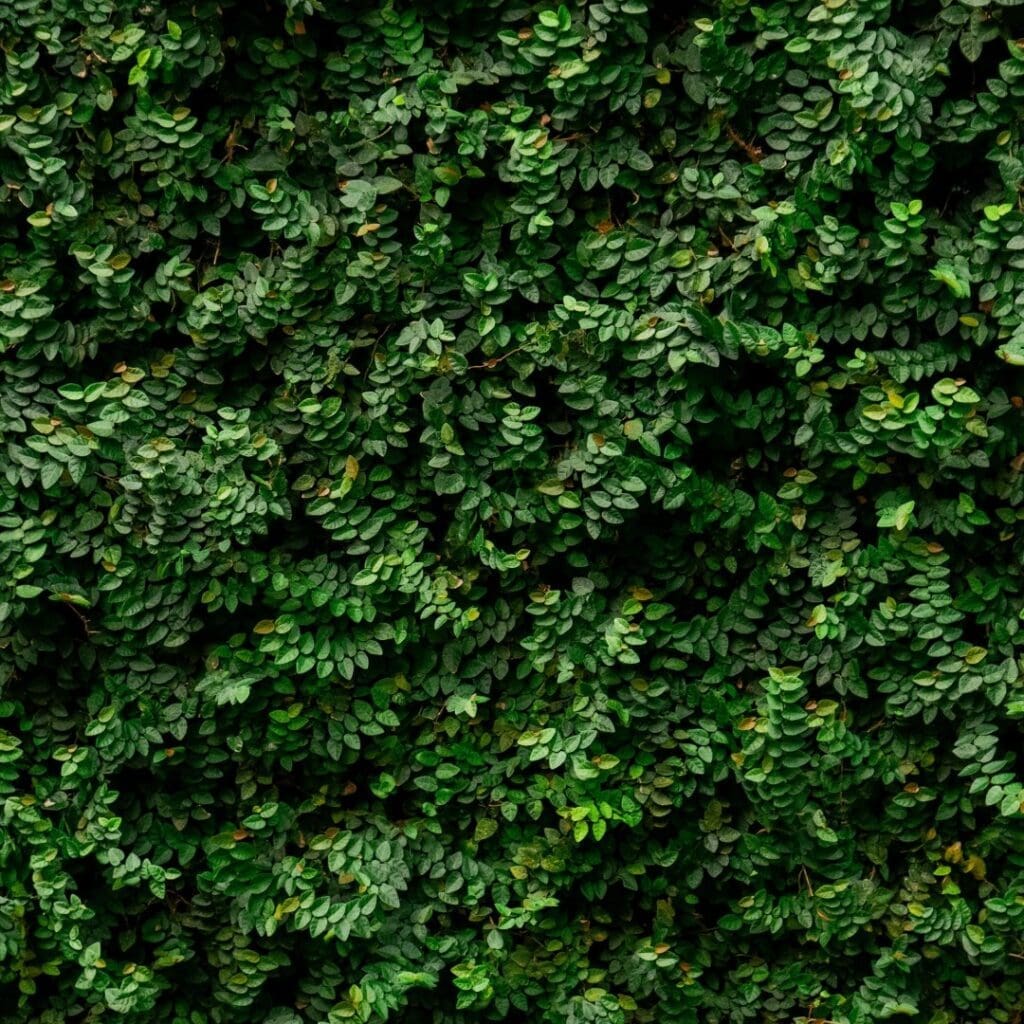
Miniature Creeping Fig
Ficus pumila ‘Minima’
Growth: Fast, smaller leaved
Use: A more manageable alternative to standard Creeping Fig.
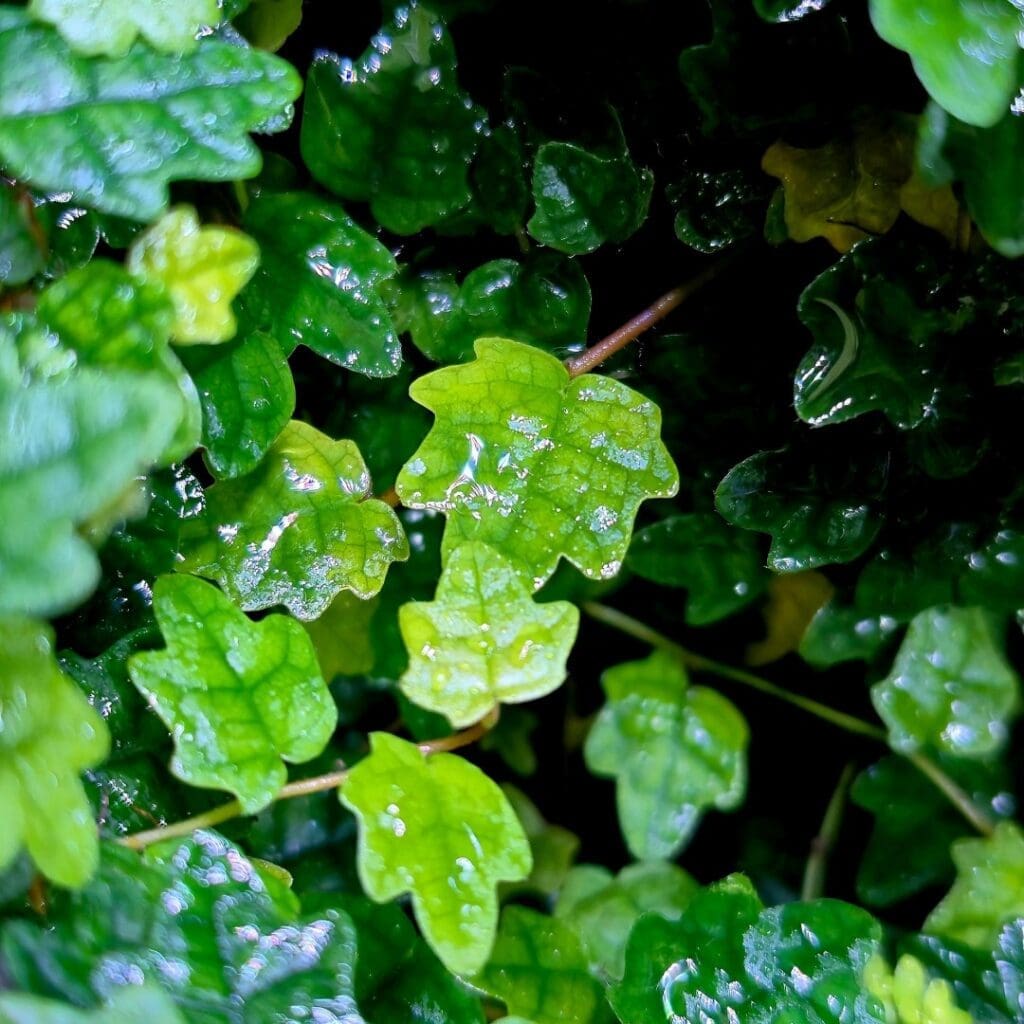
Oak Leaf Creeping Fig
Ficus pumila ‘Quercifolia’
Growth: Fast, small lobed leaves
Use: Backgrounds and branch bases. Still needs regular pruning.
Replicates in habitat
- Hoya species
- Epipremnum-like creepers
- Tapevine-style climbing growth
- Dense connecting vegetation
Use with
- Cork backgrounds
- Branch networks
- Elevated planting pockets
- Side and rear walls
Keeper note
Fast-growing plants can quickly dominate the enclosure. Use them with a plan and prune them before they outcompete slower-growing plants.
Epiphytic Plants
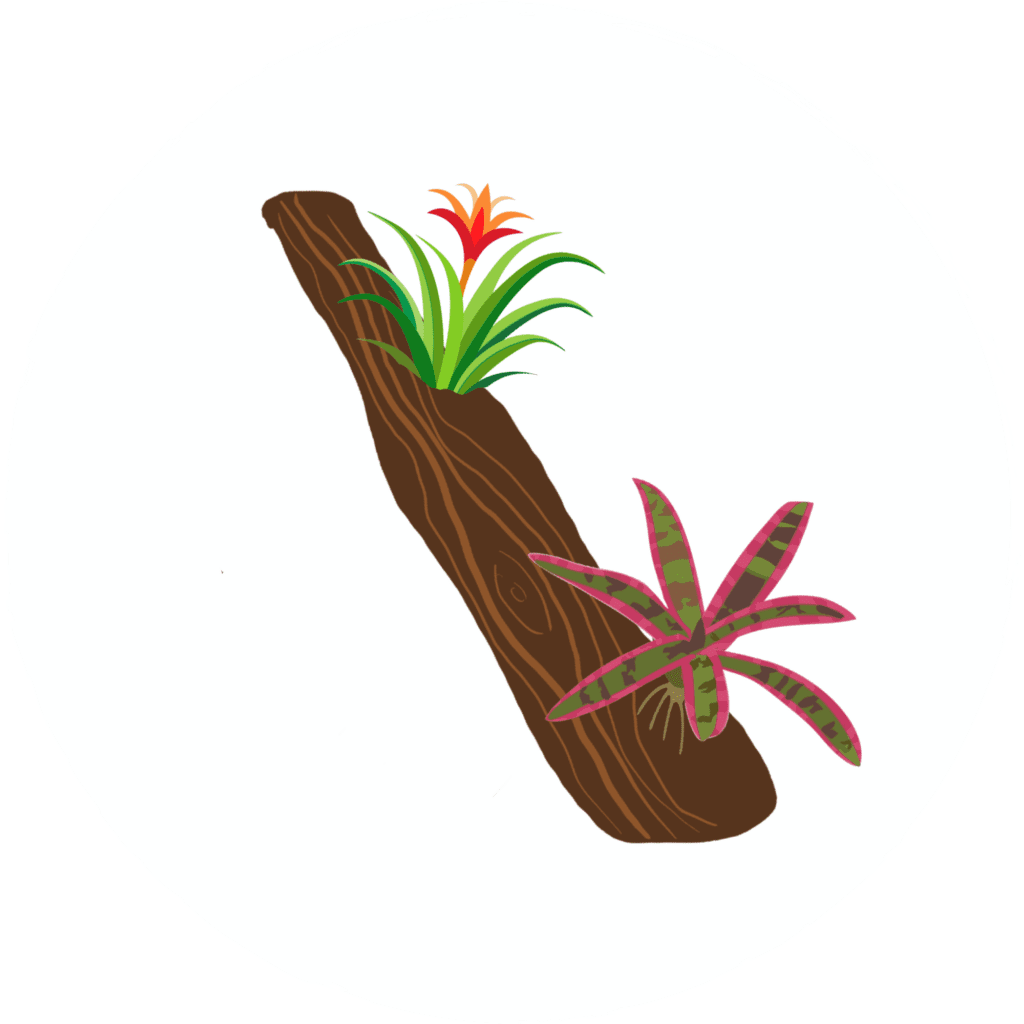
Epiphytic plants help make use of upper enclosure space. They can be mounted onto cork, branches or background panels to create elevated cover and natural humidity pockets.
Good options include
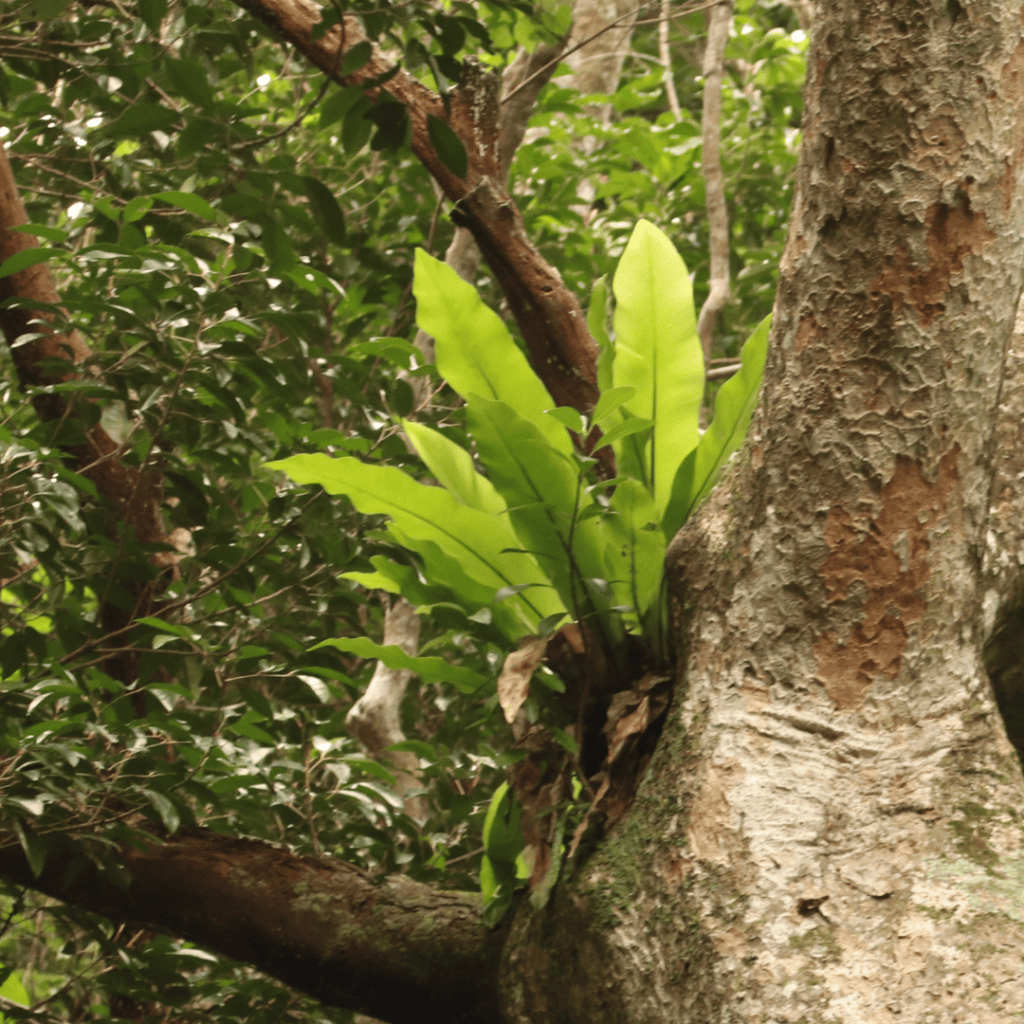
Bird’s Nest Fern
Asplenium nidus
Growth: Moderate, becomes large
Use: Mounted or in a cork pocket. Start with small plants and expect to replace them as they grow.
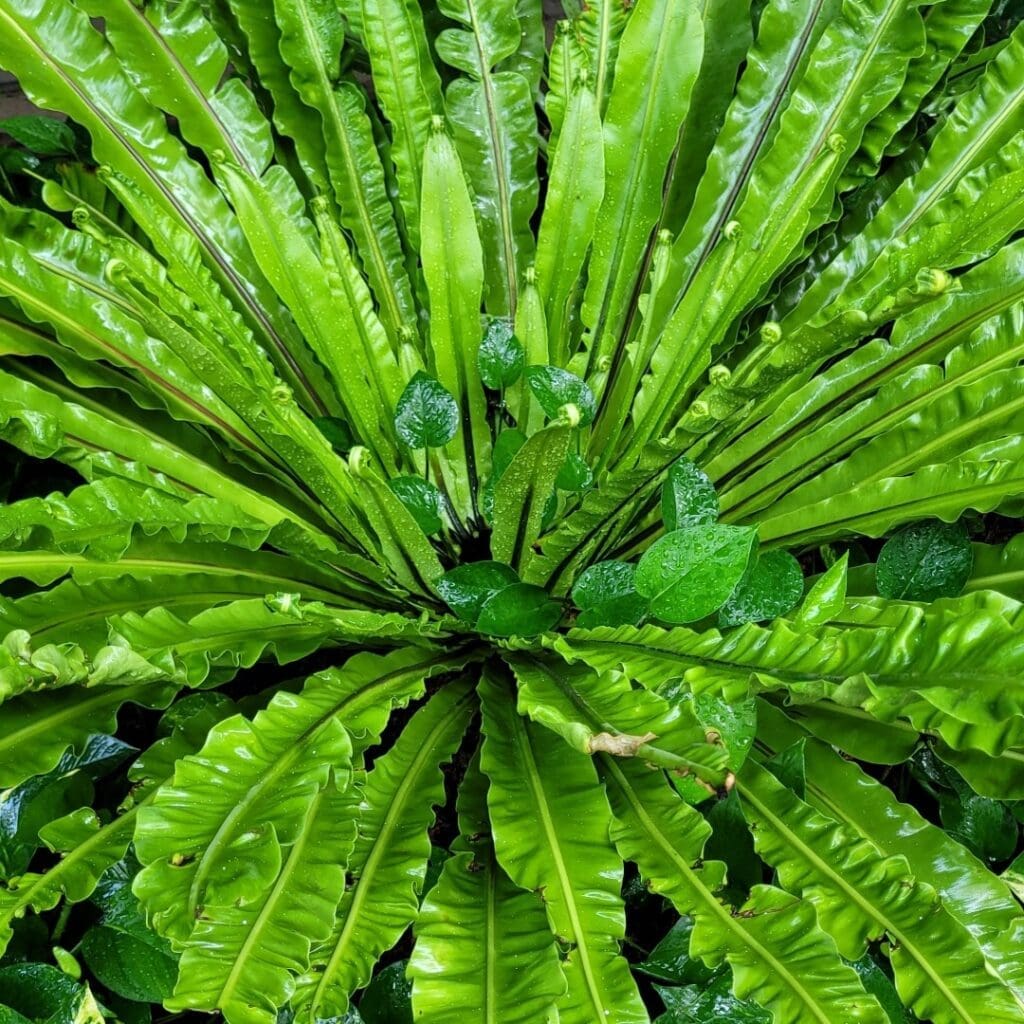
Crispy Wave Fern
Asplenium antiquum ‘Crispy Wave’
Growth: Slow to moderate
Use: Branch junctions and cork planters. The rippled fronds hold humidity.
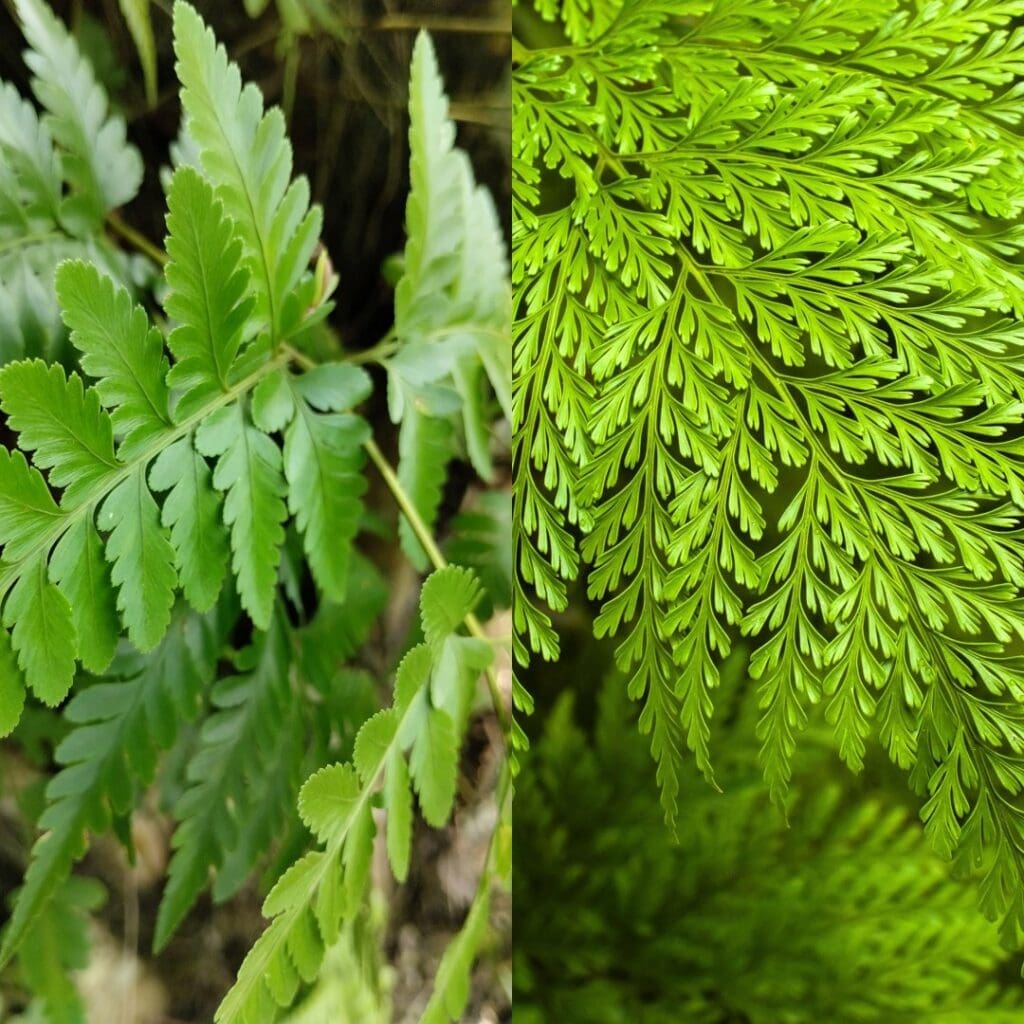
Rabbit’s Foot and Bear’s Paw Ferns
Davallia fejeensis and Humata tyermannii
Growth: Moderate, creeping rhizomes
Use: Mounted on cork where the furry rhizomes can run across the bark. The two are closely similar and are often sold interchangeably.
Small-Leaf Wax Plant
Hoya curtisii
Growth: Slow
Use: Mounted pockets in the brighter upper areas.
Shingling Hoya
Hoya imbricata
Growth: Slow
Use: Flat cork surfaces it can climb against.
String of Nickels
Dischidia nummularia
Growth: Moderate, trailing
Use: High mounts where the stems can hang freely.
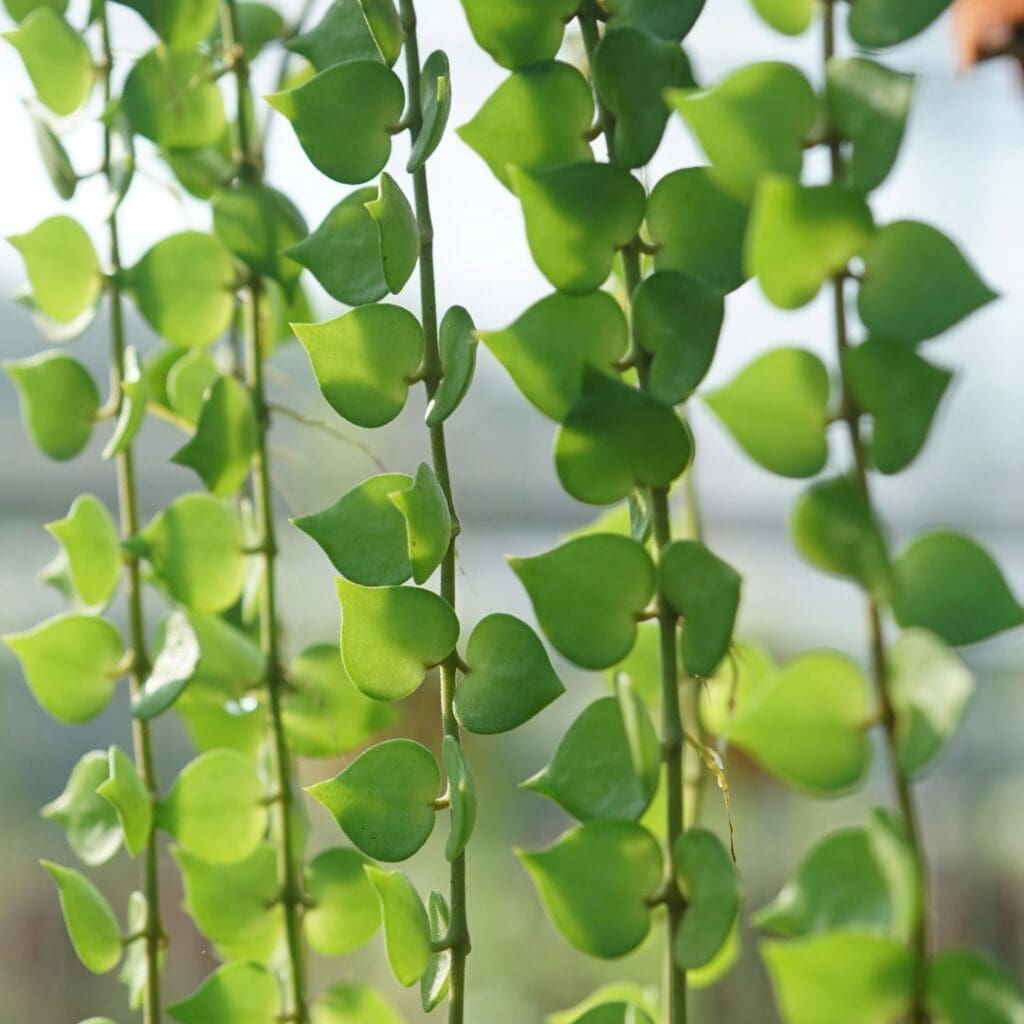
Million Hearts Plant
Dischidia ruscifolia
Growth: Moderate, dense trailing
Use: Upper planting pockets and branch junctions.
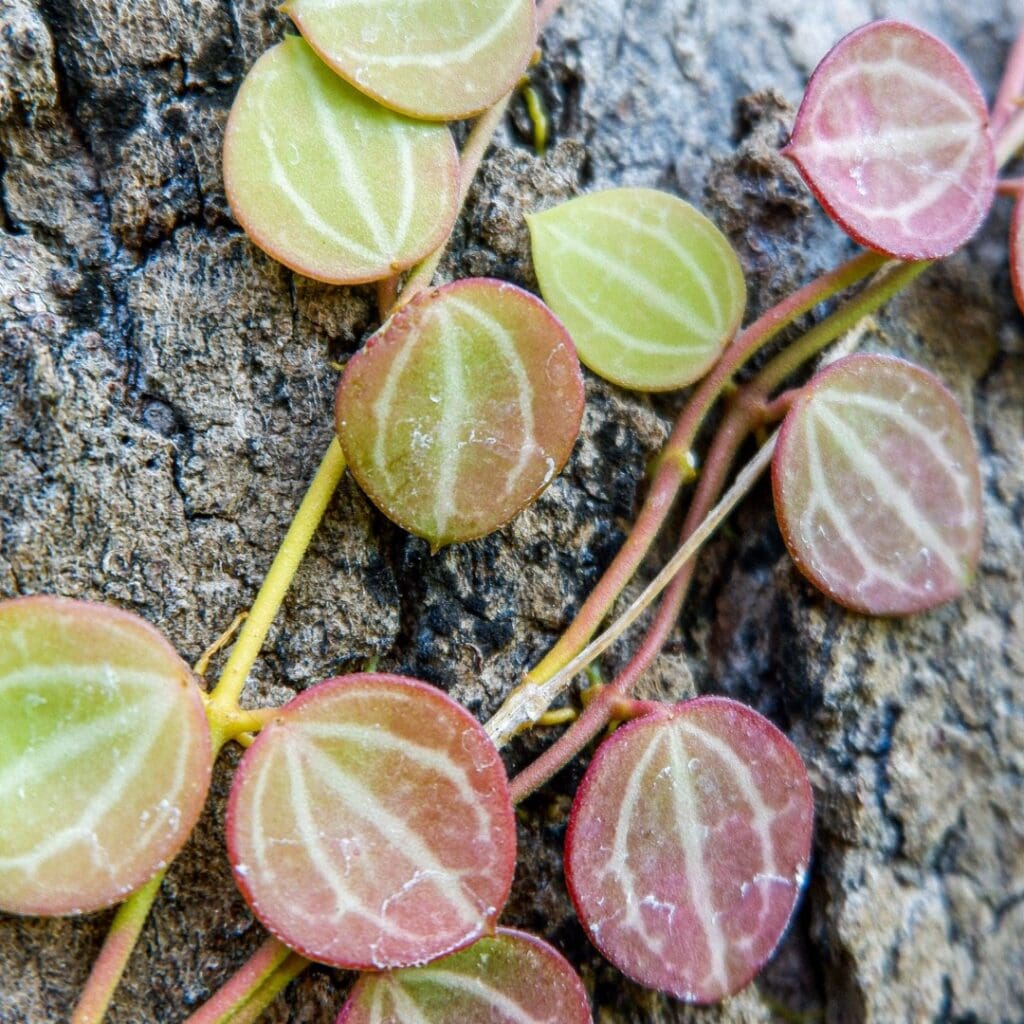
Watermelon Dischidia
Dischidia ovata
Growth: Slow to moderate
Use: Mounted on bark in bright, well-ventilated upper areas.
Replicates in habitat
- Bird’s Nest Fern, Asplenium nidus
- Basket Fern, Drynaria rigidula
- Epiphytic fern pockets
- Mounted Hoya growth
Use with
- Cork-mounted planters
- Branch junctions
- Background planting pockets
- Higher shaded areas
Keeper note
Do not create wet, stagnant pockets. Epiphytes should have humidity, but they should not sit in constantly saturated conditions.

Ferns
Ferns are useful for shaded, humid areas and help give a New Caledonian-style forest feel.
Good options include
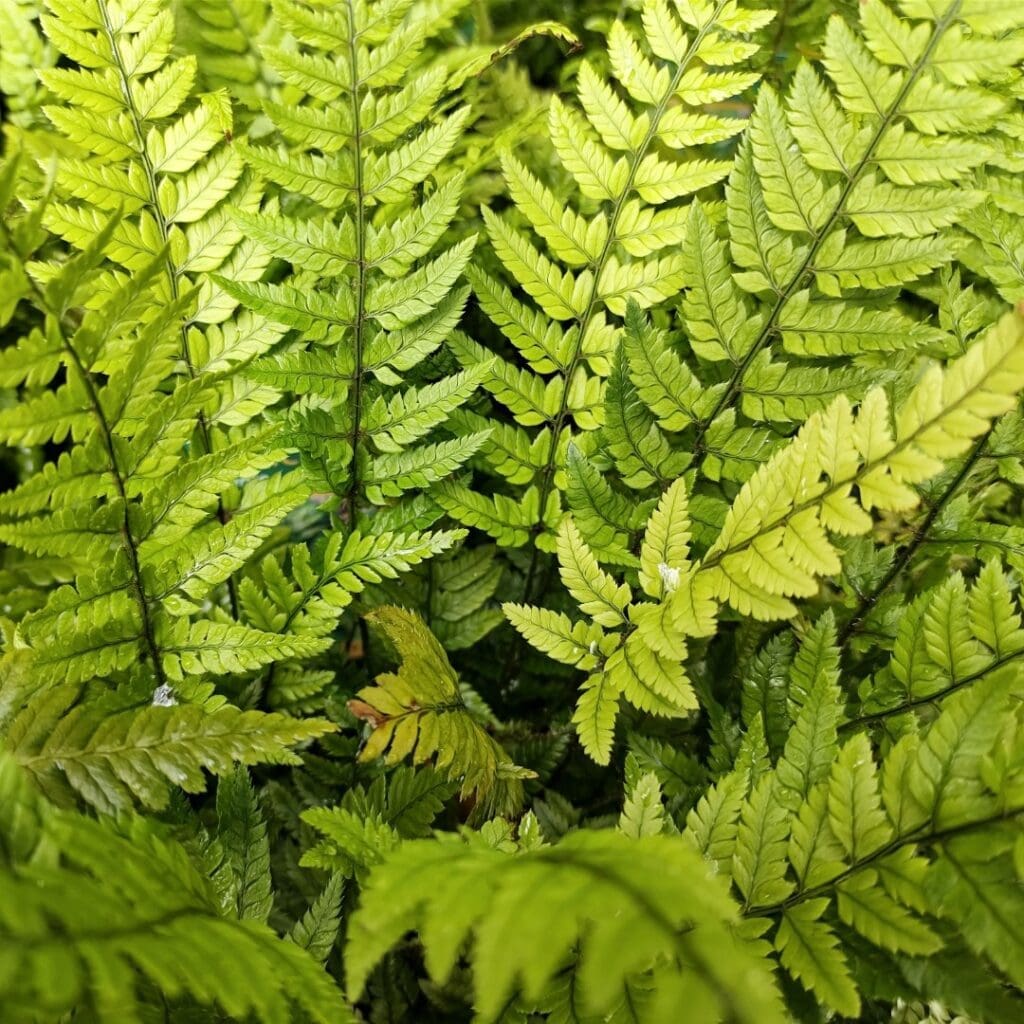
Korean Rock Fern
Polystichum tsus-simense
Growth: Slow to moderate, compact
Use: Shaded rear corners and cork bases. One of the more forgiving terrarium ferns.
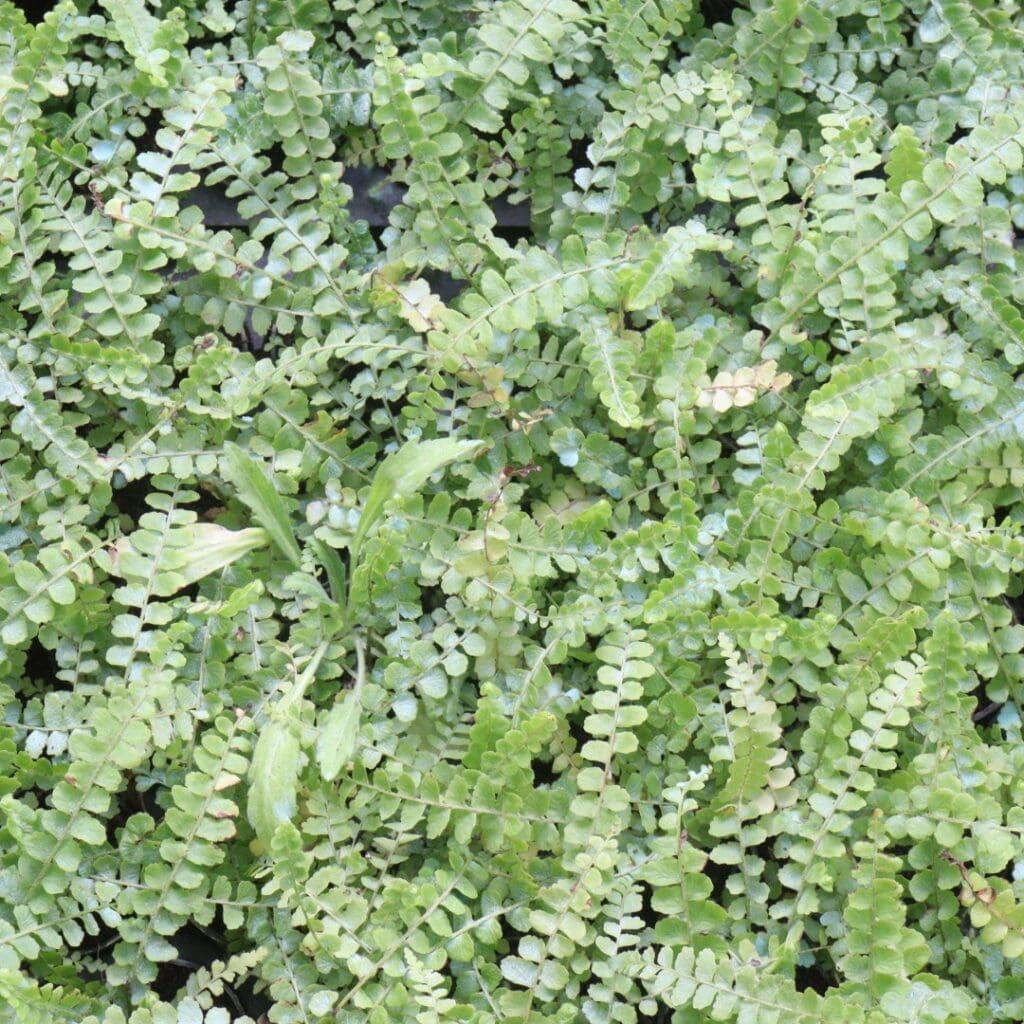
Lemon Button Fern
Nephrolepis cordifolia ‘Duffii’
Growth: Moderate, compact upright
Use: Leaf litter zones and cork bases.
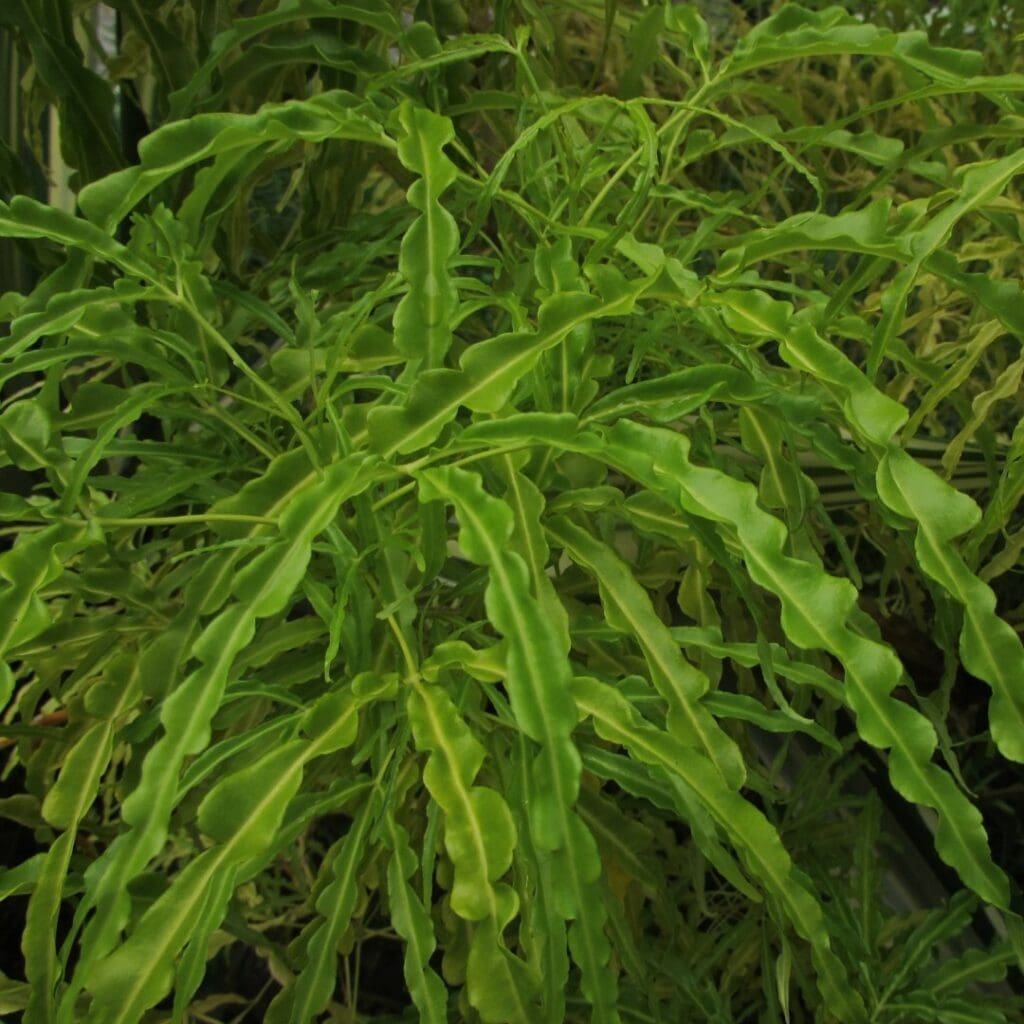
Cretan Brake Fern
Pteris cretica
Growth: Moderate
Use: Background planting and shaded corners. Needs drainage as well as humidity.
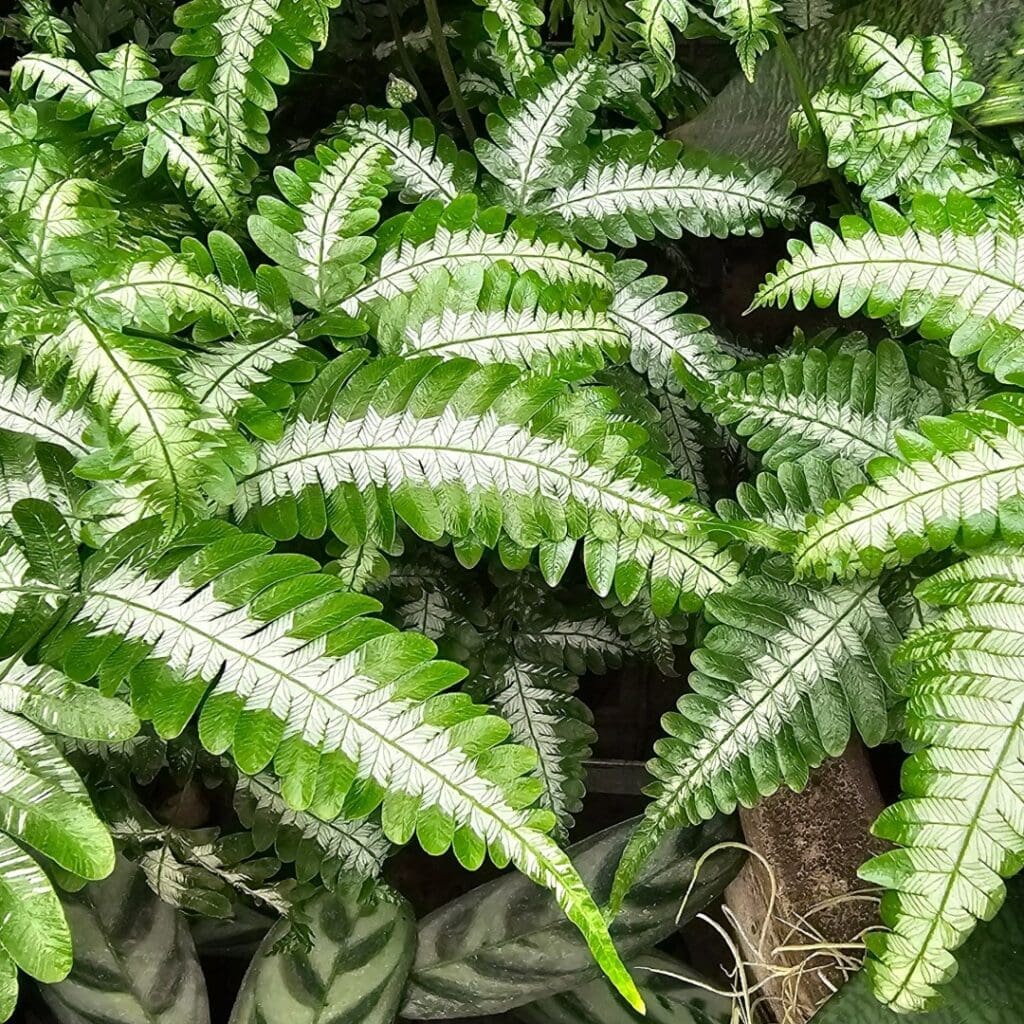
Silver Lace Fern
Pteris ensiformis · also sold as Variegated Brake Fern
Growth: Moderate
Use: Shaded areas where the silver variegation catches the light.
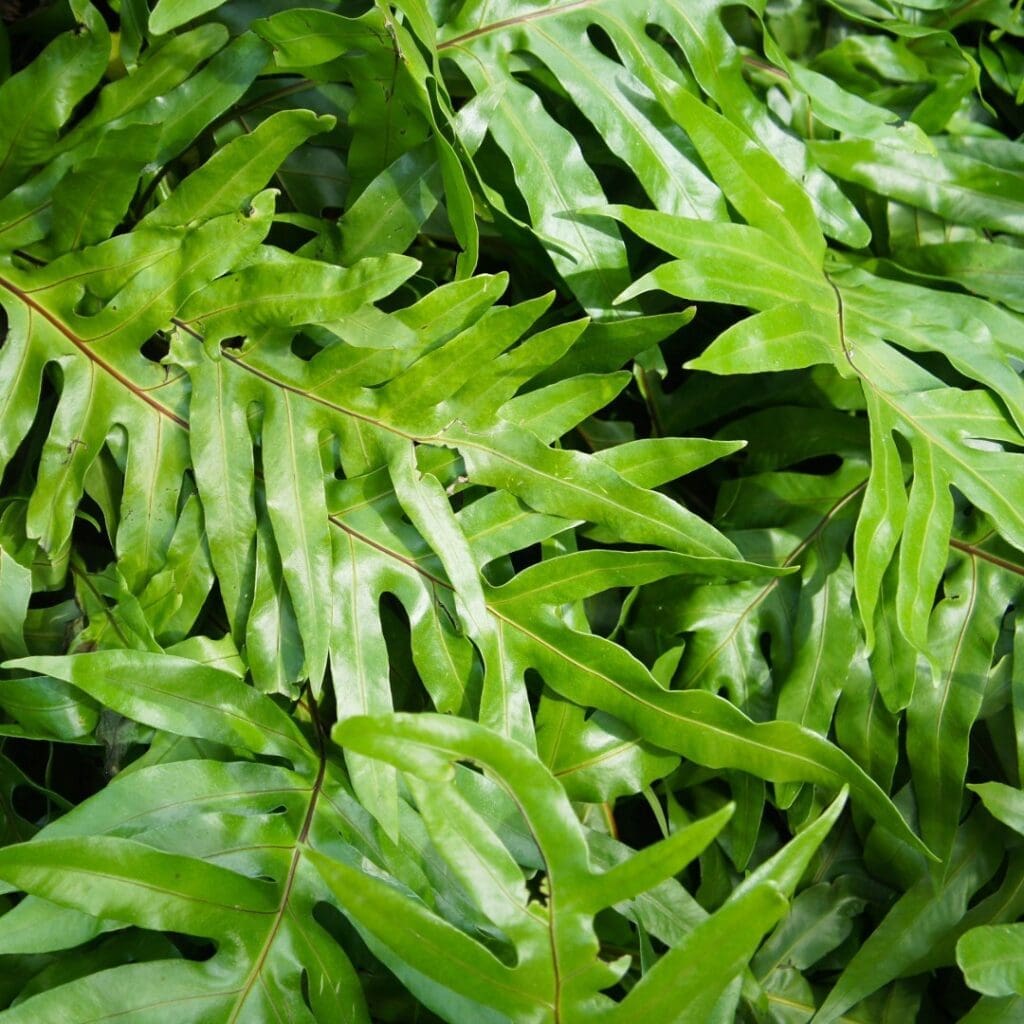
Kangaroo Paw Fern
Microsorum diversifolium
Growth: Moderate, creeping rhizomes
Use: Across cork and leaf litter. Can be grown mounted or planted.
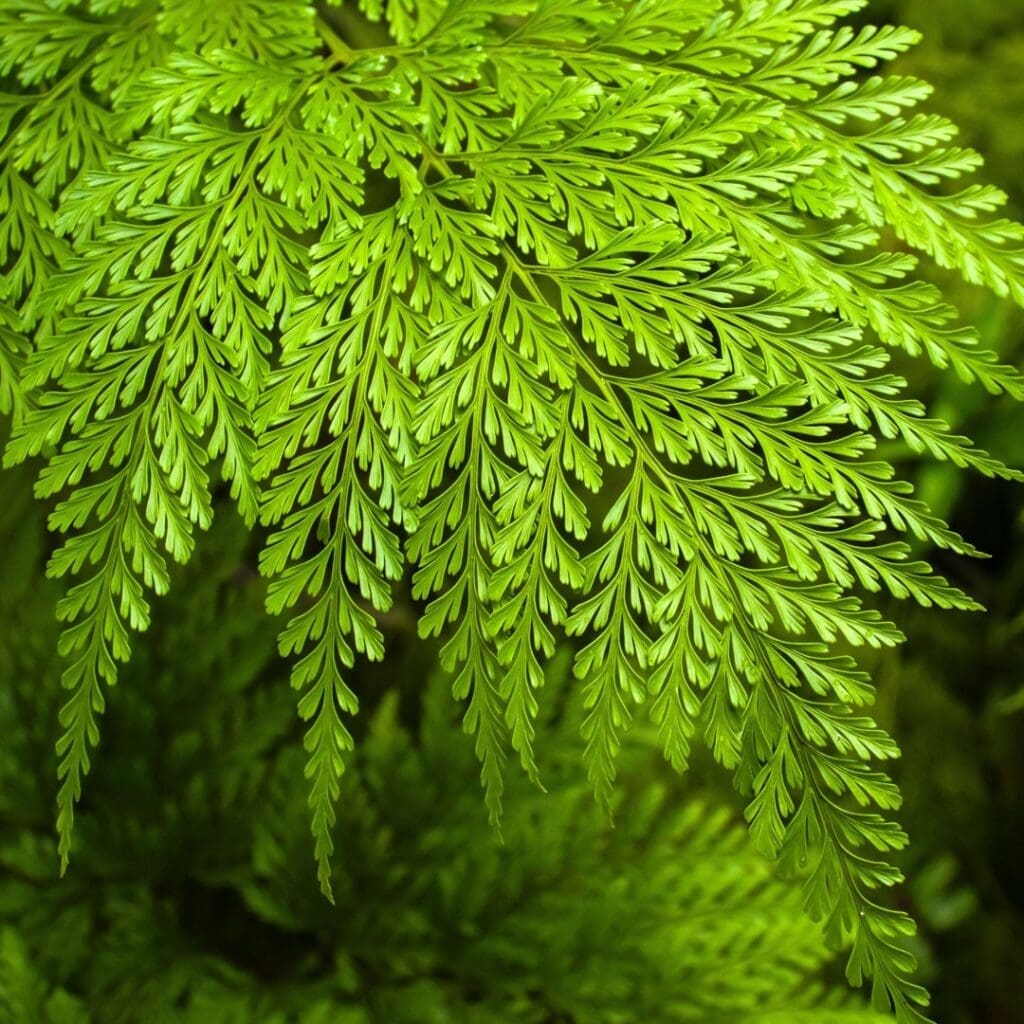
Rabbit’s Foot Fern
Davallia fejeensis
Growth: Moderate, creeping
Use: Mounted or at cork bases. Rhizomes run over the surface rather than down into it.
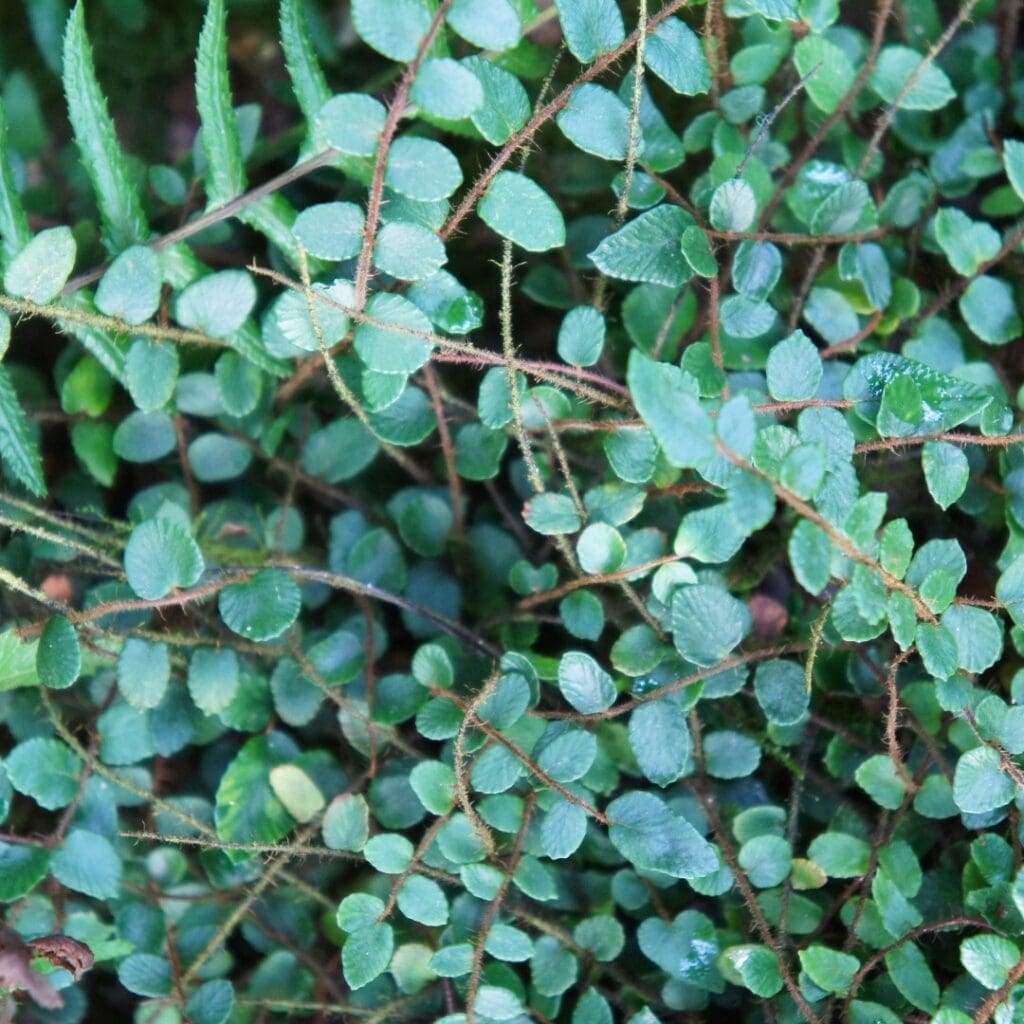
Button Fern
Pellaea rotundifolia
Growth: Slow, compact
Use: Cork bases and drier shaded pockets. Less tolerant of constant saturation.
Replicates in habitat
- Monarch’s Fern, Microsorum scolopendria
- Musk Fern, Microsorum grossum
- Ground ferns
- Climbing fern texture
Use with
- Shaded rear corners
- Cork bases
- Humid hides
- Background planting
- Leaf litter zones
Keeper note
Ferns need moisture and humidity, but they also need airflow and drainage. A fern that is constantly wet at the roots may fail.
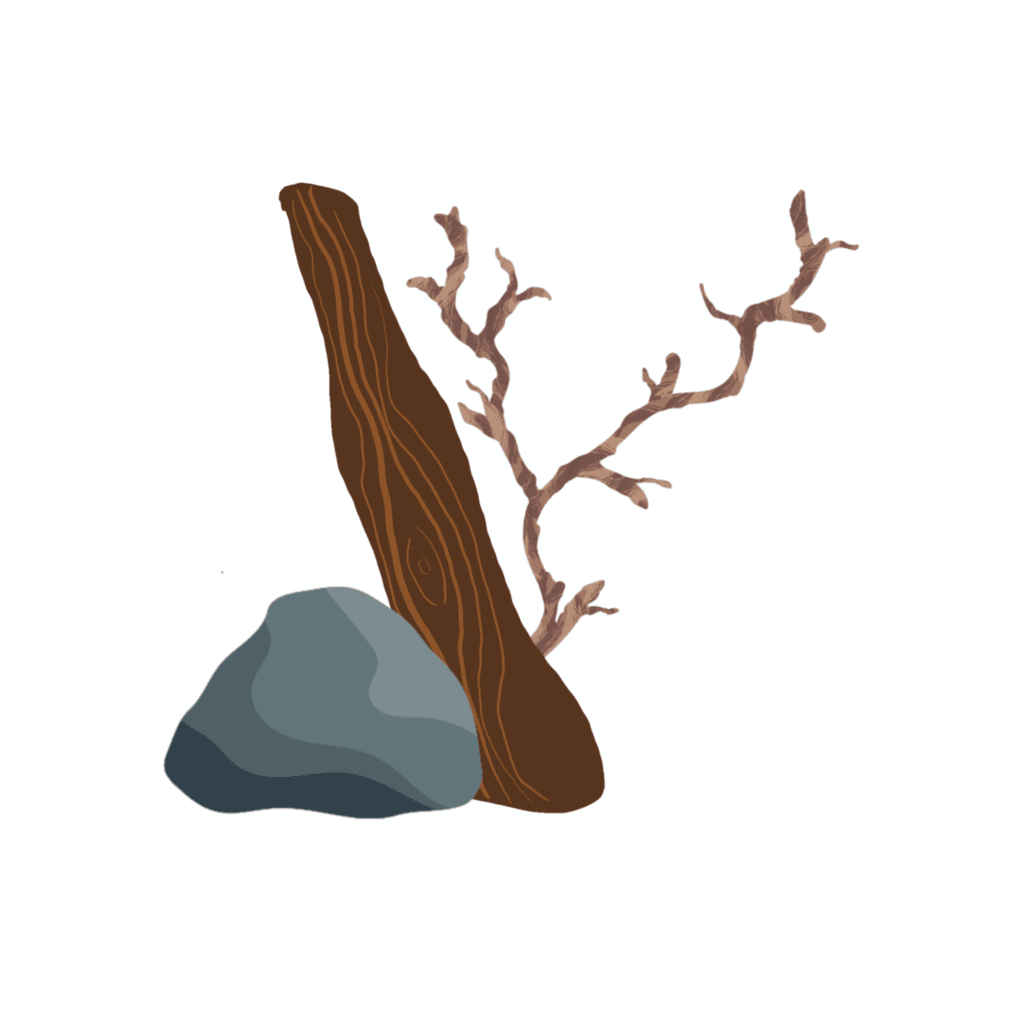
Hardscape as Plant Support
Plants alone cannot create a functional crested gecko enclosure. Hardscape should create the main structure, with plants used to soften and naturalise it.
Good options include
- Thin natural branches
- Cork bark backgrounds
- Cork branches
- Grapevine
- Java wood
- Natural liana
- Raised feeding ledges
- Cork-mounted planting pockets
Replicates in habitat
- Tree trunks
- Thin peripheral branches
- Bark texture
- Epiphyte attachment points
- Elevated routes through habitat
Keeper note
Avoid relying too heavily on bulky cork tubes or large flat surfaces. Crested geckos benefit from thin branches and climbing routes that fill the enclosure.

Plants to Use With Caution
Some plants are popular but need careful management.
Use caution with
- Creeping Fig, Ficus pumila
- Devil’s Ivy / Golden Pothos, Epipremnum aureum
- Larger Bird’s Nest Ferns, Asplenium nidus
- Larger Philodendron species
- Larger Calathea or Goeppertia species
- Plants with irritating sap
- Plants with sharp or stiff leaf edges
These plants may still be useful, but only if they are placed carefully and maintained properly.

Plants to Avoid as General Recommendations
Some plants observed in wild habitat should not be recommended as general enclosure plants.
Avoid recommending
- Yellow Sage / Lantana, Lantana camara
- Painted Leaf / Painted Spurge, Euphorbia cyathophora
- Wild fruiting tree species that become too large
- Plants with known irritating sap
- Plants that may have been treated with pesticides
- Any plant that cannot be confidently identified
The goal is to learn from the habitat, not copy every wild plant directly.
Final Advice
Choose plants by function first.
A good crested gecko enclosure should have
- Tall usable space
- Thin climbing branches
- Cover at different levels
- Leaf litter
- Humid but ventilated areas
- Epiphytic planting where possible
- Clear feeding access
- Space for plant growth
- A functioning clean-up crew if bioactive
The best planted enclosures are not the most crowded. They are the ones that remain stable, usable and manageable over time.