
Crested geckos are not simply animals that live among “tropical plants”. They are associated with the complex, humid forest environments of New Caledonia, where vegetation grows in layers and the animal’s usable space is built from branches, bark, vines, ferns, epiphytes and understory plants.
This page brings together plant and habitat observations from the Blue River Diets New Caledonia expedition. Its purpose is to give keepers a clearer insight into the natural environment of crested geckos and the type of plant structures recorded in the wild.
The aim is not to suggest that every plant found in the wild should be planted in captivity. Many wild plants are too large, too specialist, unavailable, or unsuitable for home enclosures. Instead, this guide explains what was observed and what those observations tell us about crested gecko habitat.
If you are looking for plants that can be used in a crested gecko enclosure, visit our
In this guide
Why This Habitat Matters
New Caledonia is one of the most distinctive island groups in the reptile keeping world. Its forests are not just generic tropical environments. They contain layered vegetation, thin branching structure, epiphytes, ferns, vines, fruiting plants and complex humid microhabitats.
For crested geckos, this matters because the enclosure should be built around how the animal uses space.
A strong naturalistic enclosure should provide:
- Height
- Thin climbing branches
- Dense but usable cover
- Humid resting areas
- Bark and branch texture
- Epiphytic planting
- Ground and mid-level vegetation
- Leaf litter
- Feeding access
- Space for the animal to move without being forced into the open
The following sections look at the plant groups recorded during the expedition and explain how each layer can influence captive enclosure design.
Ground Cover and Mid-Level Plants
Plants Observed During our Expeditions
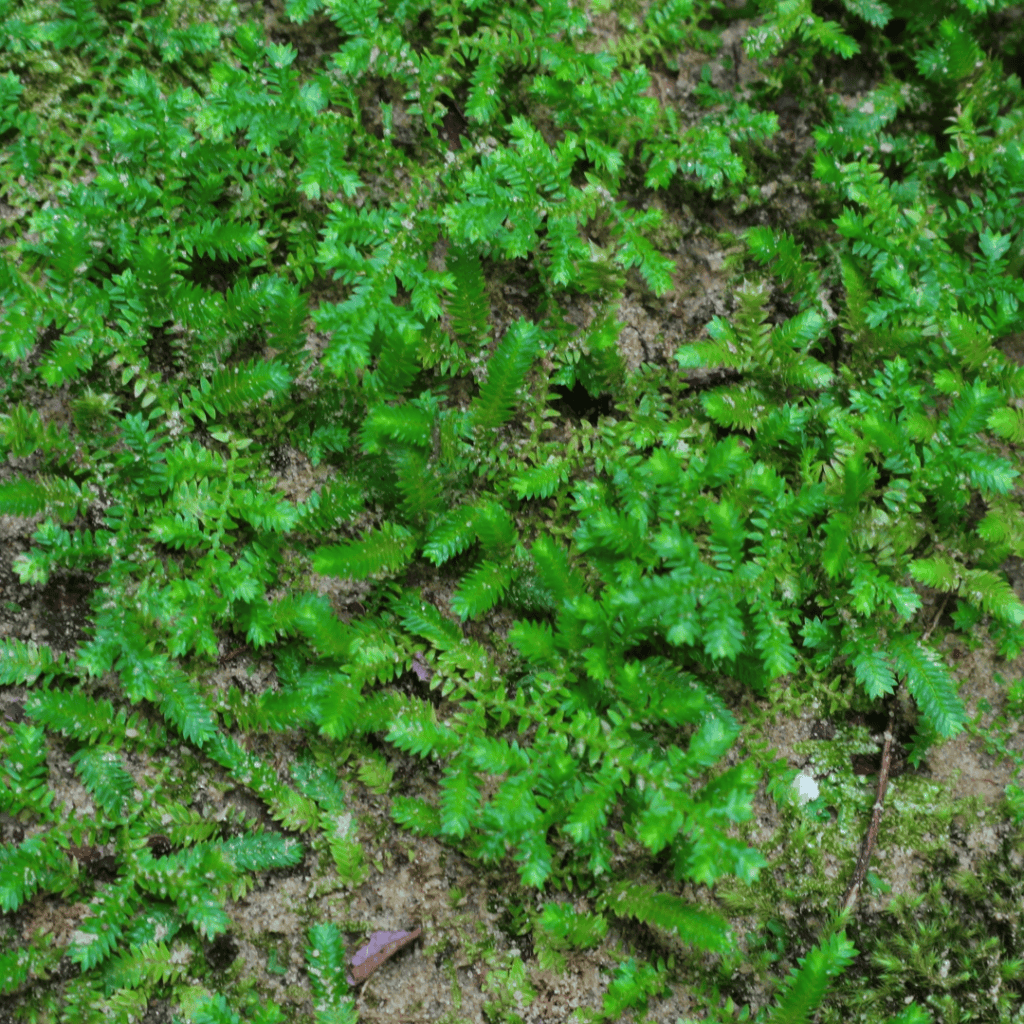
Spike Moss
Selaginella species
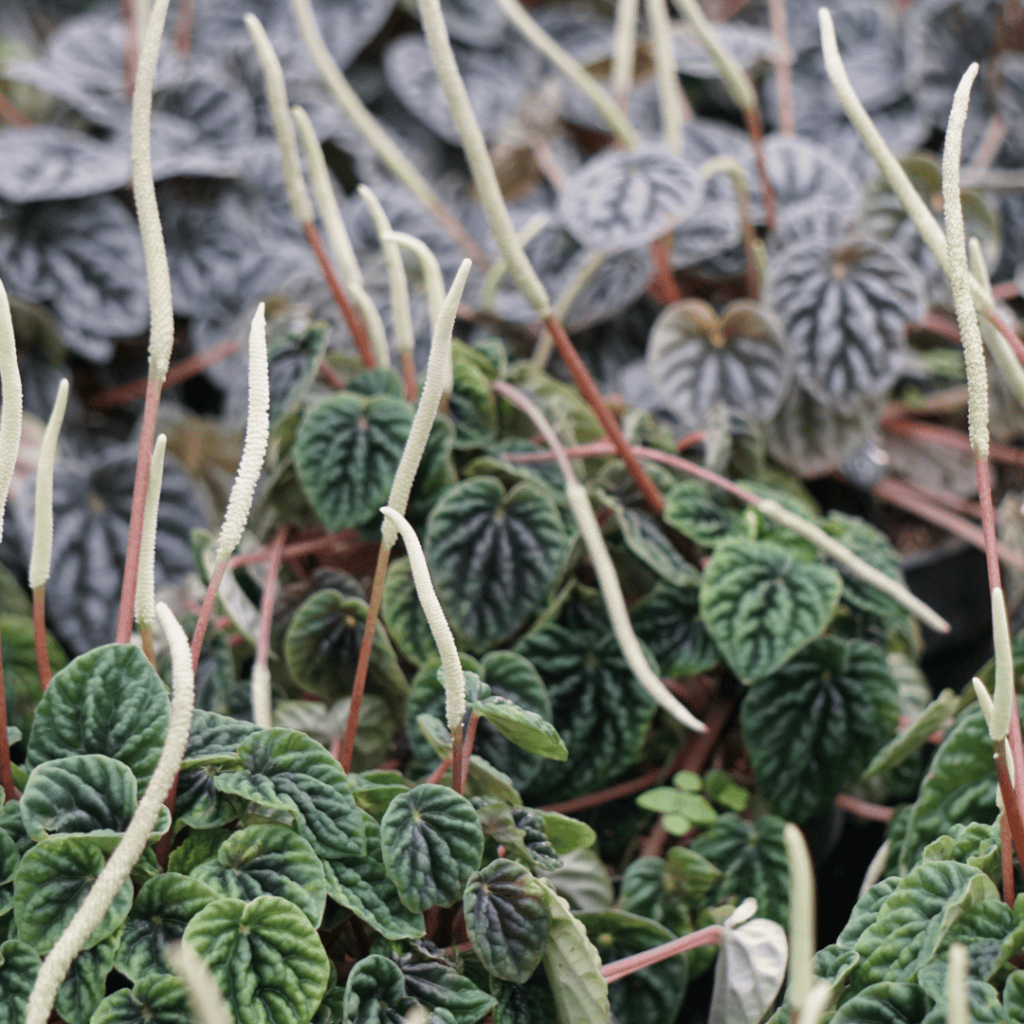
Radiator Plants
Peperomia species
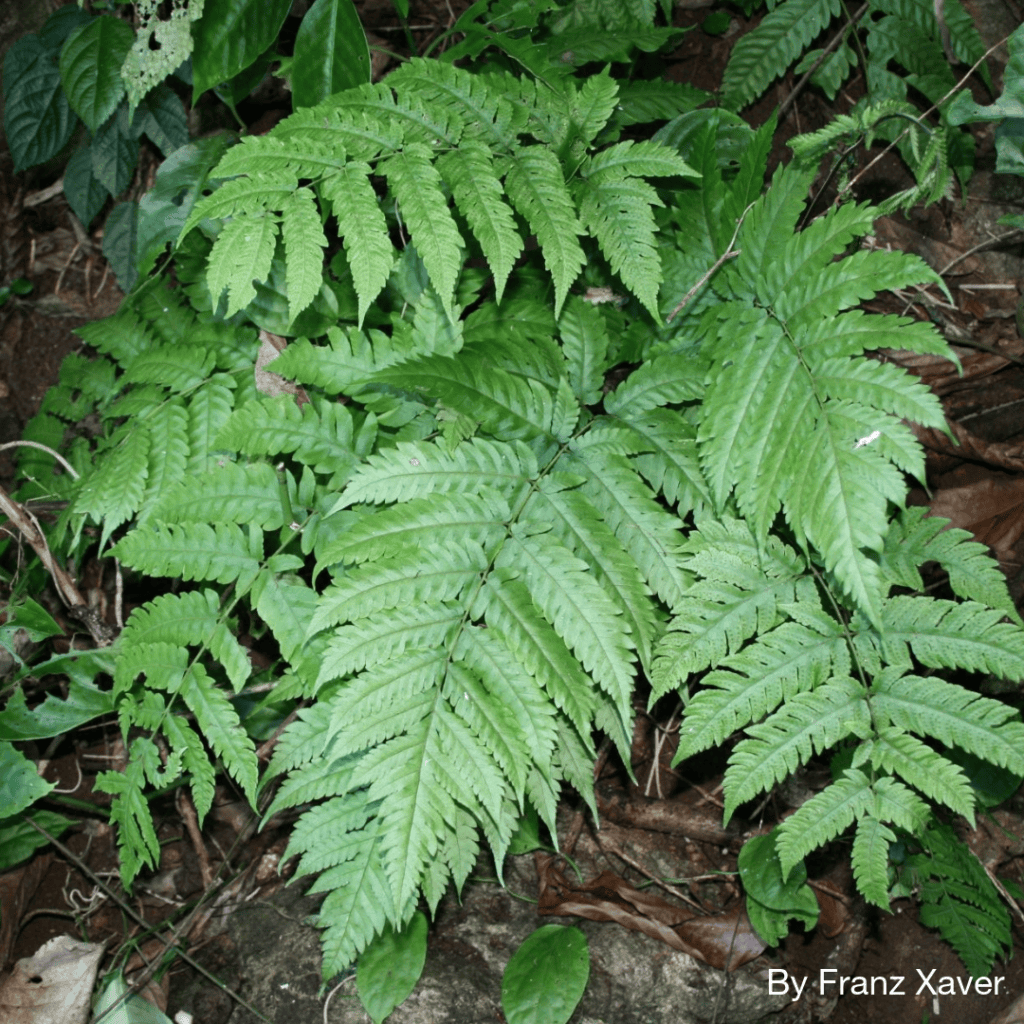
Snake Bun
Tectaria dissecta
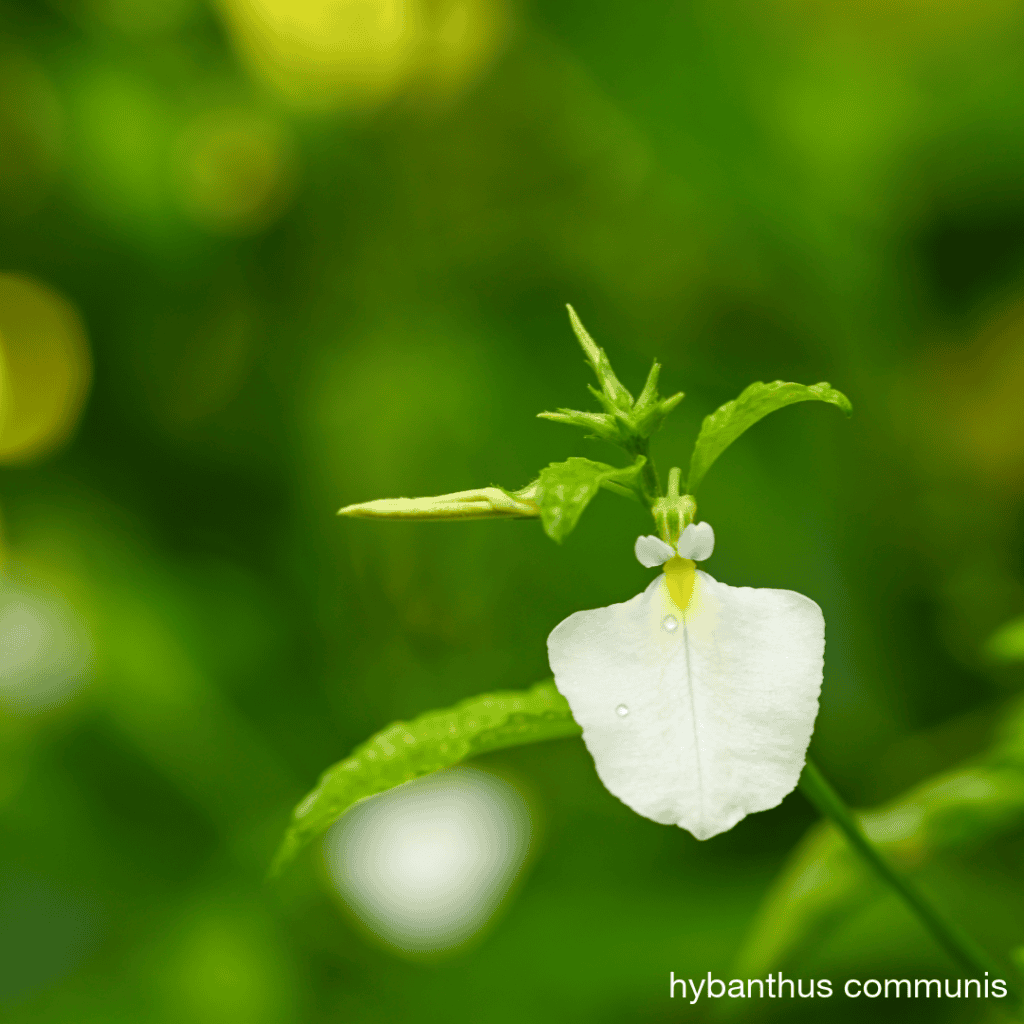
New Caledonian Hybanthus
Hybanthus caledonicus
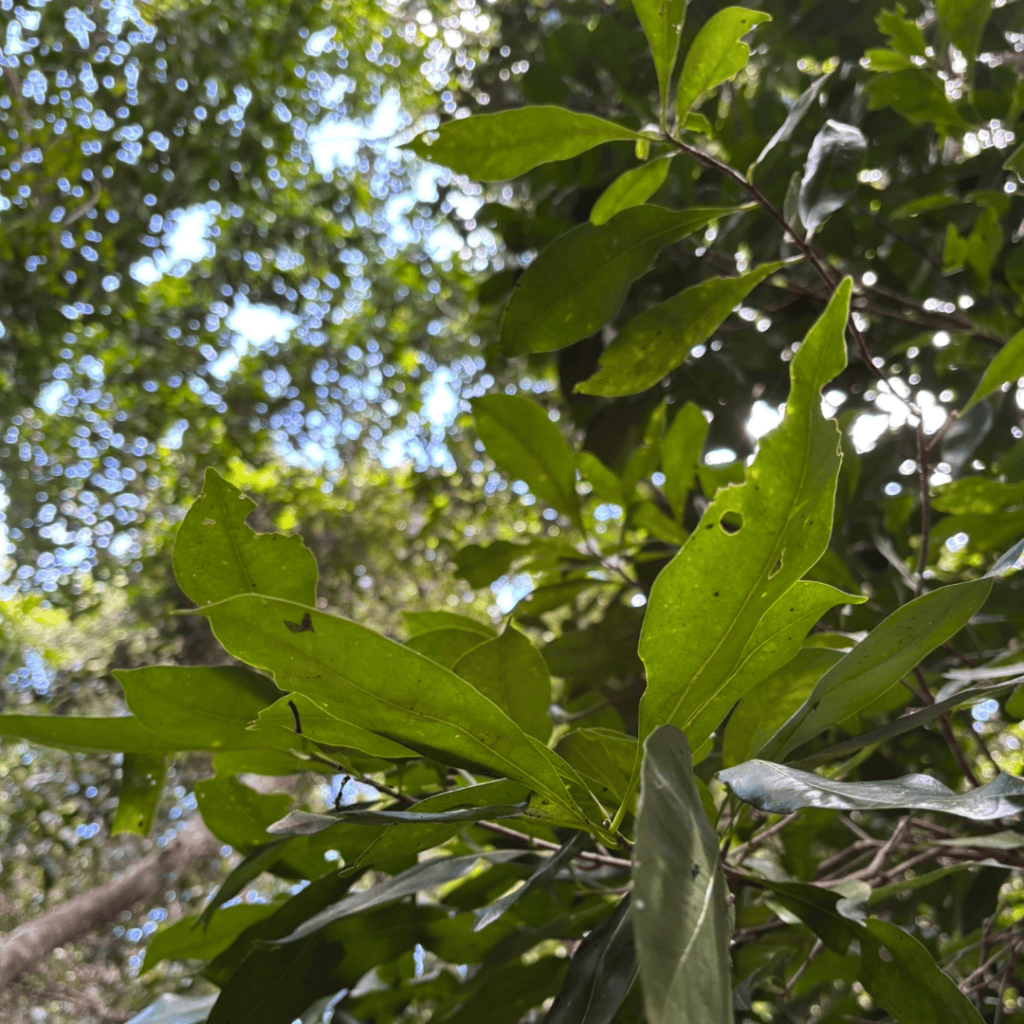
Willow-Leaved Plant
Lethedon salicifolia
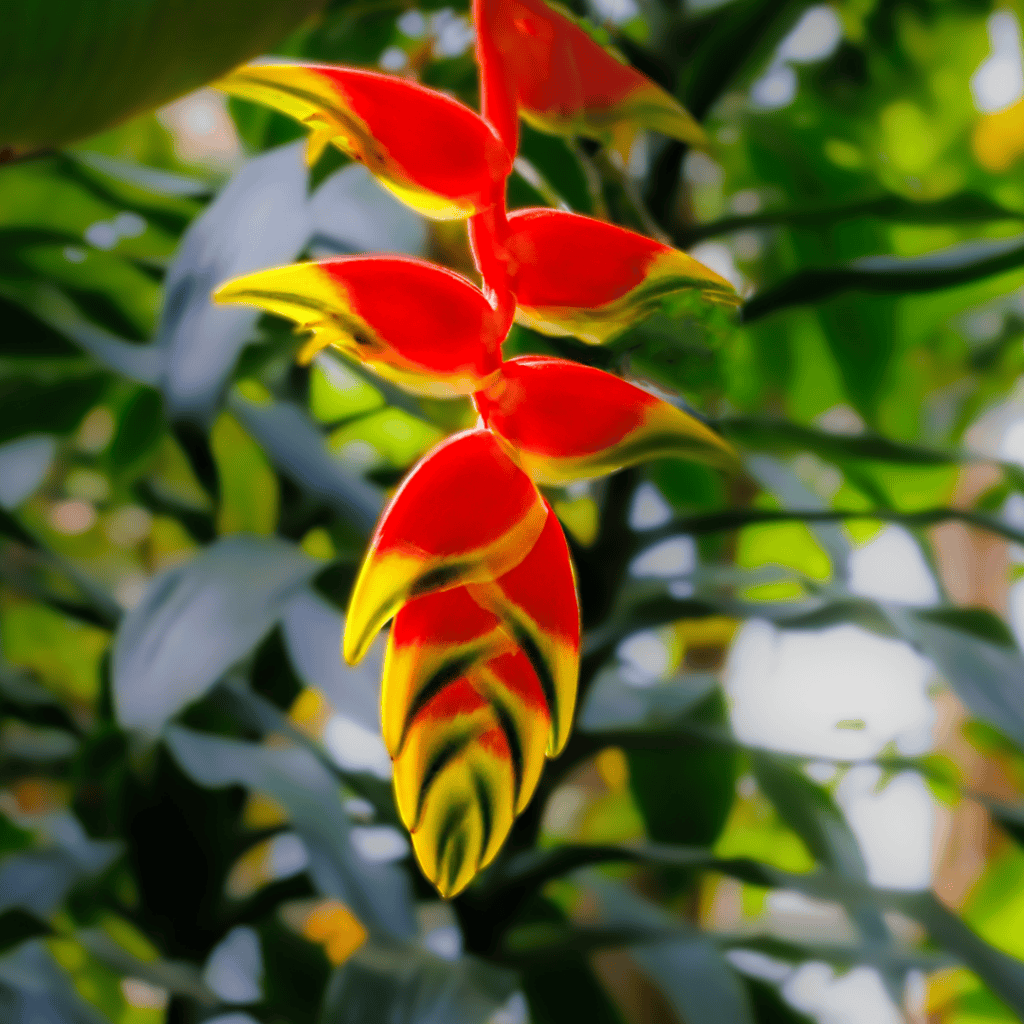
Lobsterclaw / Heliconia
Heliconia species
Their Role In the Habitat
This layer helps create the lower structure of the forest environment. Ground cover and low foliage can support humidity, soften the forest floor and create shaded areas around roots, trunks, fallen branches and low vegetation.
Although crested geckos are strongly associated with vertical structure, the lower habitat still contributes to the overall stability of the environment. It helps create sheltered microclimates, supports humidity and adds complexity to the enclosure base.
Leaf litter is also important. It creates a more natural surface over the substrate and supports the small invertebrates that help a bioactive system function.
What This Means in Captivity
Lower-level planting should not be used simply to fill every empty space. Its role is to support humidity, create a more natural base layer and soften the enclosure around branches, bark and leaf litter.
A planted base should still leave space for maintenance, clean-up crew activity and natural plant growth.
In captivity, the goal is not to copy every ground-level plant exactly. The goal is to recreate the function of this layer: humidity, cover, leaf litter, soft planting and a more natural transition between substrate and climbing structure.
Hoya, Flowers and Creeping Plants
Plants Observed During our Expeditions
Hoya species were recorded in crested gecko habitat. The expedition also recorded a range of creeping plants and flowering species, including:
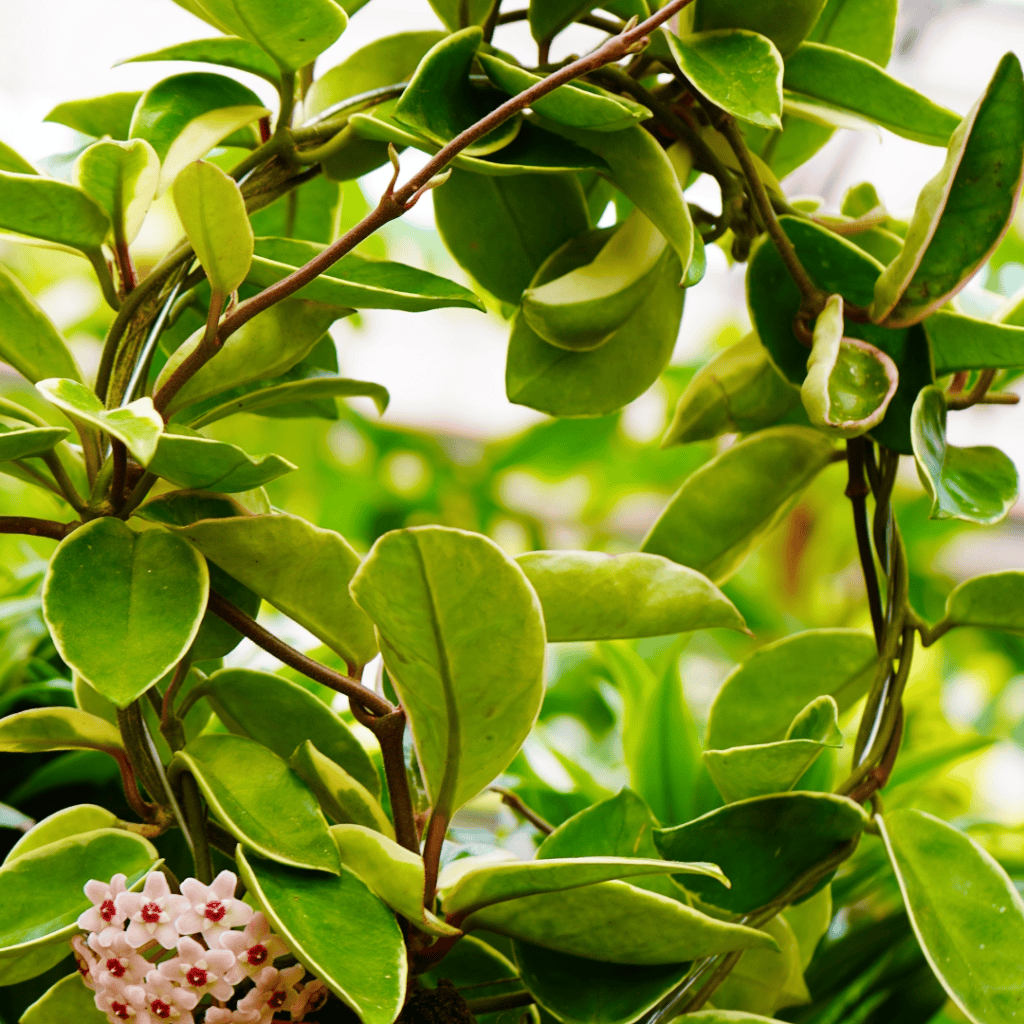
Wax Plants / Hoya
Hoya species
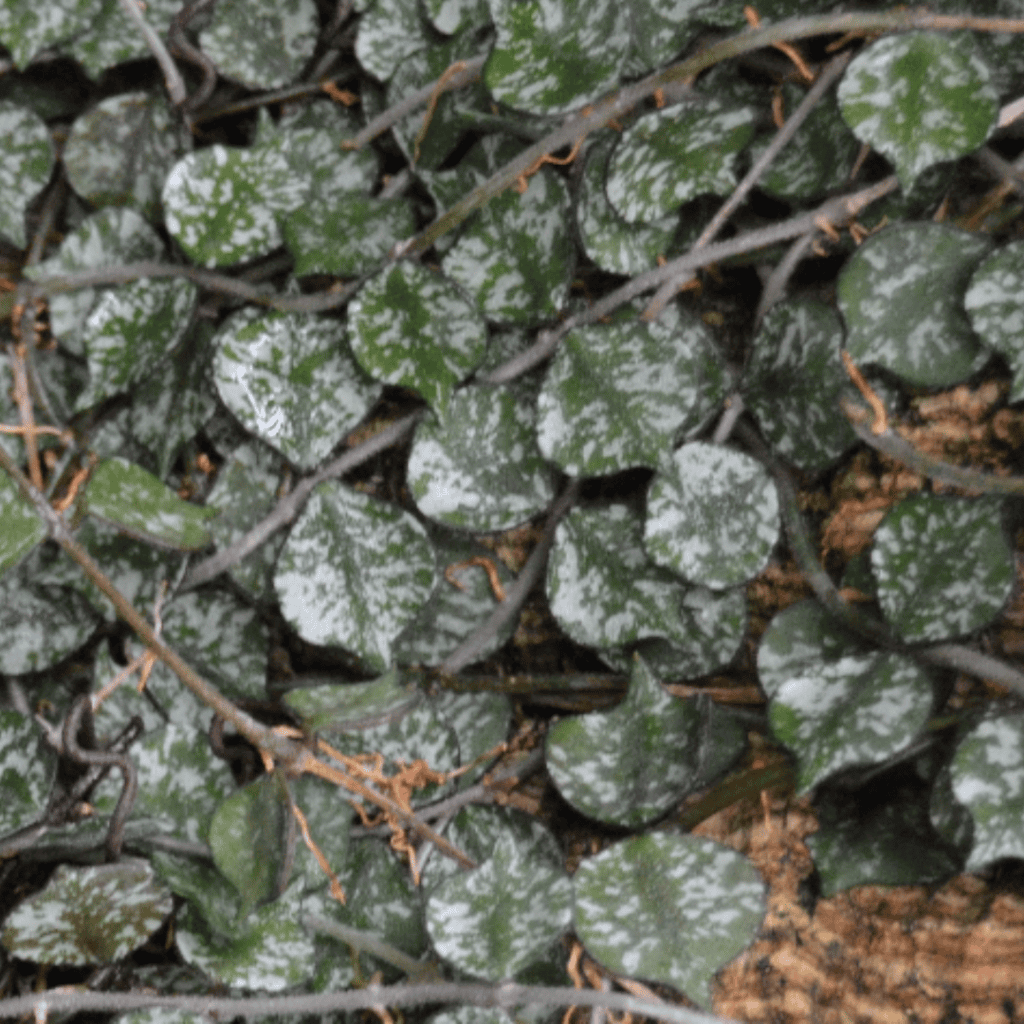
Hoya curtisii / Small-Leaf Wax Plant
Hoya curtisii
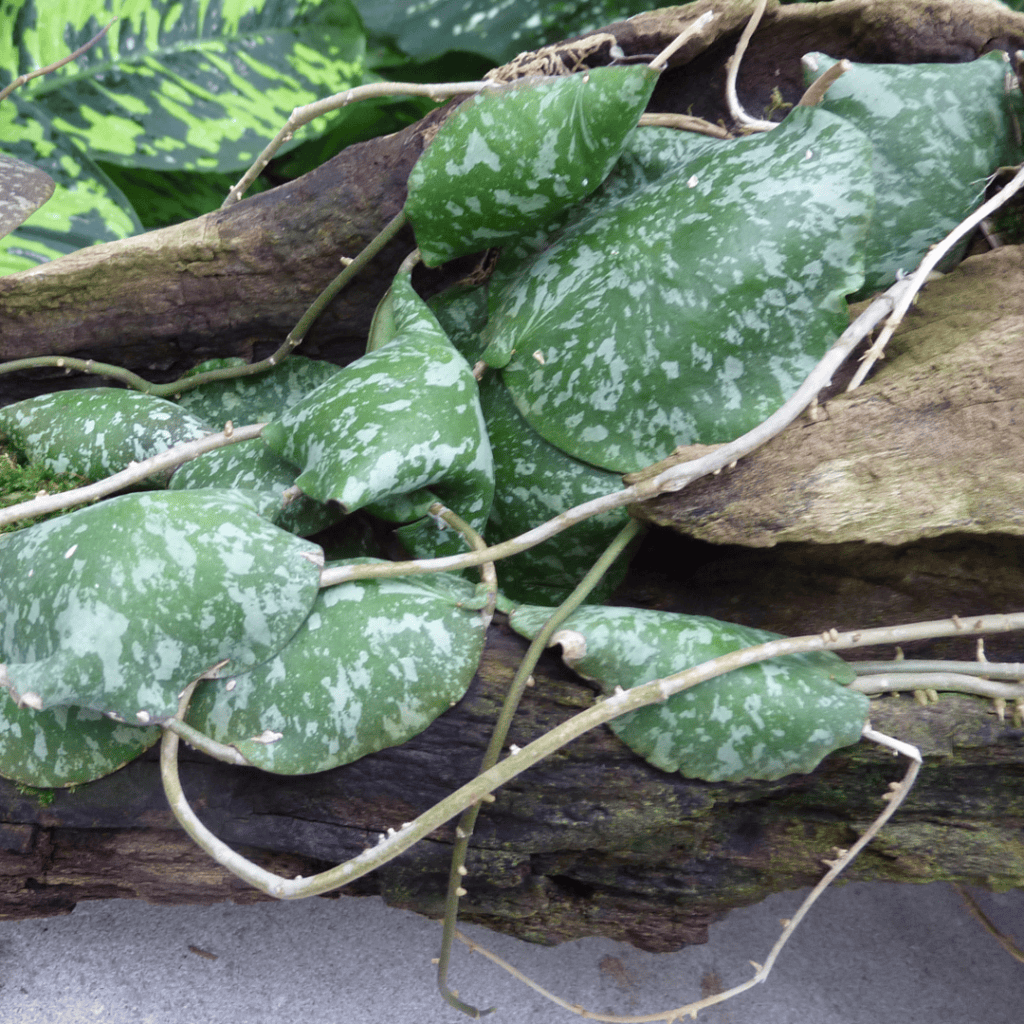
Shingling Hoya
Hoya imbricata
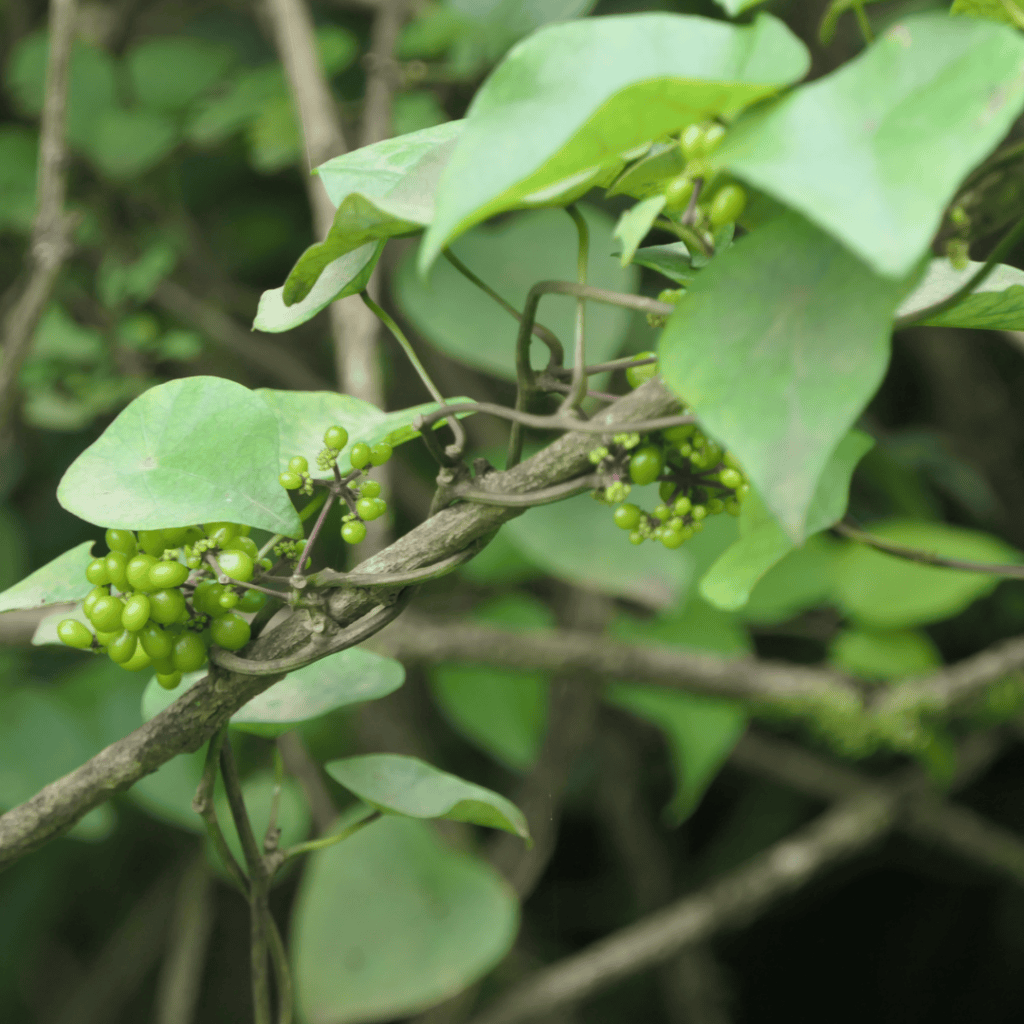
Tapevine
Stephania japonica
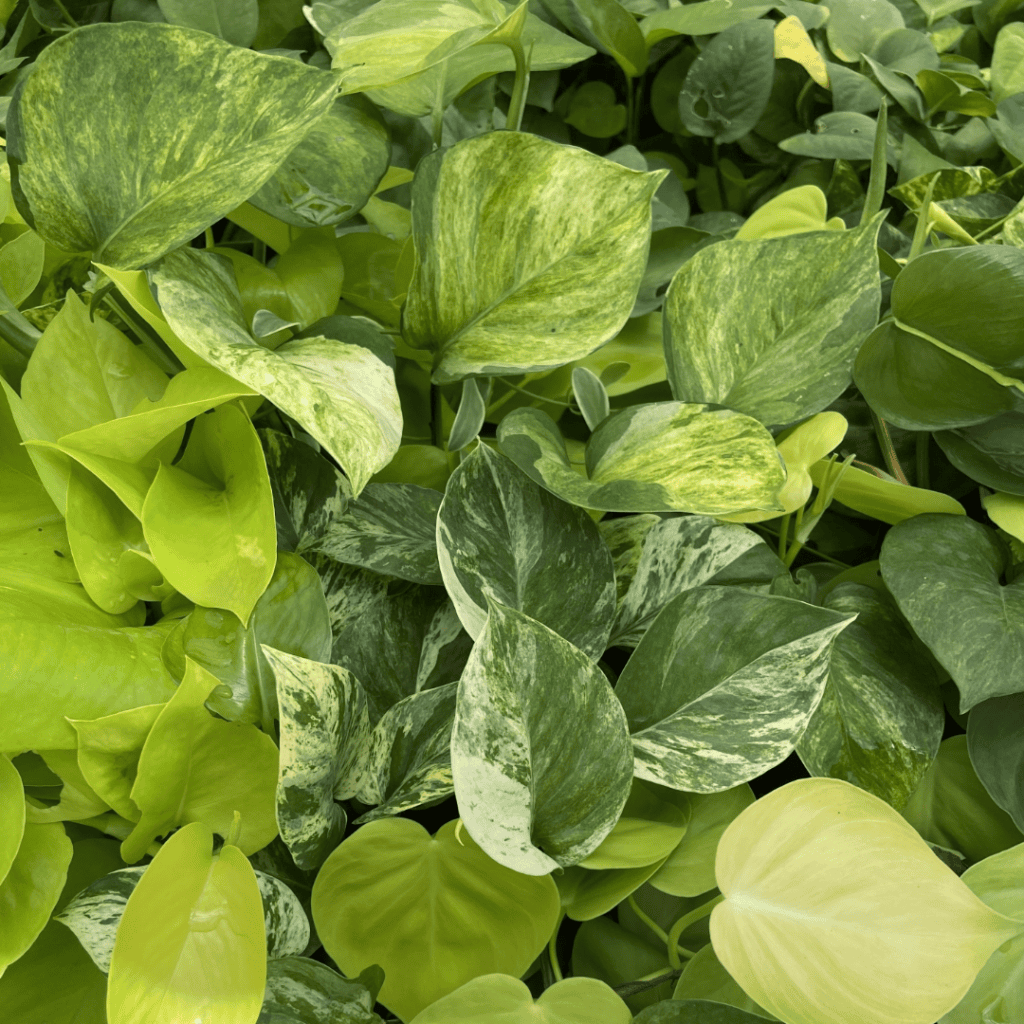
Unidentified creeping plants similar in appearance to Devil’s Ivy / Pothos
Epipremnum-type growth
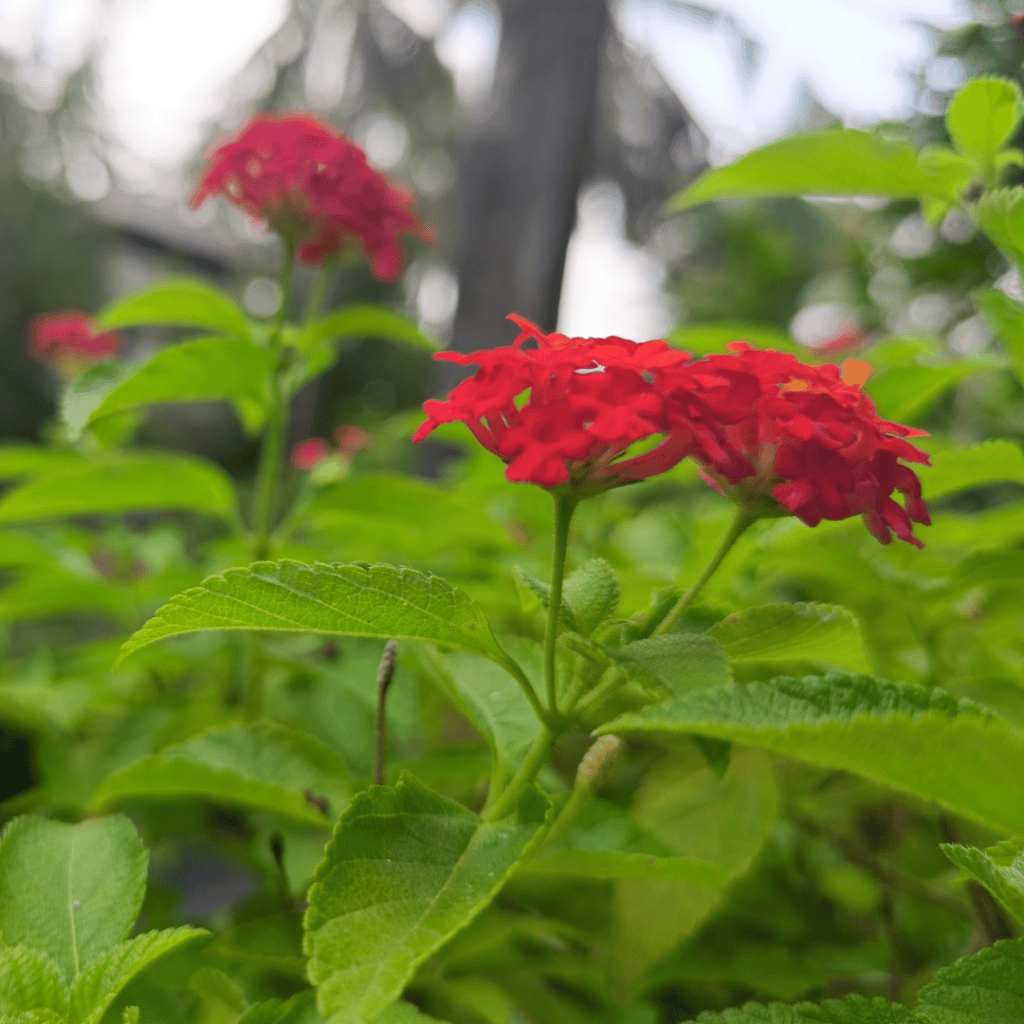
Yellow Sage / Lantana
Lantana camara
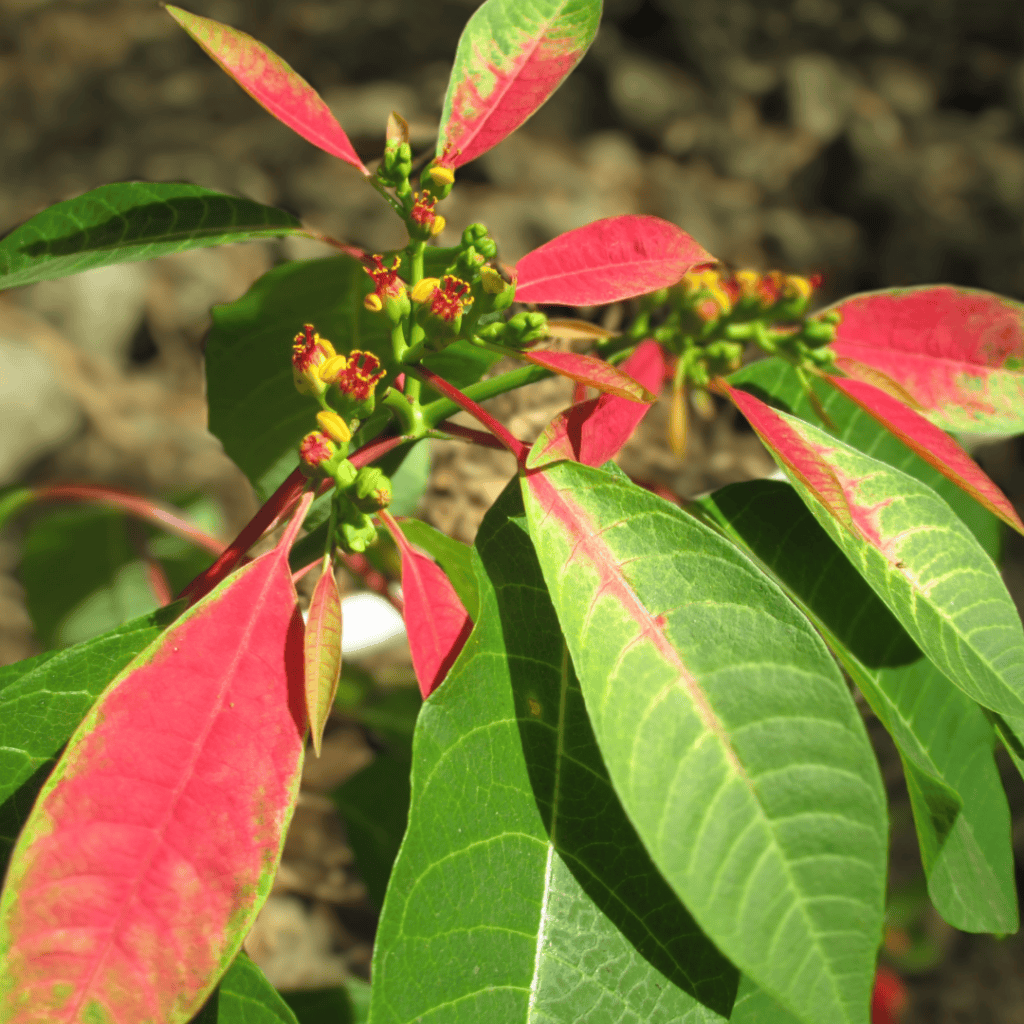
Painted Leaf / Painted Spurge
Euphorbia cyathophora
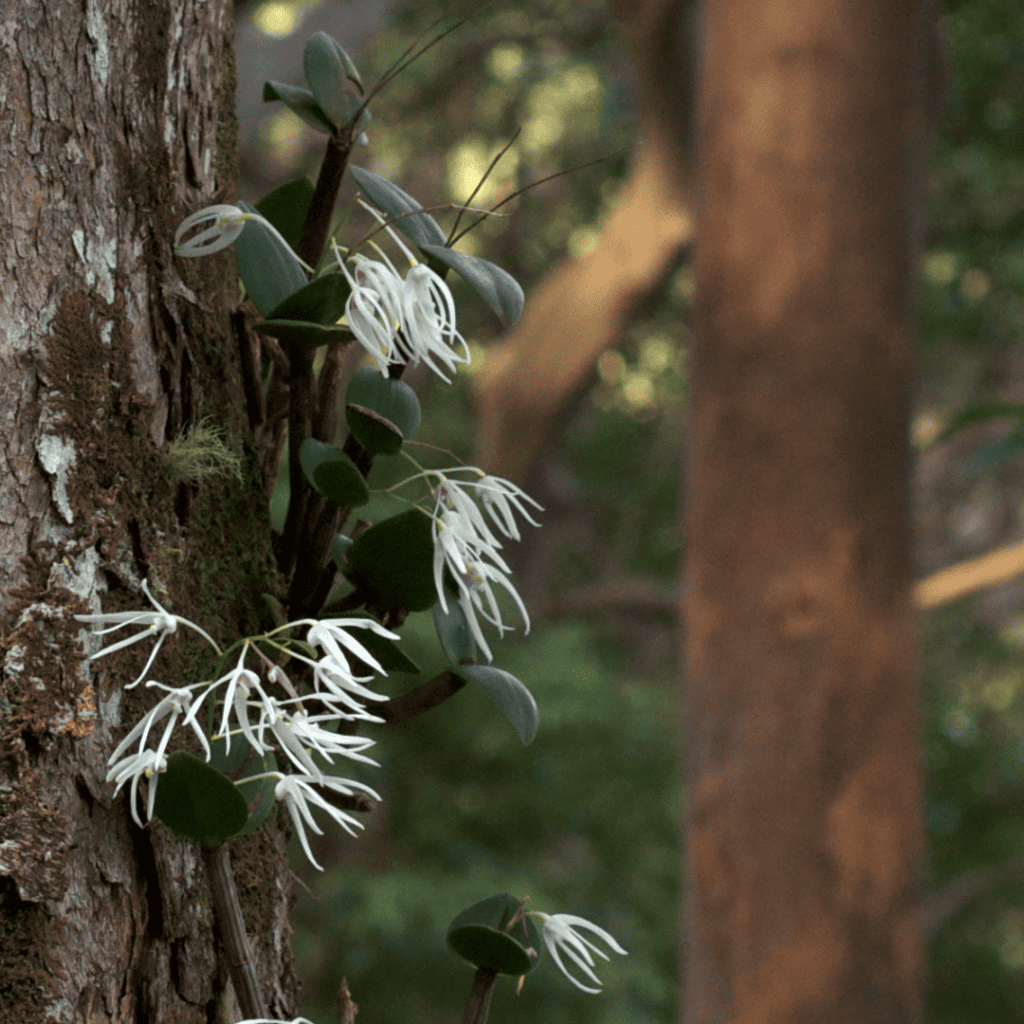
Ironbark Feather Orchid
Dendrobium aemulum
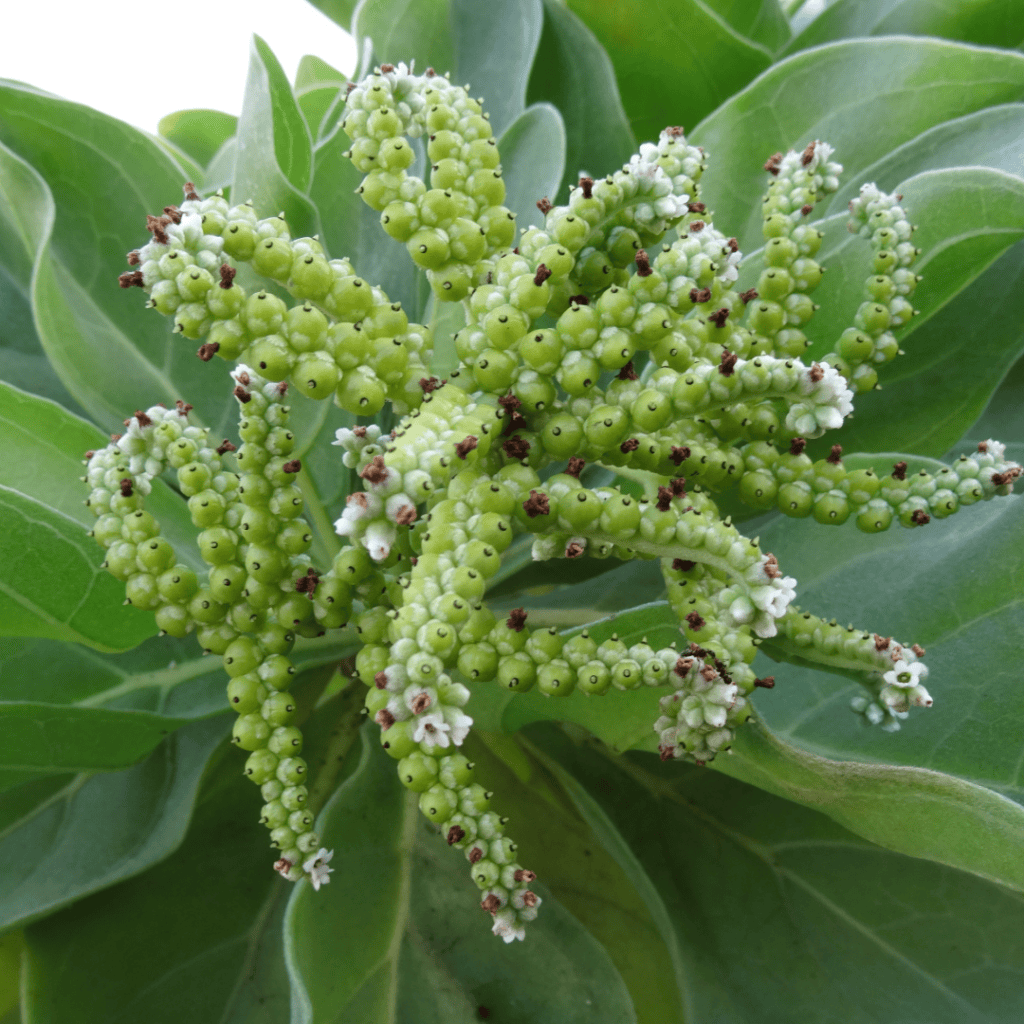
Tree Heliotrope / Octopus Bush
Heliotropium arboreum
Habitat Role
Creeping, trailing and climbing plants help create the dense, tangled vegetation that makes the habitat usable for an arboreal gecko. These plants connect branches, trunks and foliage, allowing animals to move through cover rather than across open space.
Hoya species are especially interesting because they occur within the habitat and show how climbing, trailing and epiphytic growth can form part of the same environment.
The flowering plants and orchids recorded during the expedition also show that the habitat is not just made from green foliage. It includes seasonal growth, flowers, nectar sources, pollen and other ecological details that help shape the wider environment.
What This Means in Captivity
Crested gecko enclosures should not rely only on bare branches and ground-level plants. Climbing and trailing vegetation can help connect different levels of the enclosure and make the space feel more secure.
This does not mean every wild creeping or flowering plant should be used in captivity. Some may be unsuitable, irritating, toxic, too large or impractical. The important point is that vertical planting and connecting vegetation are important parts of the habitat structure.
Epiphytic Ferns
Plants Observed During our Expeditions
The expedition recorded epiphytic ferns including:
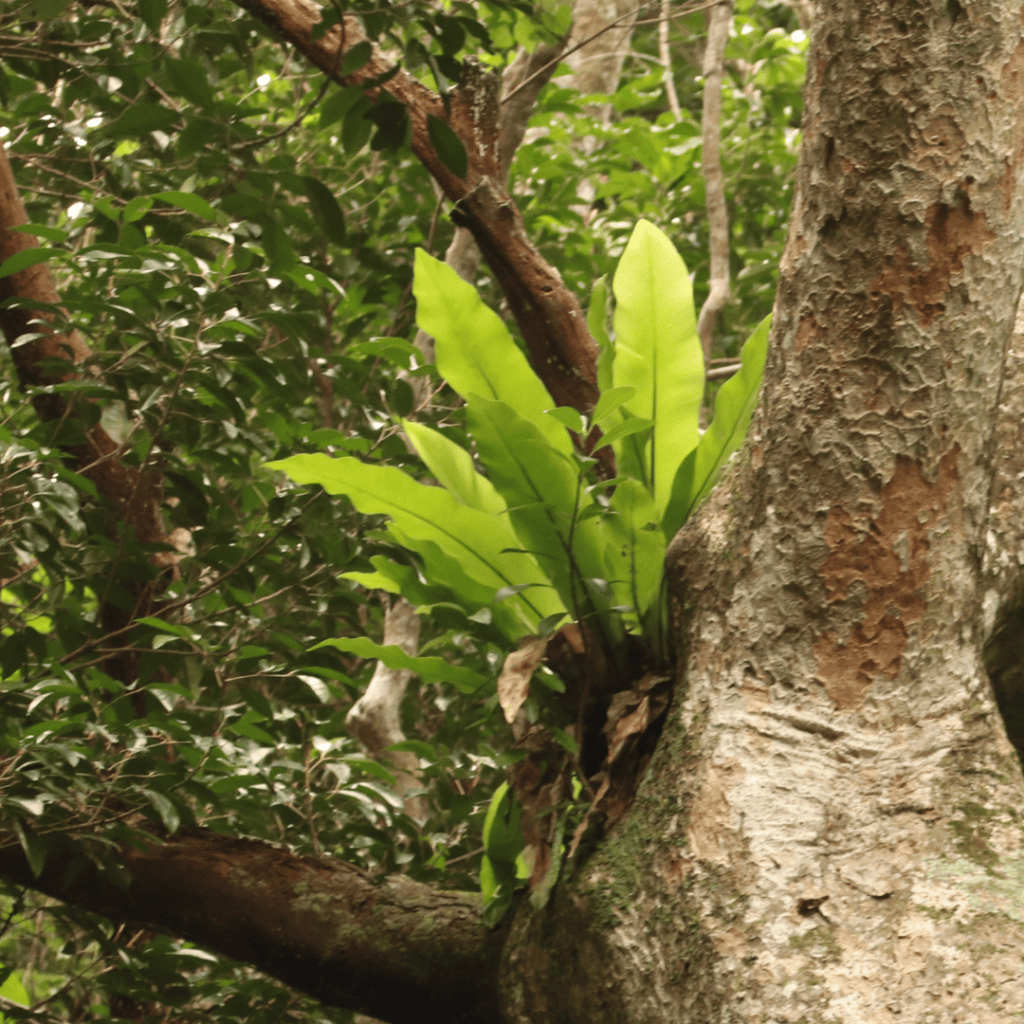
Bird’s Nest Fern
Asplenium nidus
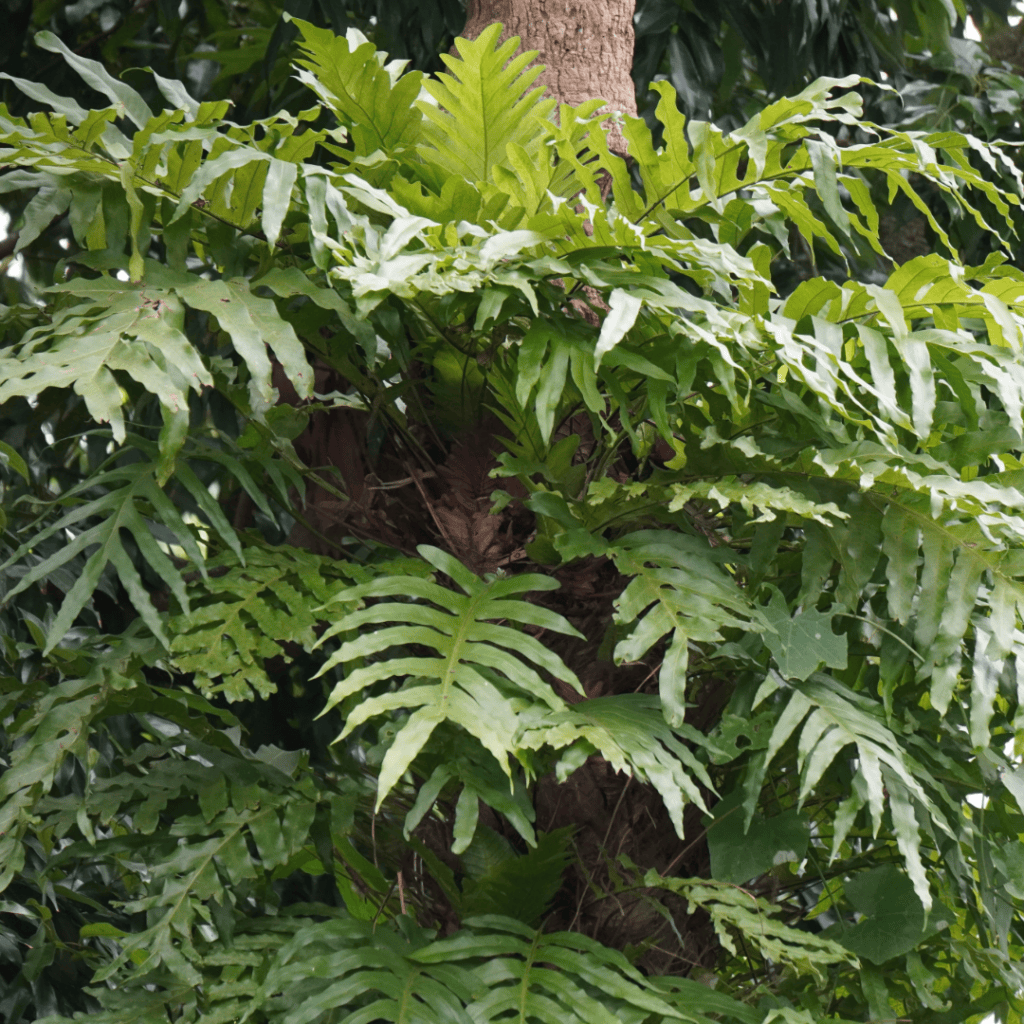
Basket Fern
Drynaria rigidula
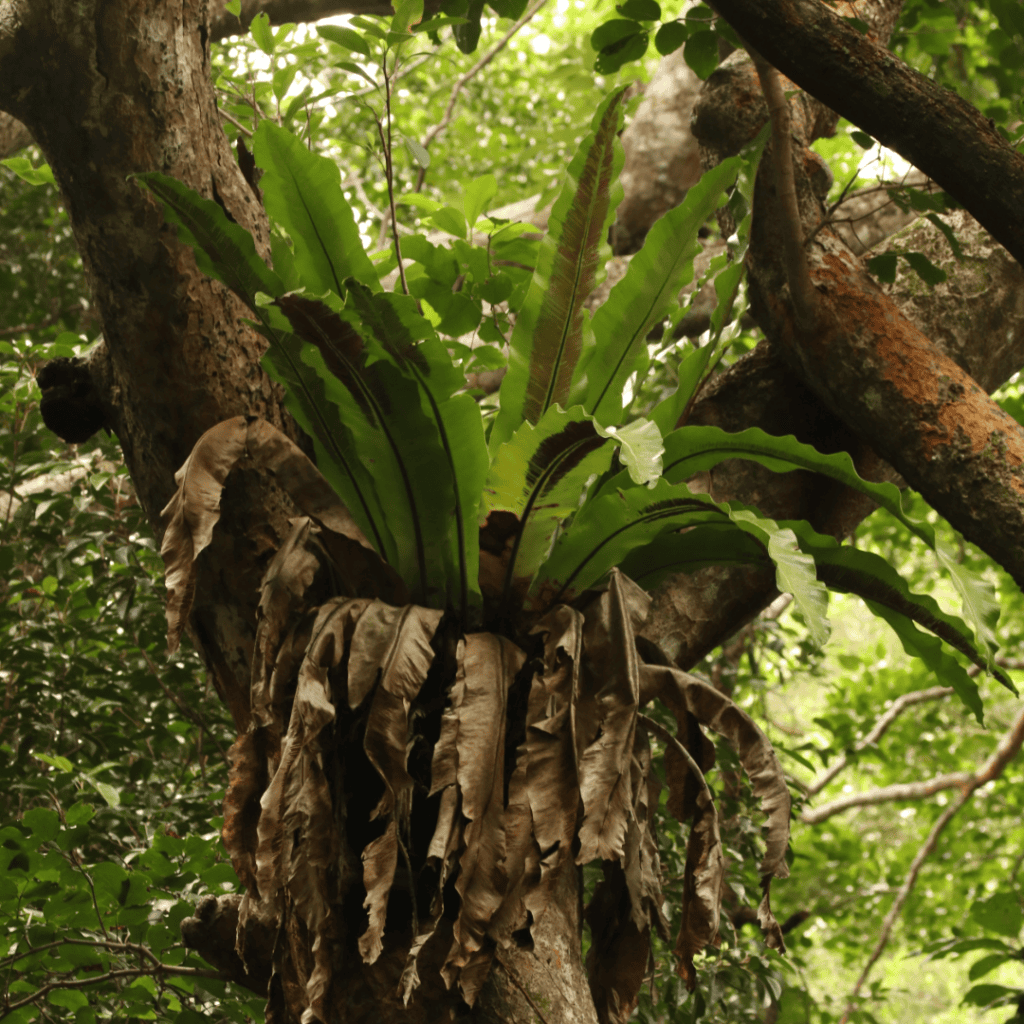
Crow’s Nest Fern / Bird’s Nest Fern
Asplenium australasicum
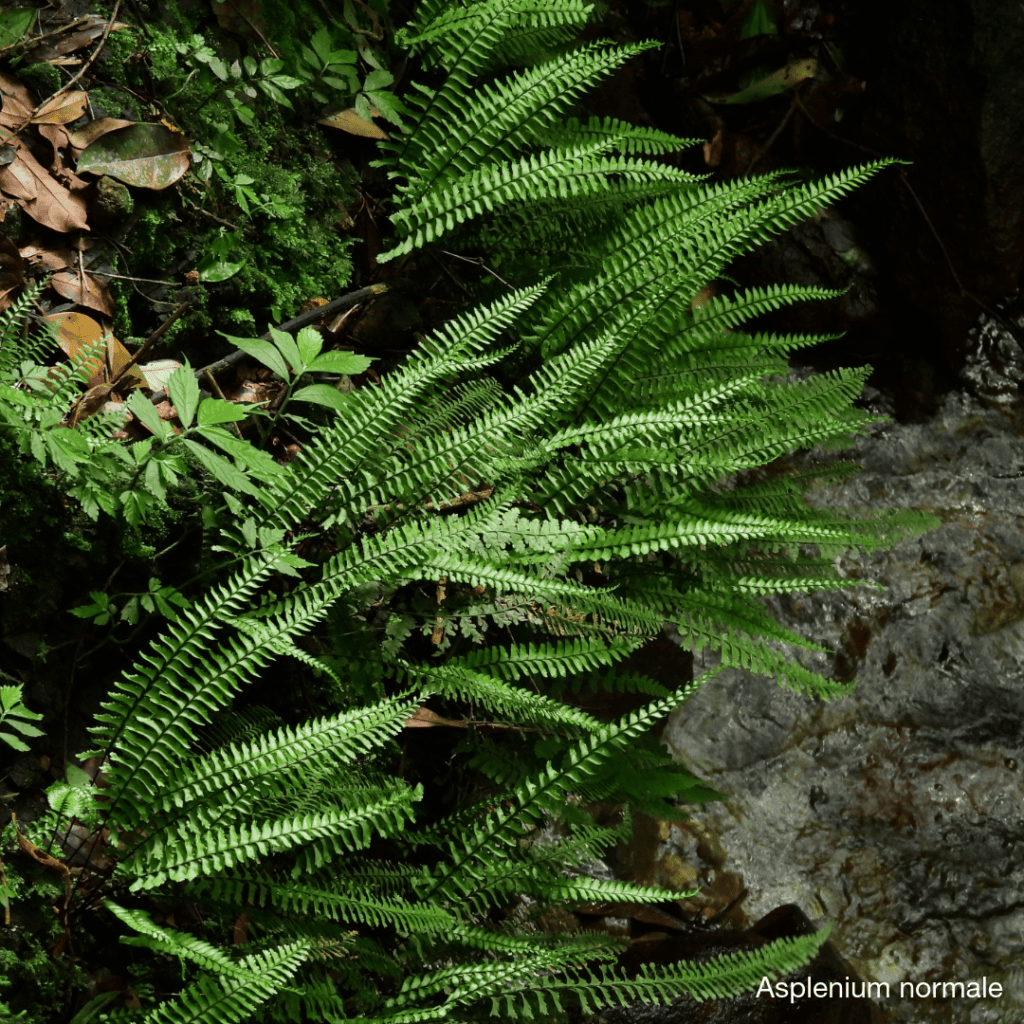
Wedgeleaf Spleenwort
Asplenium cuneatum
Habitat Role
Epiphytic ferns grow above ground level on trees, trunks, branches and elevated surfaces. These plants can create sheltered pockets, hold moisture and add structure high in the habitat.
This is especially relevant for crested gecko enclosure design because many captive enclosures are planted heavily at the bottom but left bare in the upper levels.
In the wild, elevated ferns and epiphytes may provide shelter, visual cover, resting areas and humid microhabitats.
What This Means in Captivity
Upper-level planting is one of the easiest ways to make a tall crested gecko enclosure more natural and more usable.
A good adult enclosure should not have all of its planting at ground level. Epiphytic planting, mounted plants and background planting can help turn the upper enclosure into usable space.
However, large epiphytic ferns can become dominant if used without planning. They should be treated as structural planting, not just decoration.
Ground Ferns and Climbing Ferns
Plants Observed During our Expeditions
The expedition recorded several fern types in crested gecko habitat, including:
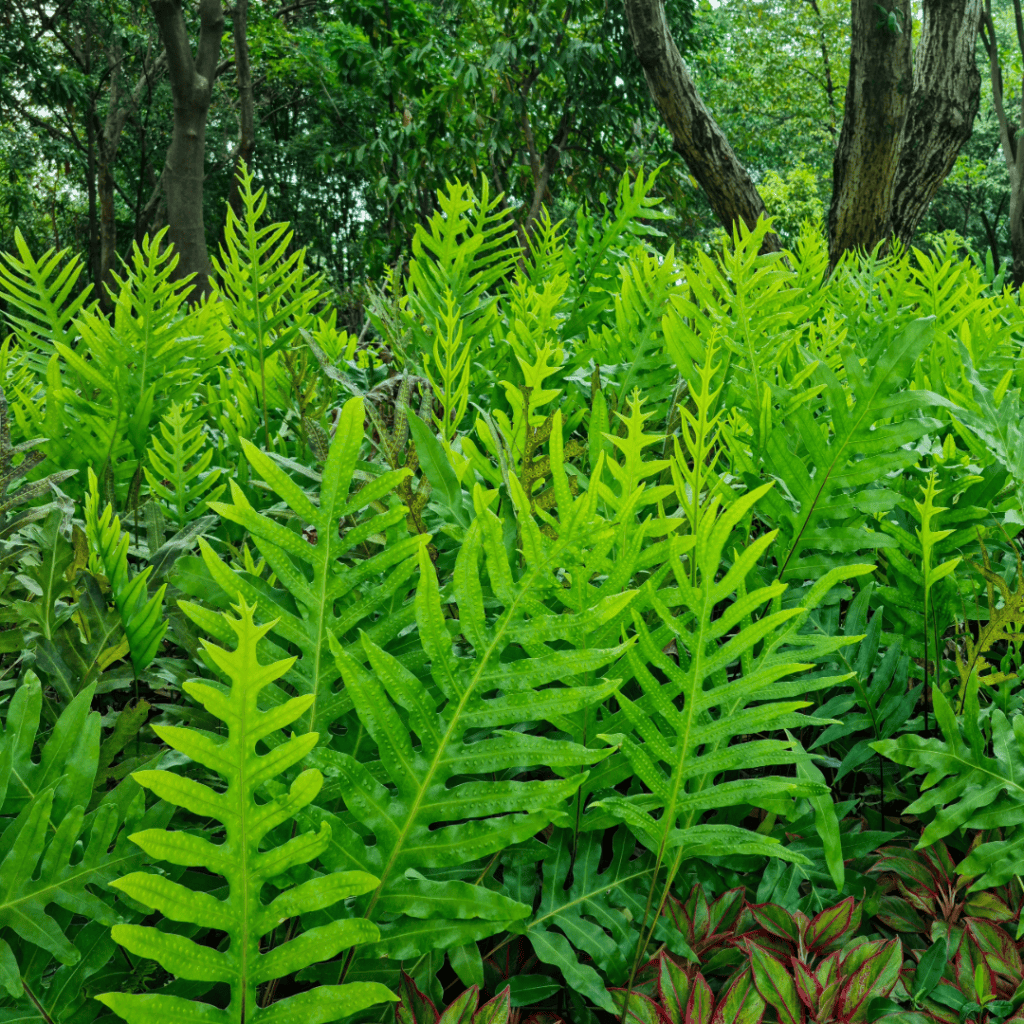
Monarch’s Fern
Microsorum scolopendria
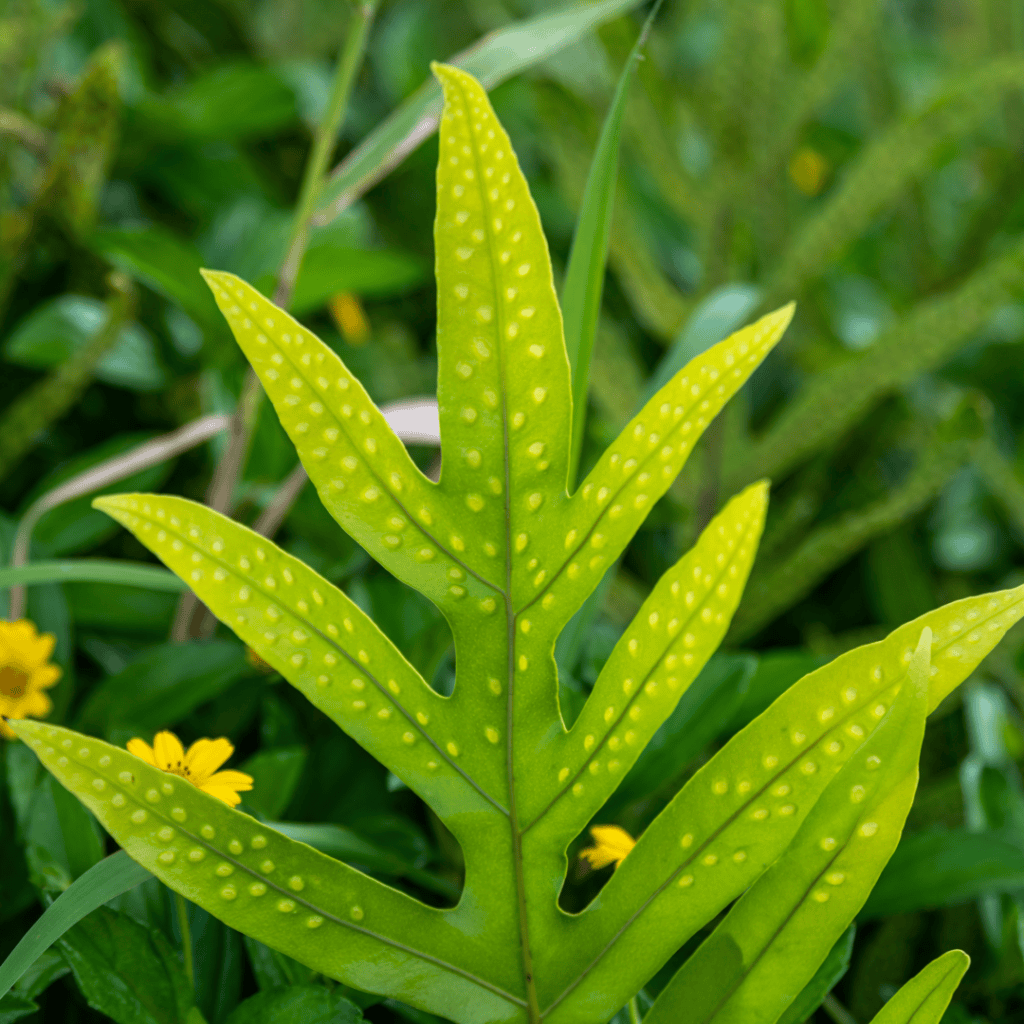
Musk Fern
Microsorum grossum
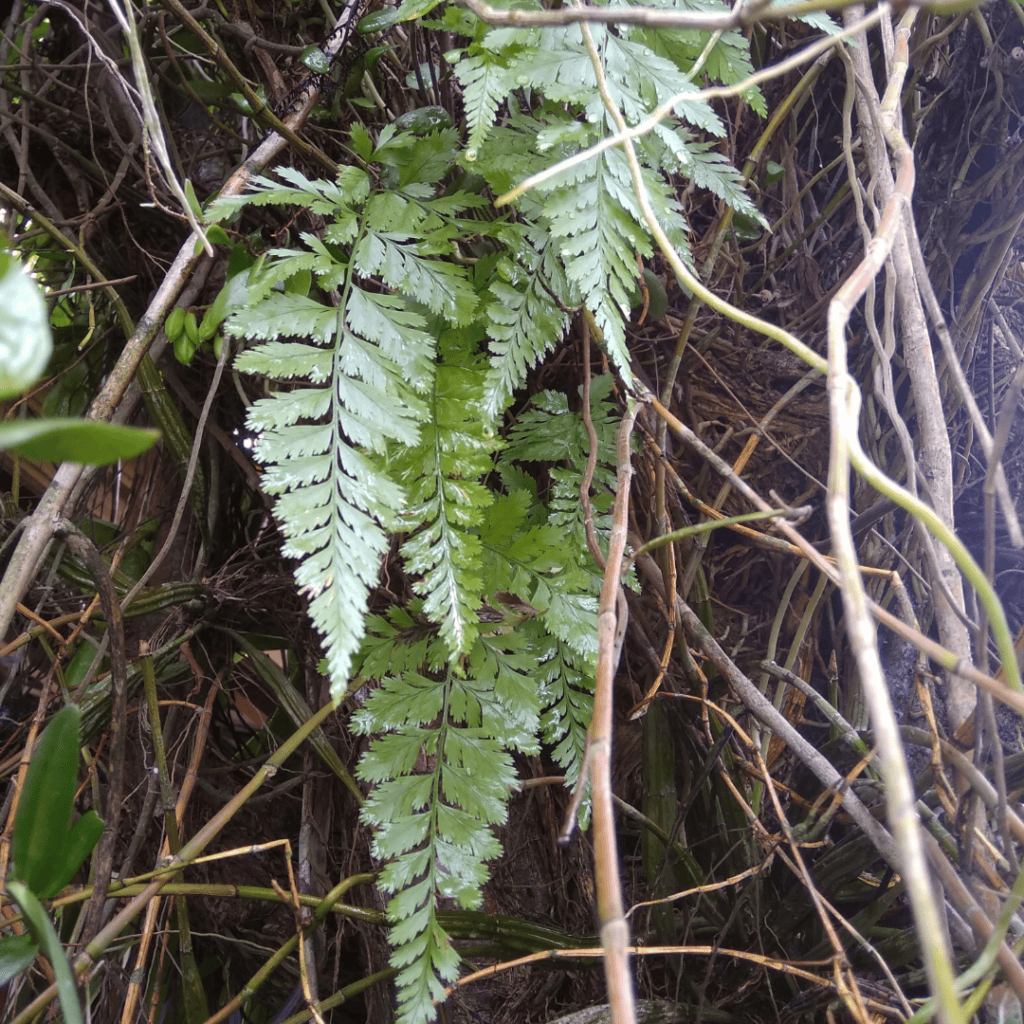
Sickle Spleenwort / Mare’s Tail Fern
Asplenium polyodon
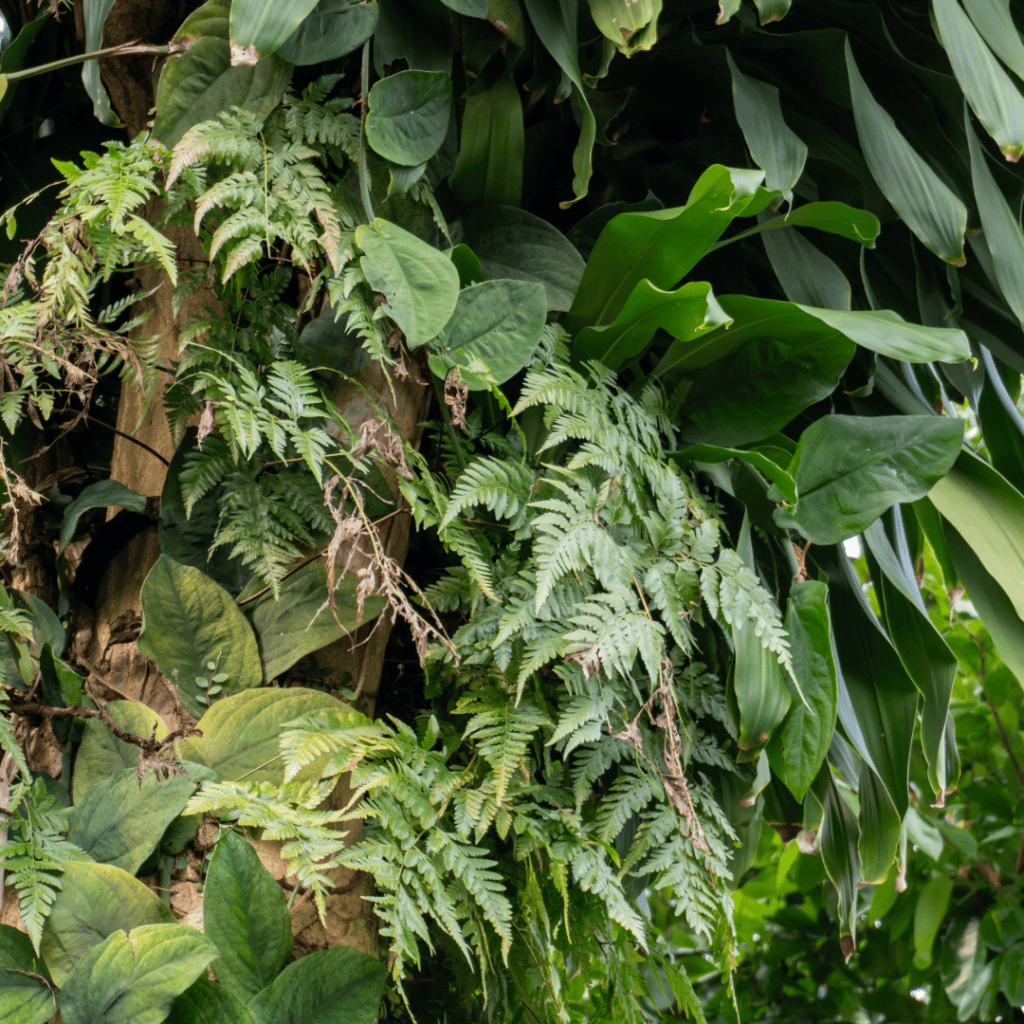
Climbing Ferns
Lygodium species
Habitat Role
Ferns help create shaded, humid and visually complex areas. In the wild, fern growth adds texture and cover across both lower and vertical parts of the environment.
Climbing ferns are particularly interesting because they show that vertical plant growth in the habitat is not limited to woody vines. Softer fern-like growth can also contribute to the structure and texture of the habitat.
What This Means in Captivity
Ferns can be useful for recreating shaded, humid areas, but they should not be used to create stagnant, wet zones.
A successful planted enclosure should balance humidity with airflow. Ferns can contribute to the forest feel of the enclosure, but they still need suitable drainage, sensible positioning and maintenance.
In taller enclosures, ferns can be used at different levels: lower shaded areas, background planting pockets and mounted areas where appropriate.
Trees, Bark and Hardscape Structure
Plants Observed During our Expeditions
The expedition recorded several trees used within crested gecko habitat, including:
Crested geckos were found using these trees to move through the environment.
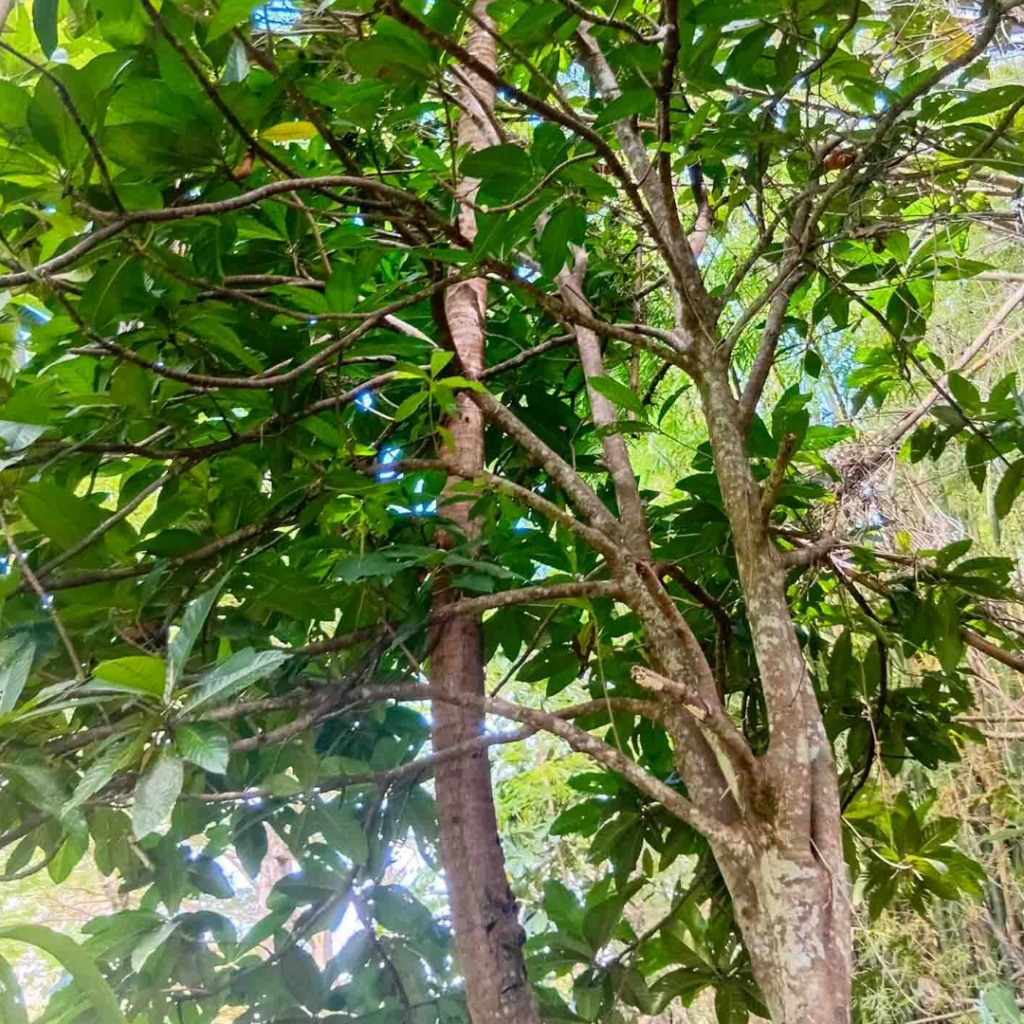
Ipil-Ipil / Moluccan Ironwood / Merbau
Intsia bijuga
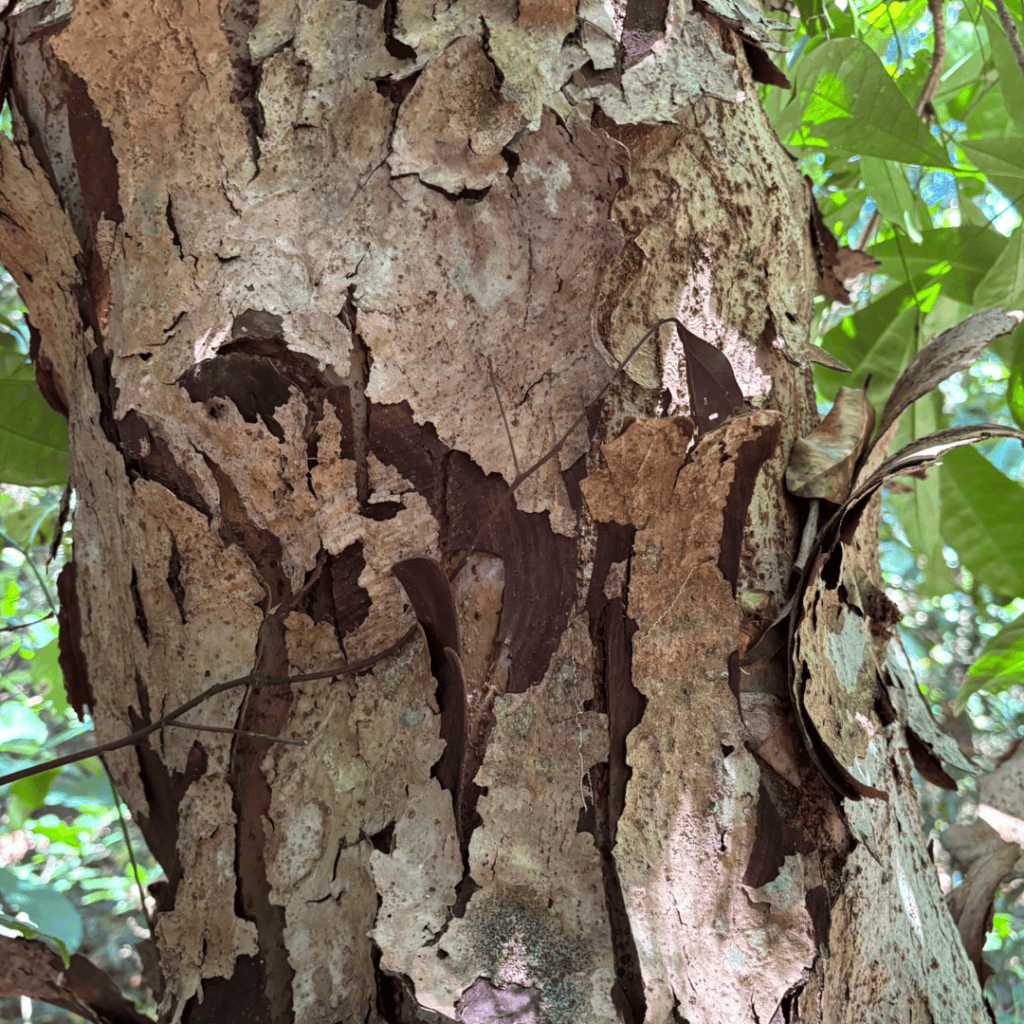
Paperbark Tree / Broad-Leaved Paperbark
Melaleuca quinquenervia
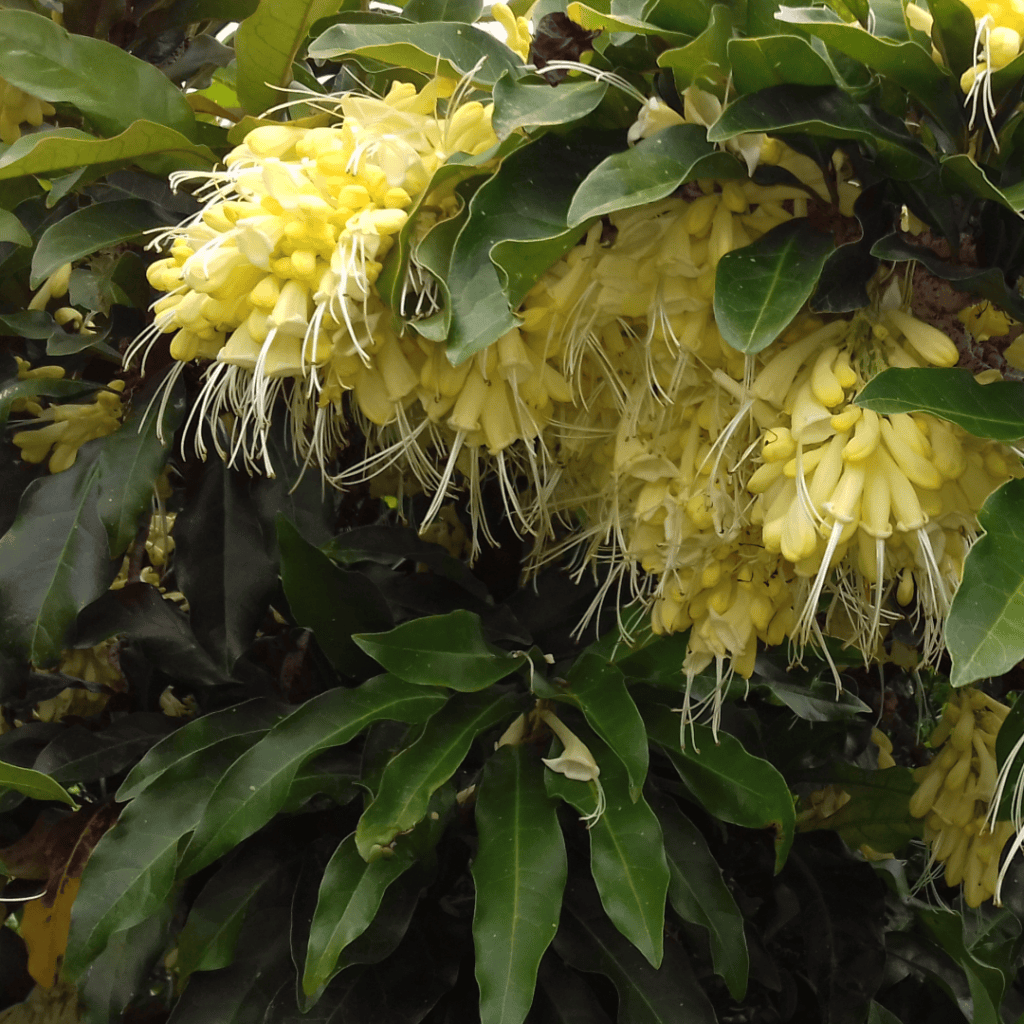
Sulphur Oxera
Oxera sulfurea
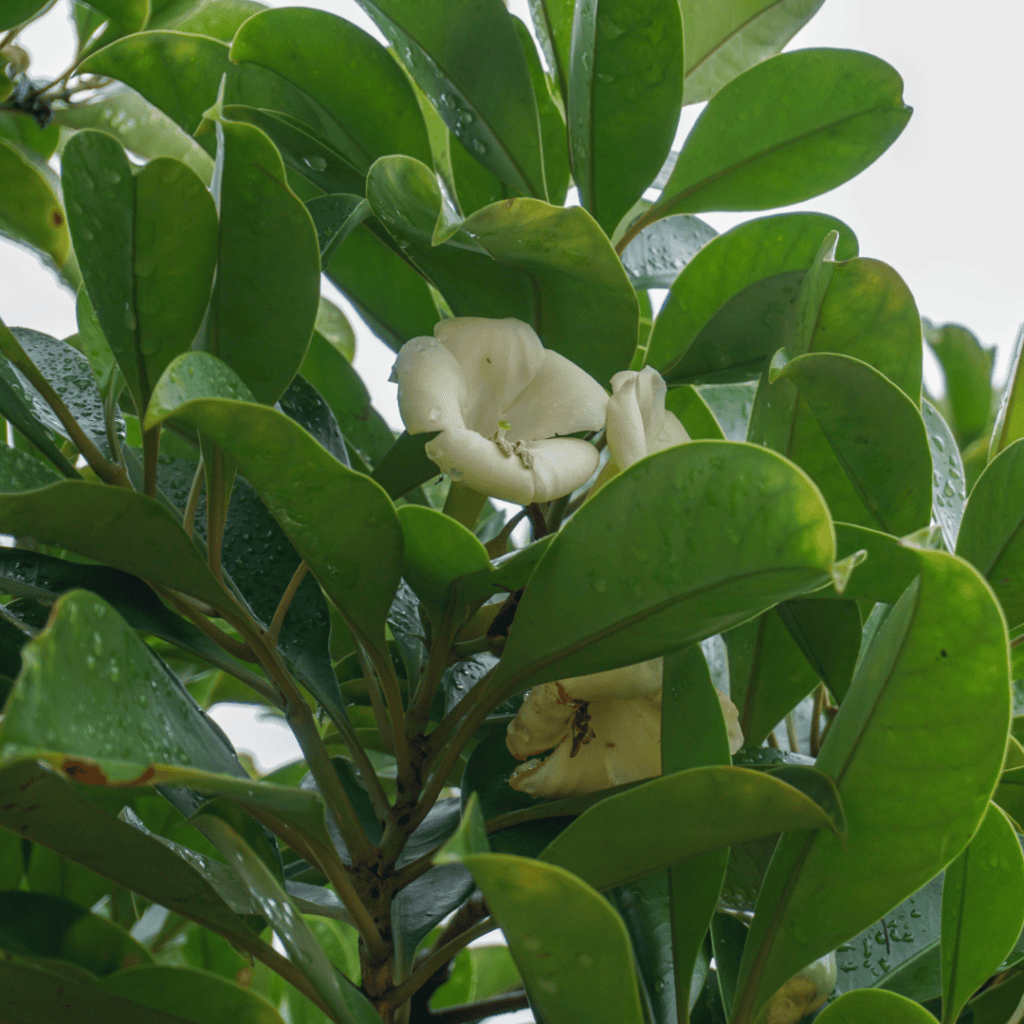
Pua Keni / Perfume Flower Tree
Fagraea berteroana
Habitat Role
These trees are not important because keepers can plant them in a terrarium. They are important because they explain the structure of the habitat.
Trees provide:
- Trunks
- Thin branches
- Elevated movement routes
- Shelter
- Attachment points for epiphytes
- Areas where vines and ferns can grow
This structure is central to how crested geckos use their environment.
What This Means in Captivity
In captivity, this layer should be recreated with hardscape.
Crested geckos benefit from thin peripheral branches that fill the enclosure and create usable routes. Avoid filling too much space with bulky cork tubes or large flat surfaces. These can look impressive, but they do not always provide the fine, branching structure that crested geckos use well.
Hardscape should be installed before planting. Plants should then be used to soften and naturalise the structure rather than replace it.
Substrate, Leaf Litter and Isle of Pines Observations
What We Observed During Our Expeditions
During the Isle of Pines research, pieces of coral and shell were observed within the substrate.
Habitat Role
This observation is useful because it reminds us that natural habitat is not made from one uniform substrate. Wild environments contain layers, fragments, organic material, mineral material, leaf litter and decaying plant matter.
The ground layer is part of the habitat system, even for an arboreal gecko.
What This Means in Captivity
Keepers should not try to copy every wild substrate element exactly. Instead, they should focus on creating a safe, functional substrate system that supports humidity, planting and bioactive activity.
Leaf litter is especially important because it creates a more natural surface layer and supports custodians such as springtails and tropical woodlice.
A planted enclosure without leaf litter and custodians is not a complete bioactive system.
Fruiting Trees and Feeding Context
Plants Observed During our Expeditions
Fruiting trees made up a notable part of the understory layer observed in New Caledonia. Species recorded included:
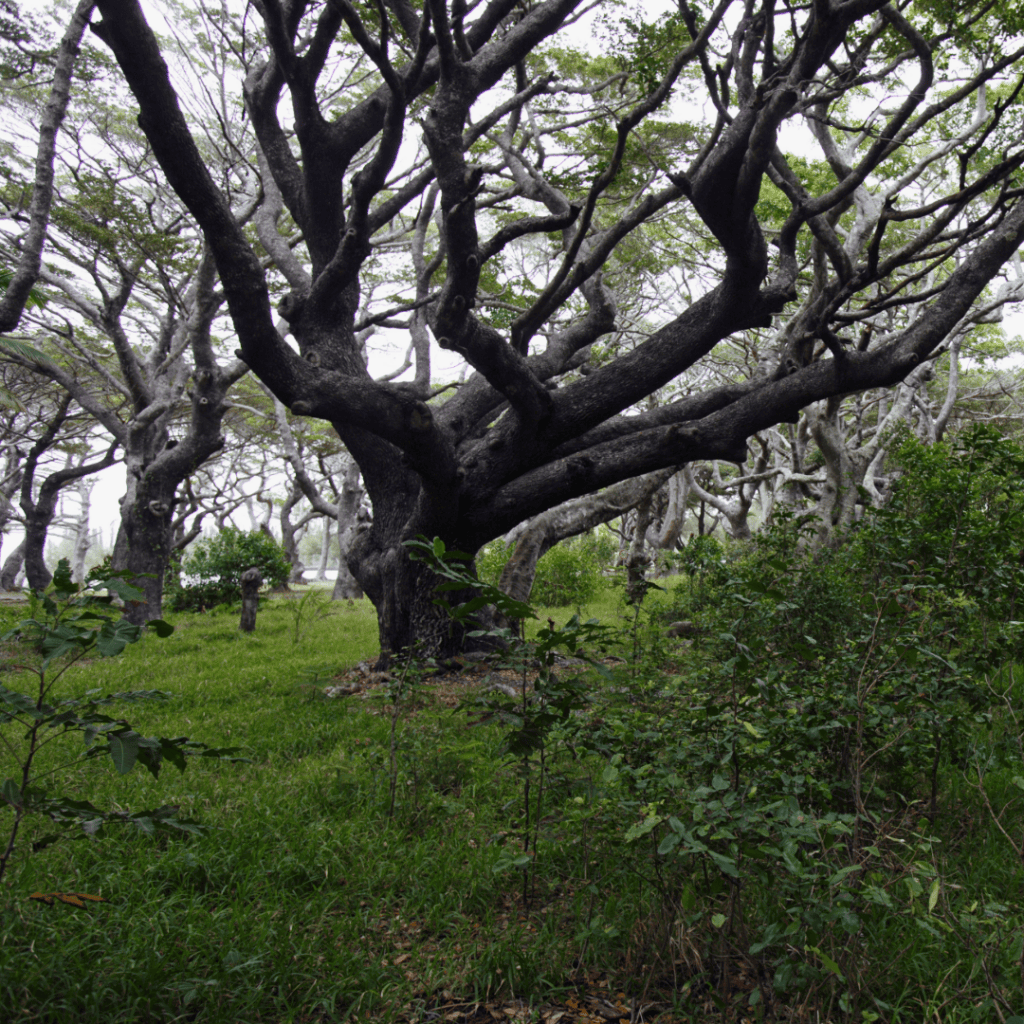
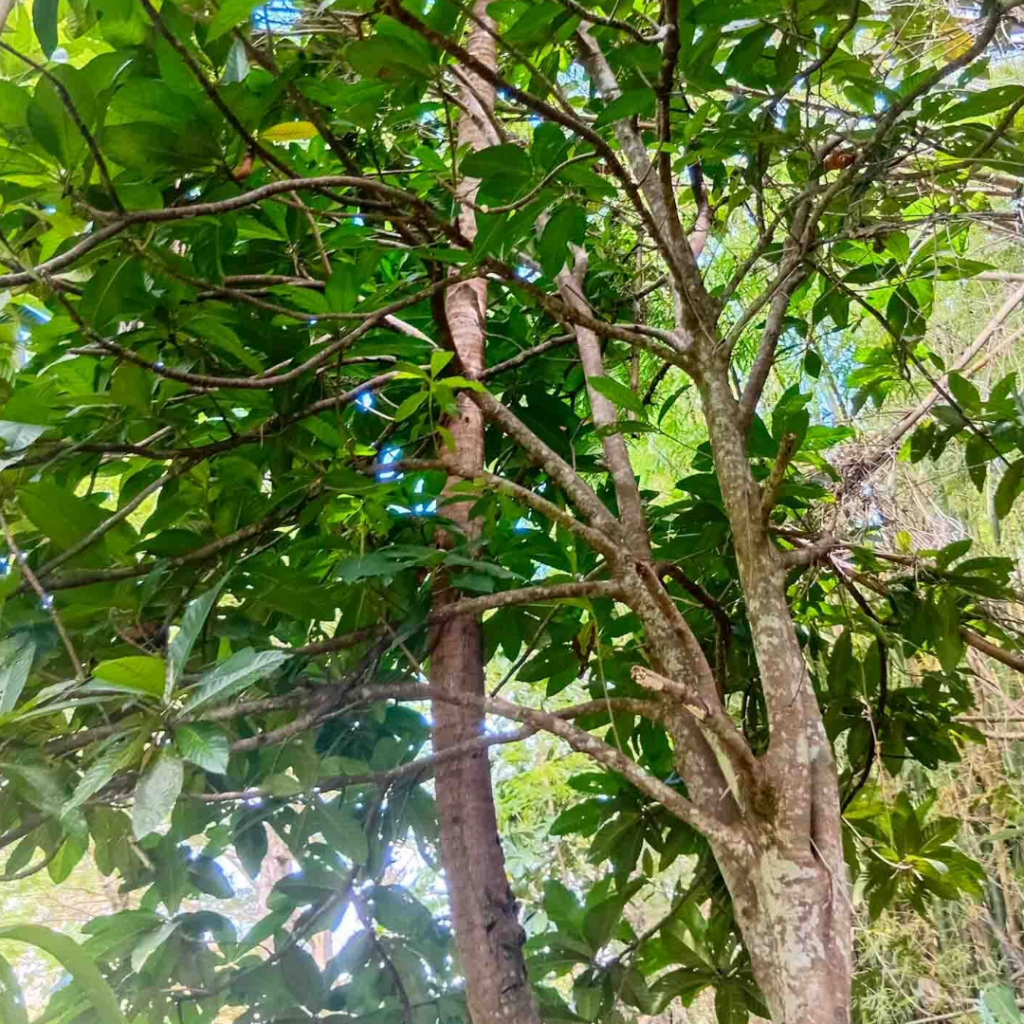
Bugney Tree
Manilkara dissecta
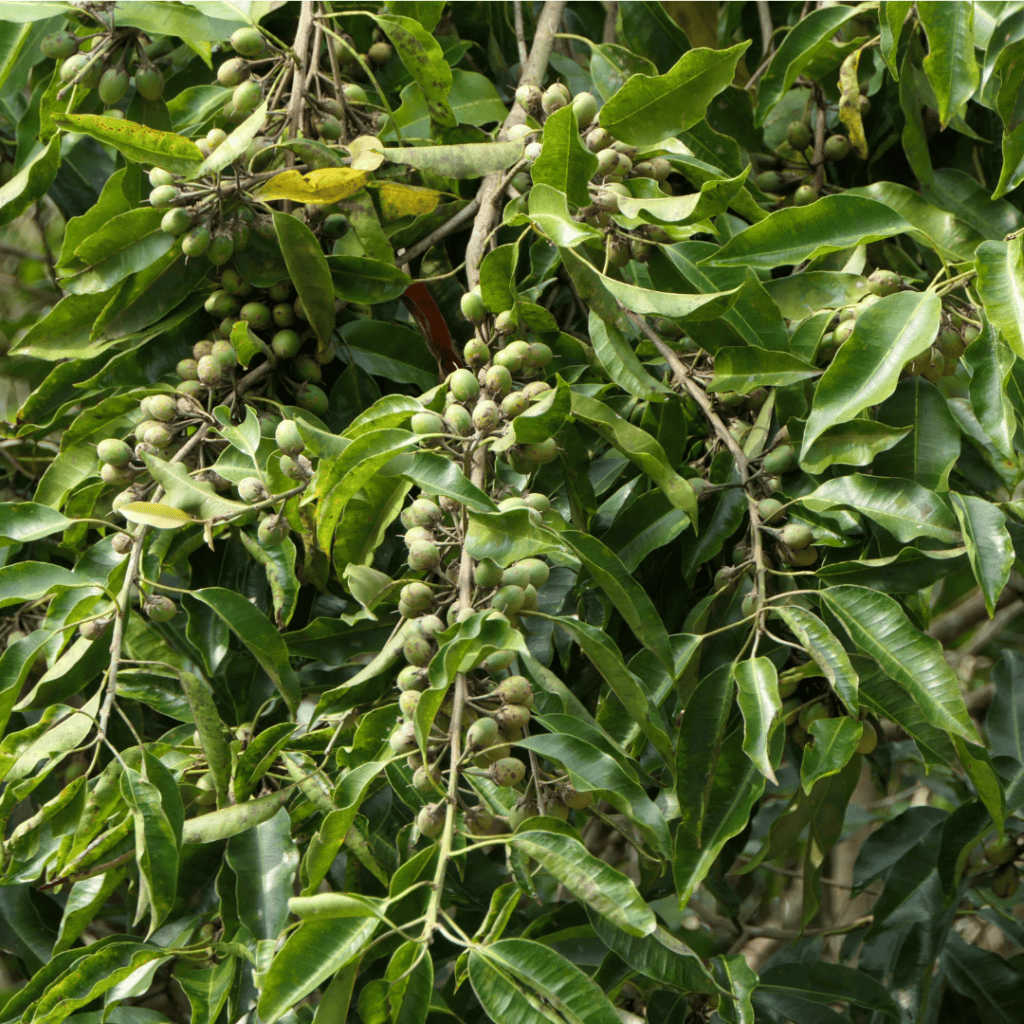
Gof Fig
Ficus habrophylla
Spanish Cherry / Bullet Wood
Mimusops elengi
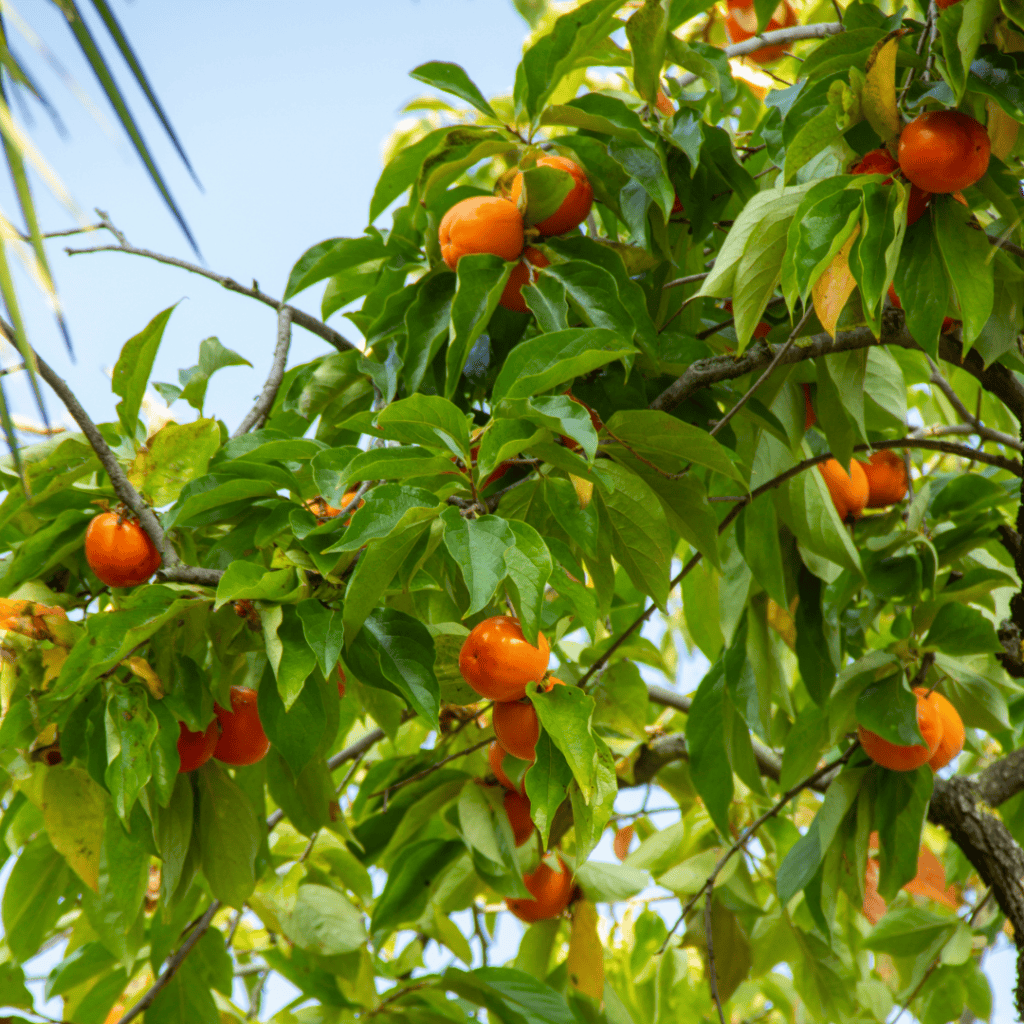
Persimmon / Ebony Trees
Diospyros species
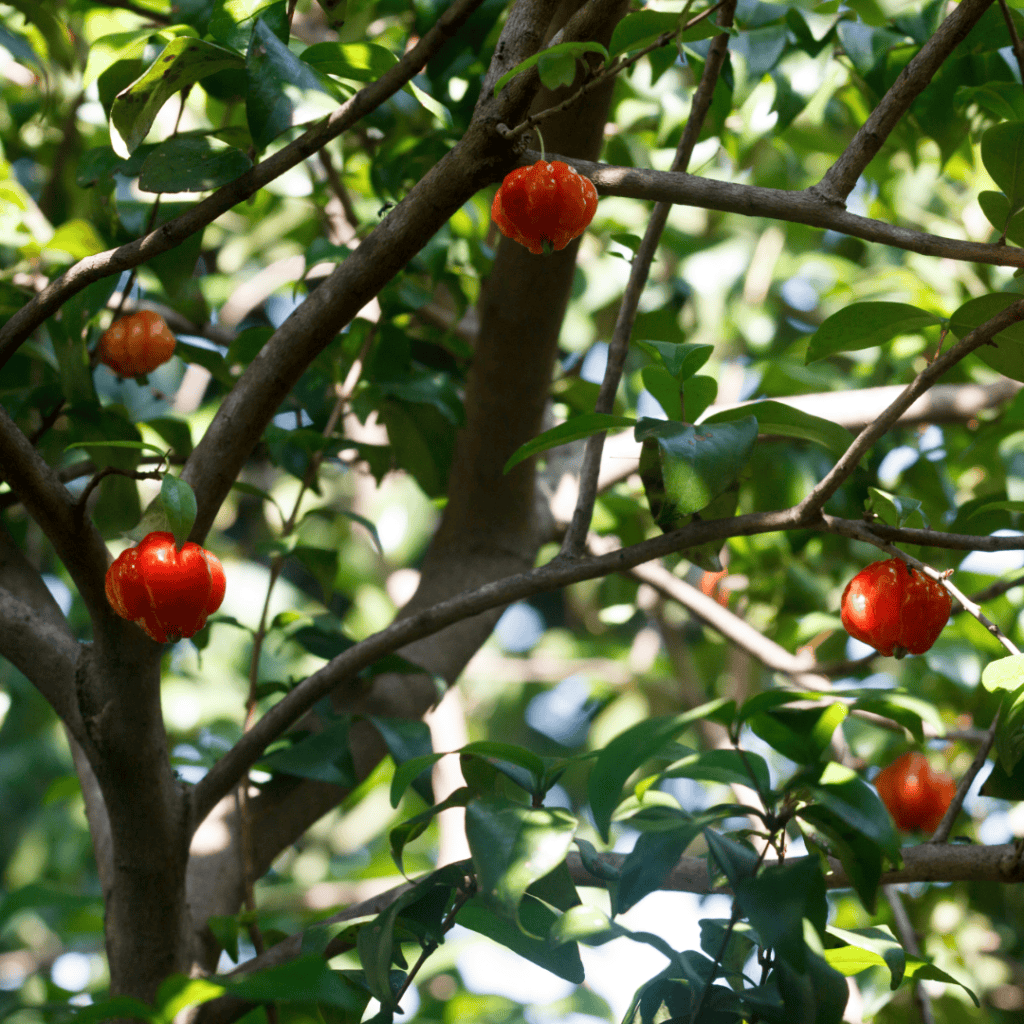
Eugenia / Brush Cherry-type Trees
Eugenia species
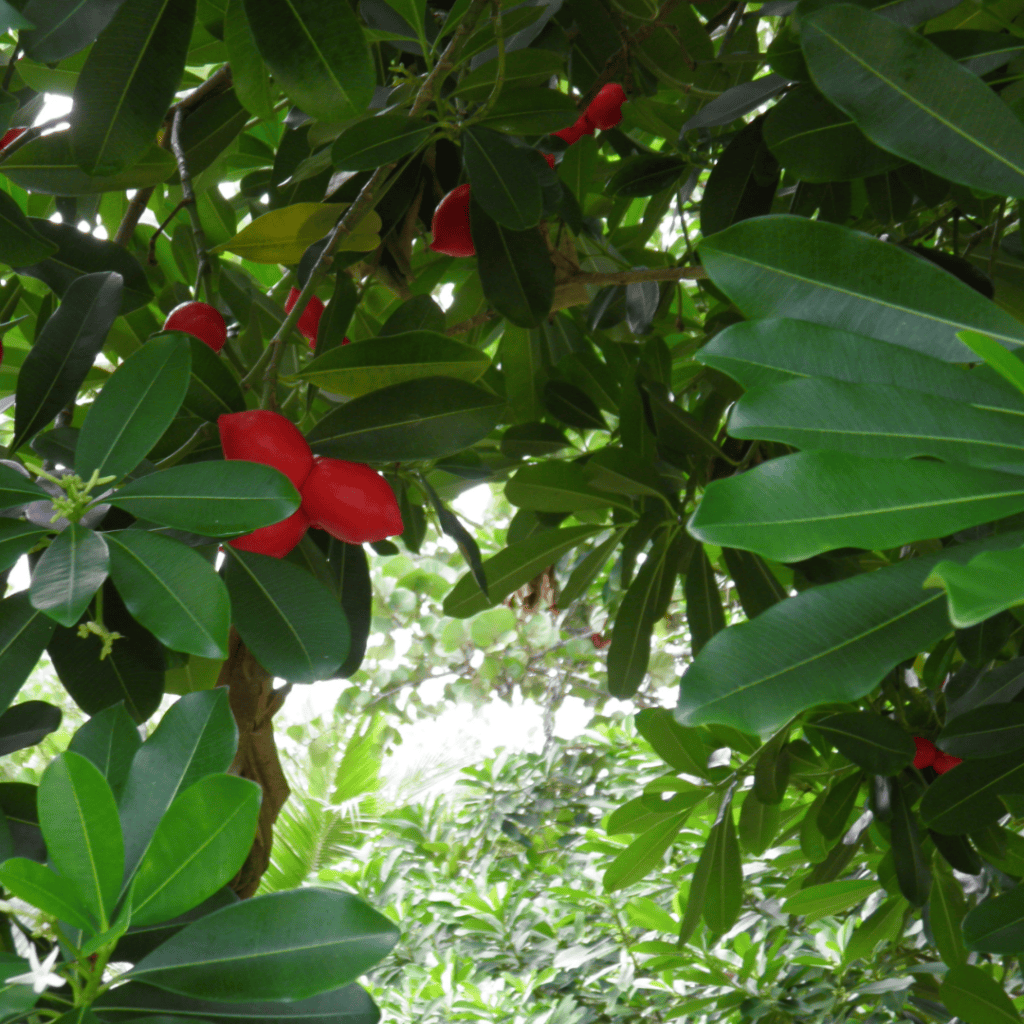
Scarlet Wedge-Apple
Ochrosia elliptica
Habitat Role
Fruiting trees help explain part of the ecological context behind crested gecko feeding.
These habitats are not just made up of leaves and branches. They include seasonal plant resources, fruiting structures, insects, pollen, nectar and other food opportunities.
This supports the idea that enclosure structure, live insects, seasonal variation and diet should be considered together.
What This Means in Captivity
This does not mean keepers should add wild fruiting tree species to an enclosure. Many are too large, unsuitable or potentially toxic.
Instead, the important point is that crested geckos come from an environment where feeding opportunities are linked to a complex living habitat. Feeding, planting, live food and seasonal husbandry should not be treated as completely separate subjects.
Blue River Diets uses this habitat-led approach to better understand the natural feeding context of crested geckos and their relatives.
How to Use This Information in Captivity
A naturalistic crested gecko enclosure should not be judged by how many plants it contains. It should be judged by how well it recreates the useful features of the habitat.
Good enclosure design should include:
- Tall usable space
- Strong branch structure
- Thin climbing routes through cover
- Epiphytic planting
- Humid but ventilated areas
- Ground and mid-level planting
- Leaf litter
- A constantly humid hide
- Open access for feeding
- Room for plants to establish and grow
- A functioning bioactive clean-up crew if the enclosure is described as bioactive
The goal is not to build a perfect miniature New Caledonian forest. The goal is to use real habitat observations to make better decisions in captivity.
Final Keeper Note
The plants recorded during the expedition offer a rare insight into the environments crested geckos use in the wild. Some can be replicated directly, while others should be treated as inspiration for structure, cover and habitat design.
Common names can vary between countries and plant suppliers, so scientific names are included wherever possible to help keepers identify plants accurately.
This page is intended as a habitat reference. For practical plant suggestions, visit our plant recommendation guide.
Read the expedition reports