
Expedition New Caledonia: Dry Season 2025
In October 2025, we returned to New Caledonia. This time, to learn more about the seasonality of the archipelago and understand how it affects the geckos that call these remarkable islands home.
Field data at a glance · Isle of Pines, October 2025
~50%
Average daytime humidity
75%
Humidity late at night
30℃+
Temperature by midday
6.7
Average UVI by 11am
70–85%
Humidity where geckos were active (20–26℃)
0
Geckos found during the day
Returning to New Caledonia
New Caledonia is located roughly 900 miles East of Australia and 1200 miles north of New Zealand on an ancient, submerged subcontinent known as Zealandia. The remaining islands that emerge from the Pacific Ocean are home to some of the most unique fauna on Earth. At around 20° South, the region receives a tropical climate year-round, but is also subject to notable seasonality.
Our first expedition took place in March, the last (and wettest) month of the ‘wet season.’ This time we would visit in October, the shoulder month between the dry (May – September) and the wet (December – March). Across the ocean, at similar latitudes, this marks Spring. Whilst New Caledonian climate isn’t as easily grouped into four distinct seasons, we hoped that this would mark an interesting time to return.
Landing in Noumea, the flagship city on Grand Terre, we knew things would be different. The sun was shining, the beaches bustling and navigating the city felt much easier within the tourist season.
Perhaps most importantly, the ferry to the Isle of Pines was an entirely different experience. Calm seas were much kinder on the stomach.

Isle of Pines
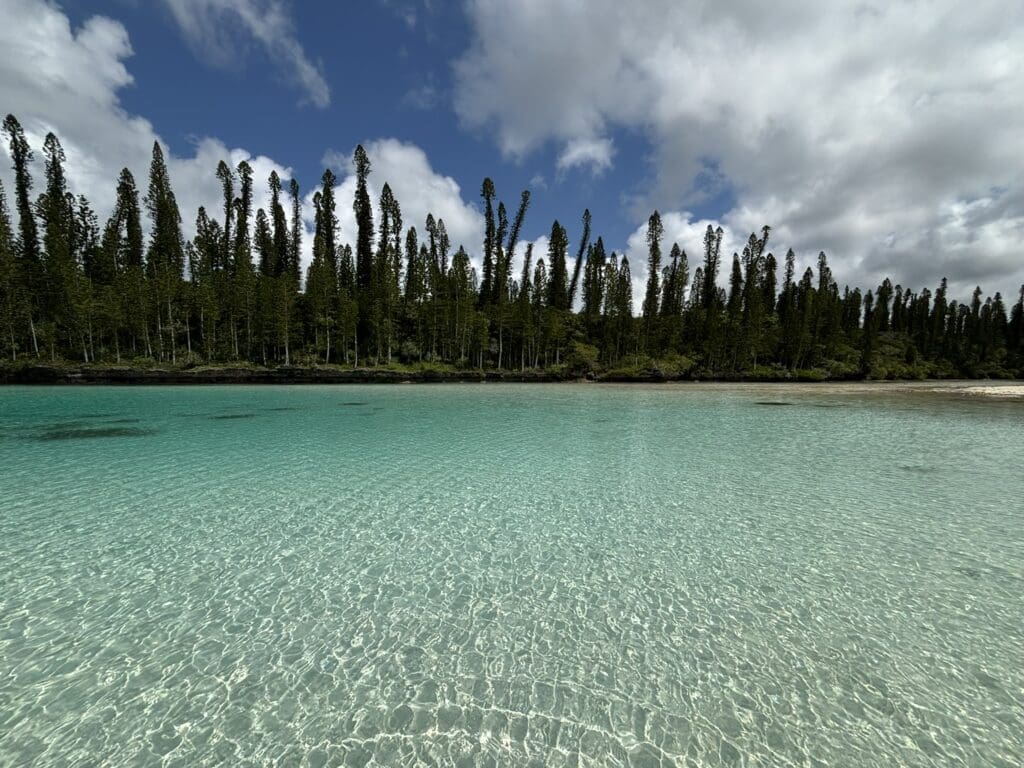
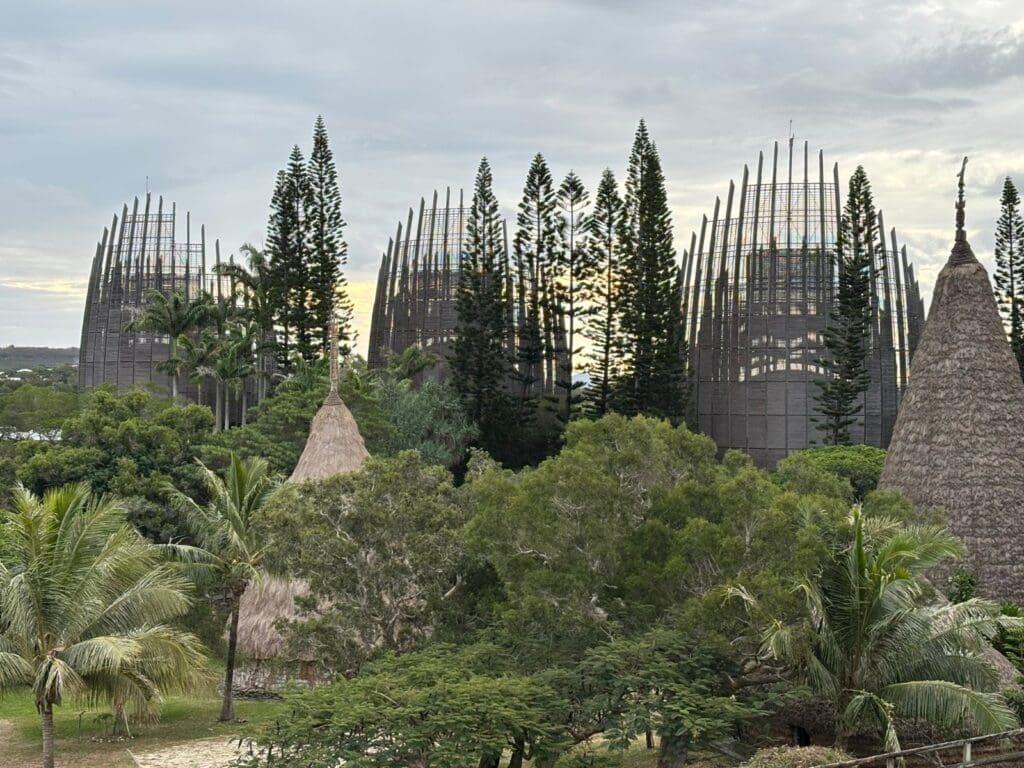
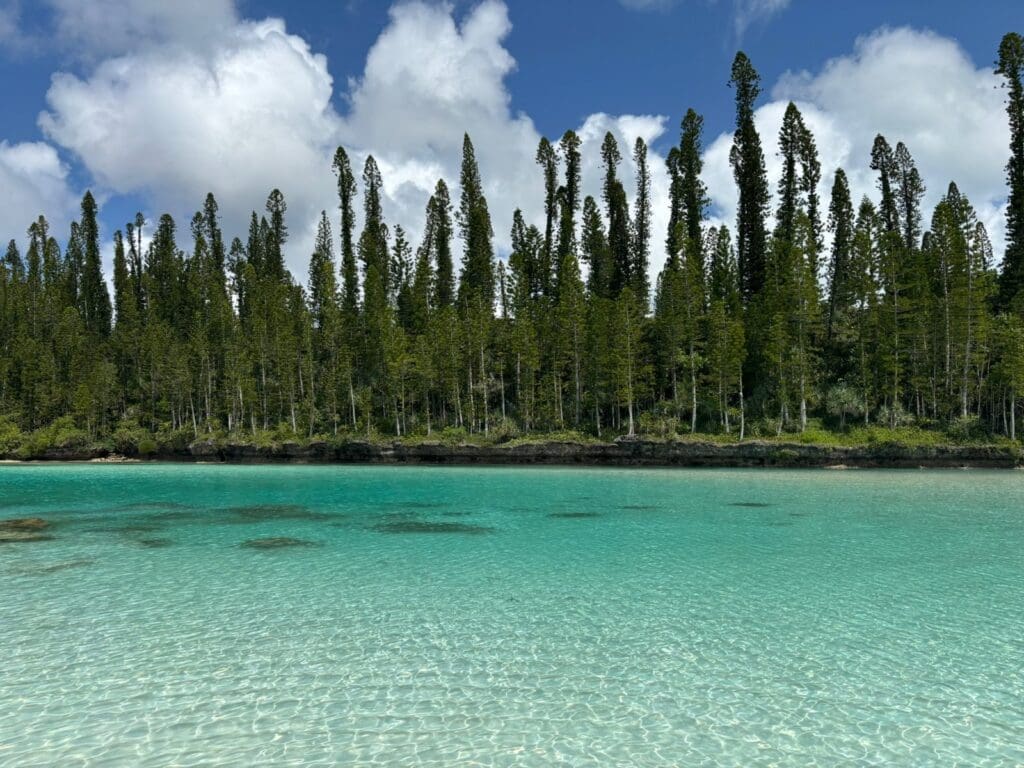
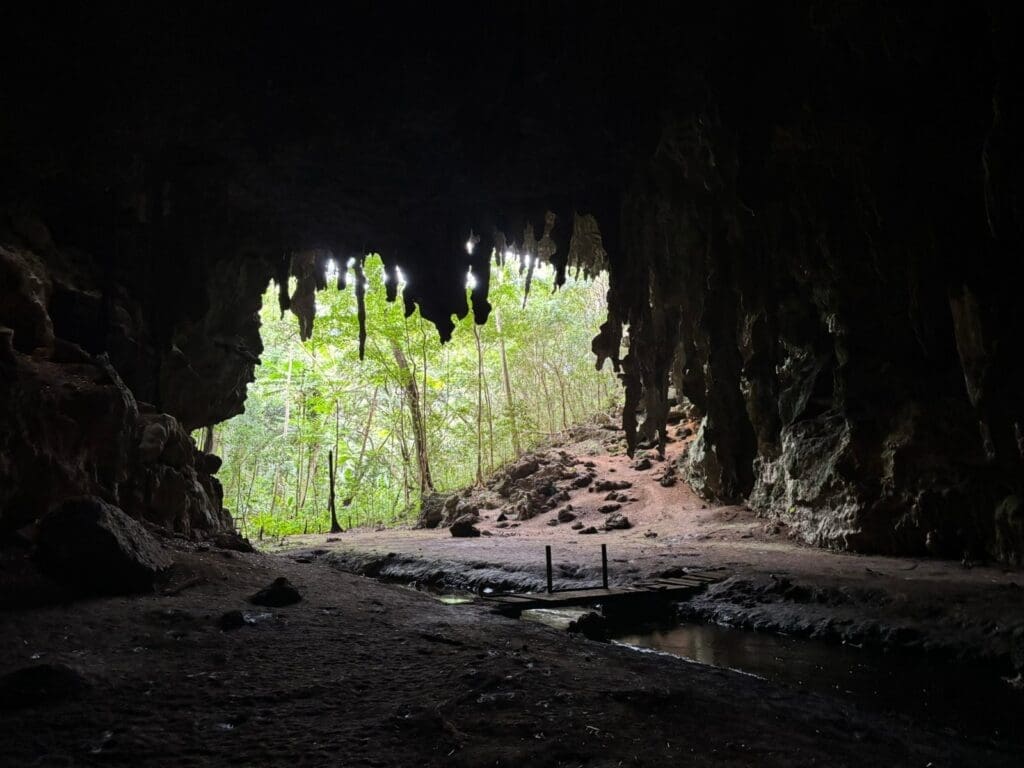
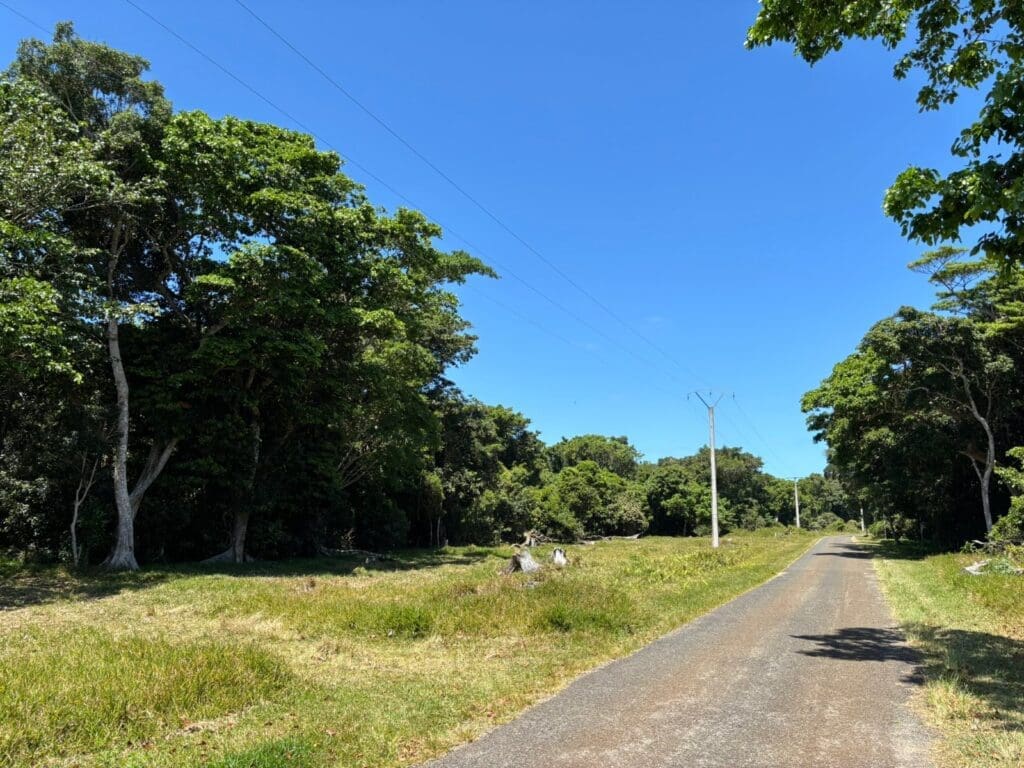
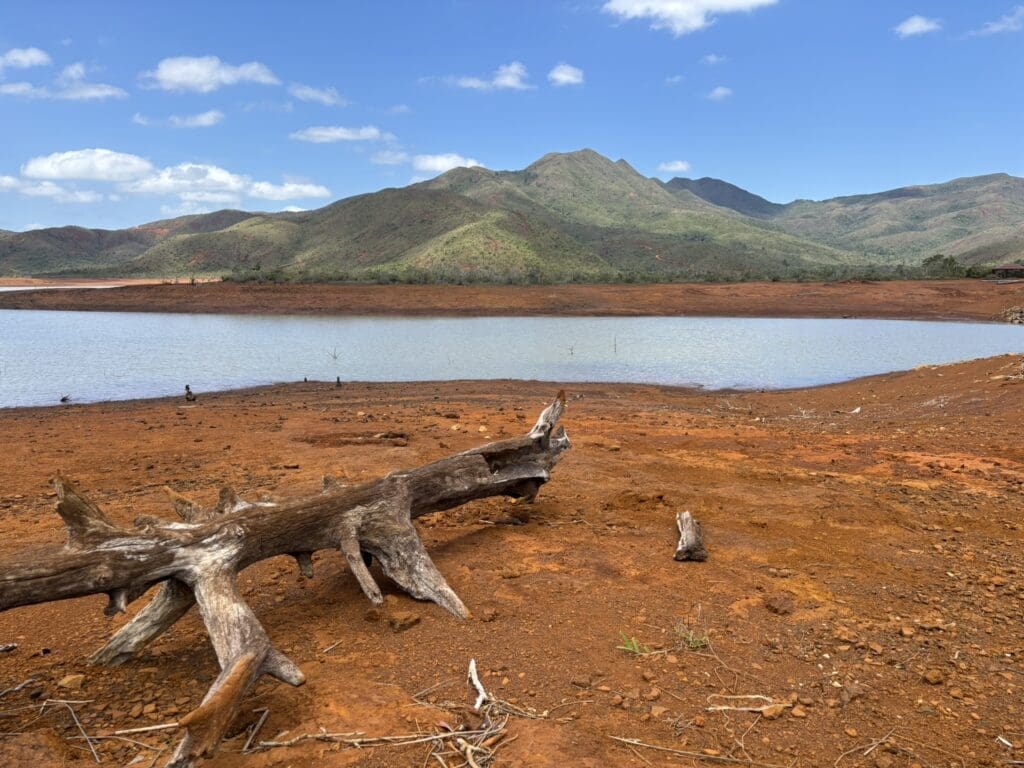
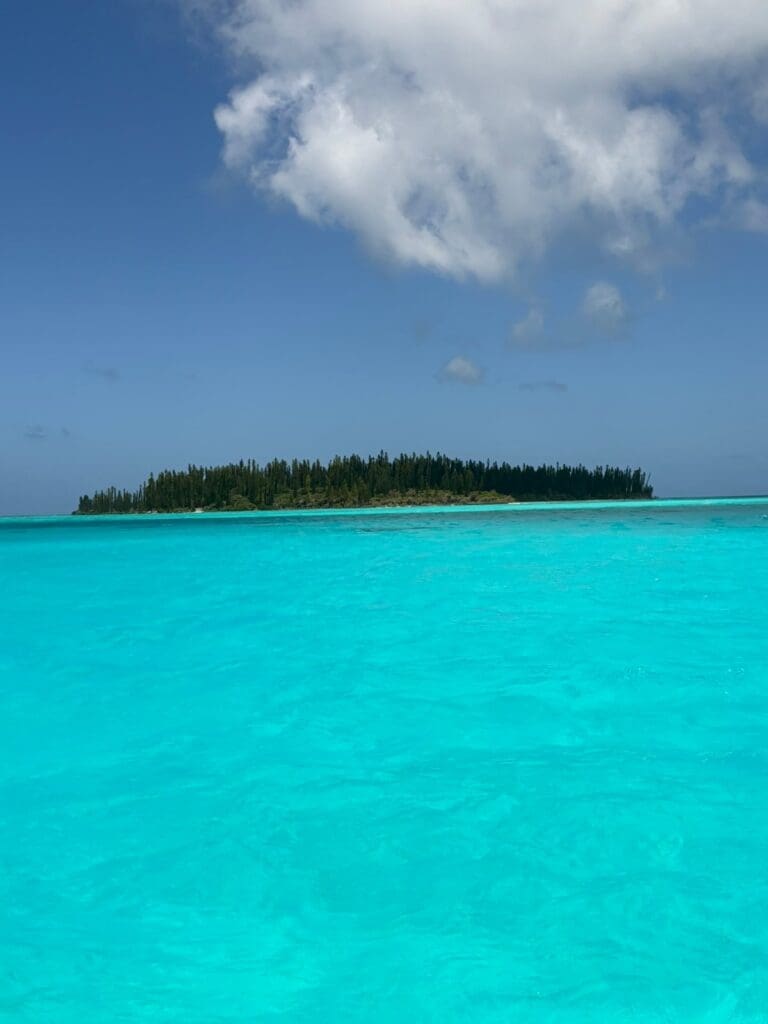
The Isle of Pines is perhaps one of the most idyllic places on Earth. The postcard picture of paradise is, however, seasonal. On our first expedition, we had only a few moments of clear skies and almost hourly rainfall. This time, it was an entirely new experience.
The sun was shining and even in this cooler period, temperatures still exceeded 30℃ by midday. Humidity was also shockingly low, averaging around 50% during the day and only increasing to 75% late at night.
Whilst the conditions were perfect for holidaymakers, this initial reintroduction to the island made us a little nervous. Would the geckos still be active in these remarkably dry conditions?
Gecko Activity
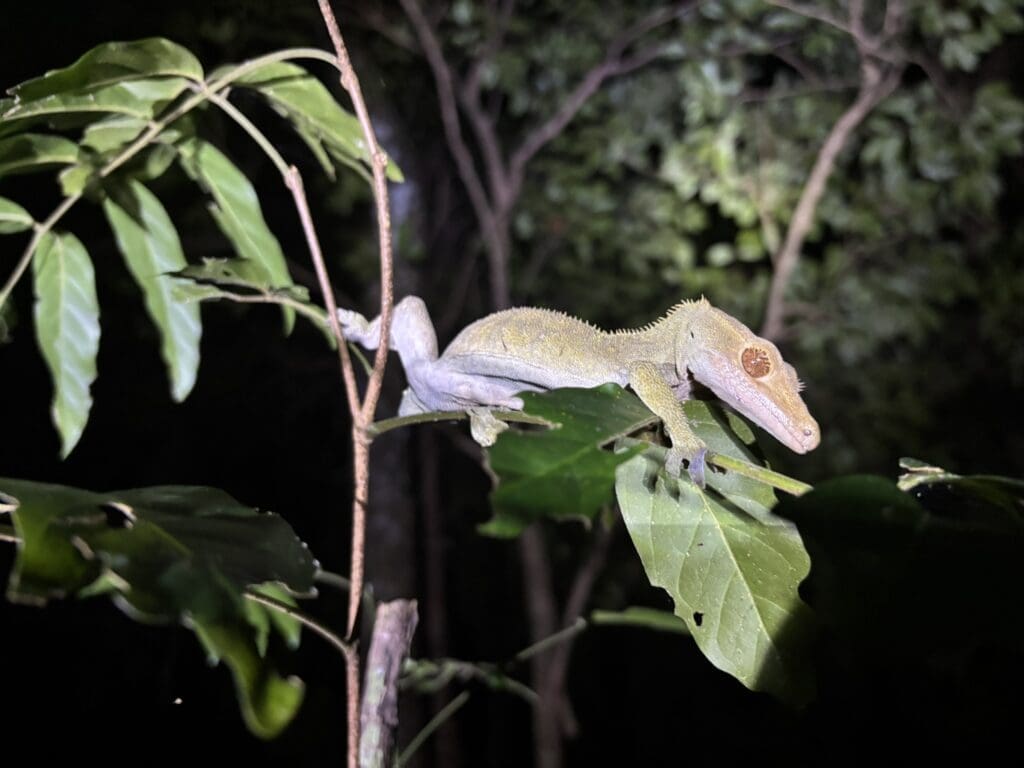
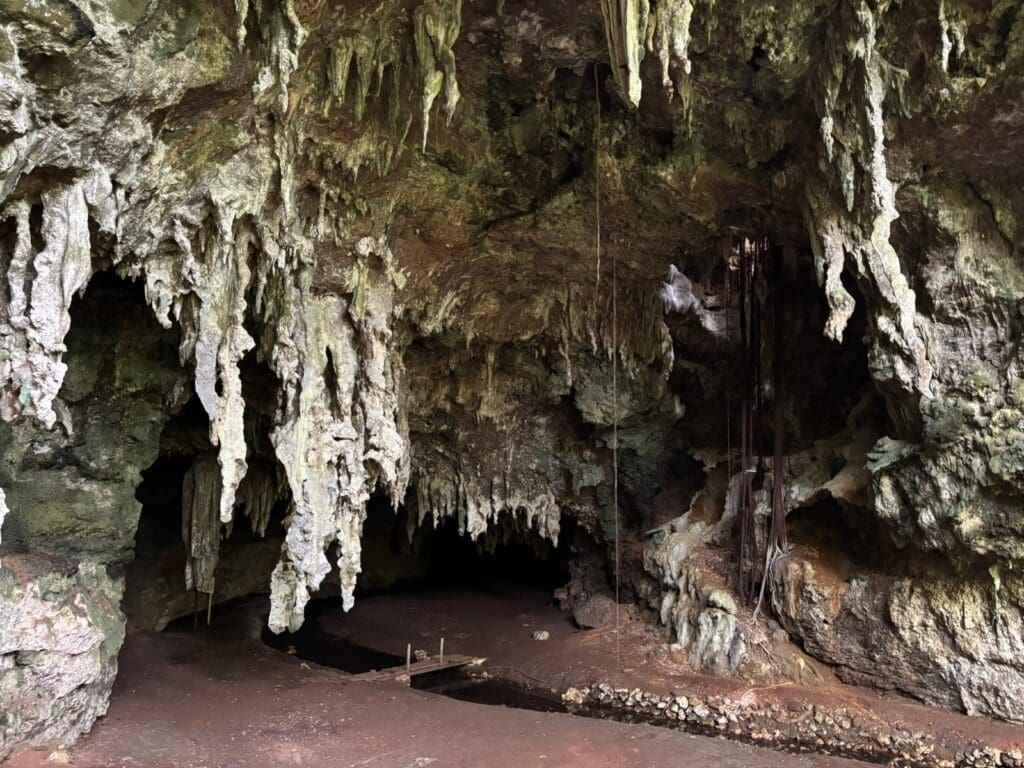
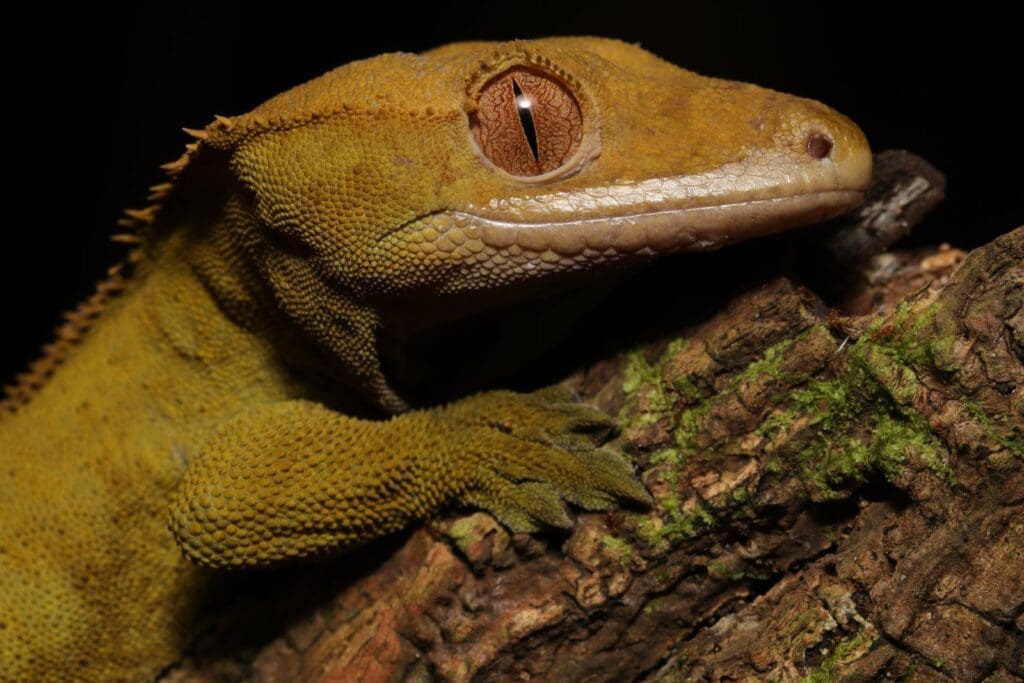
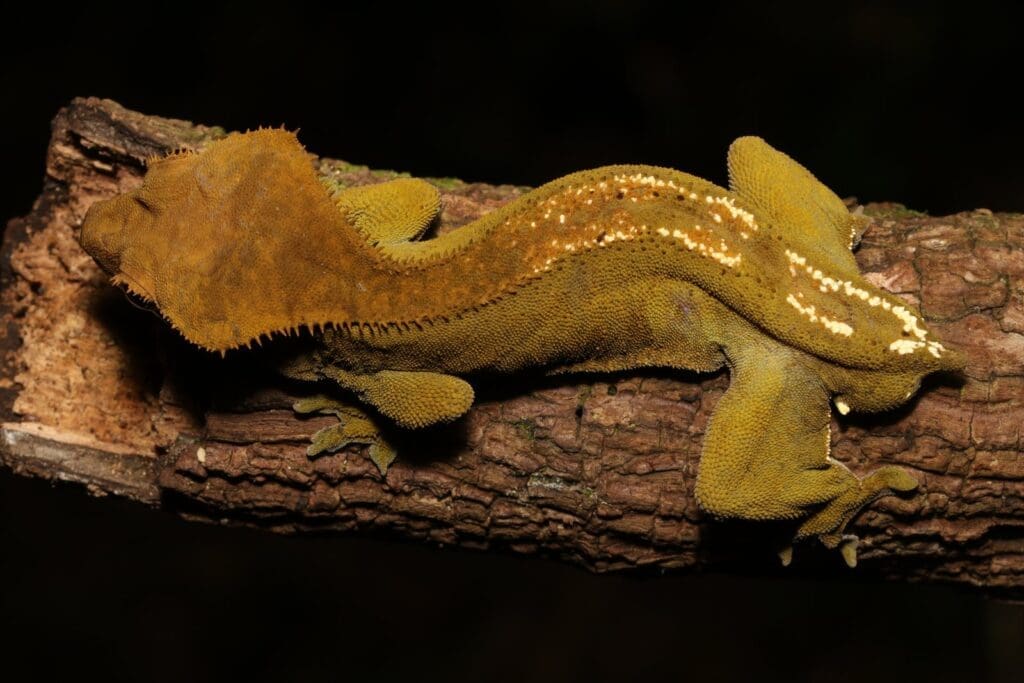
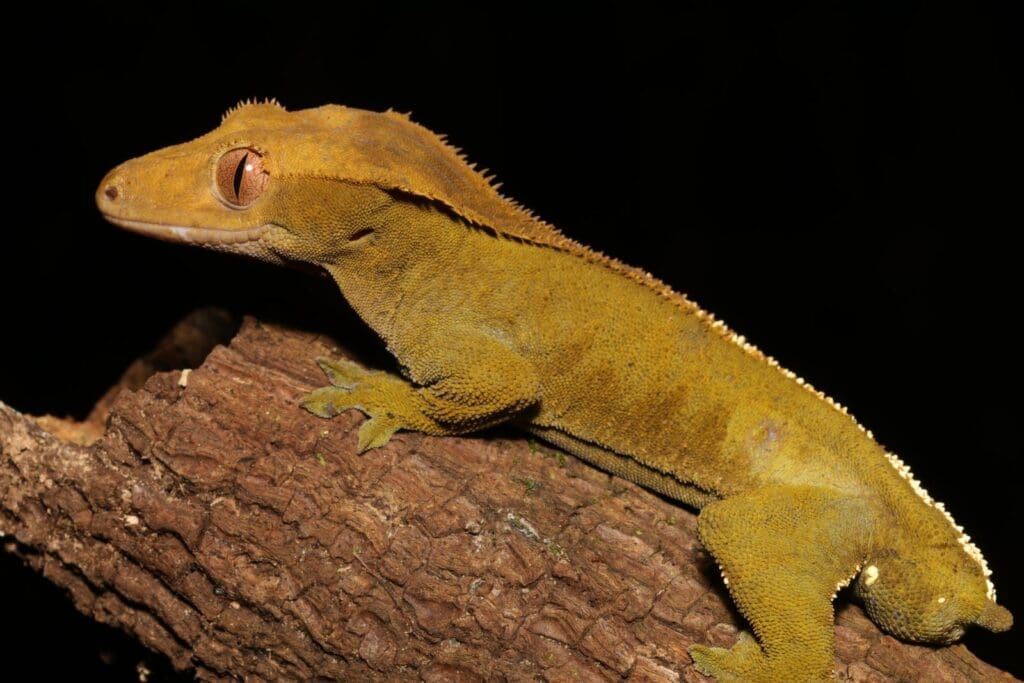
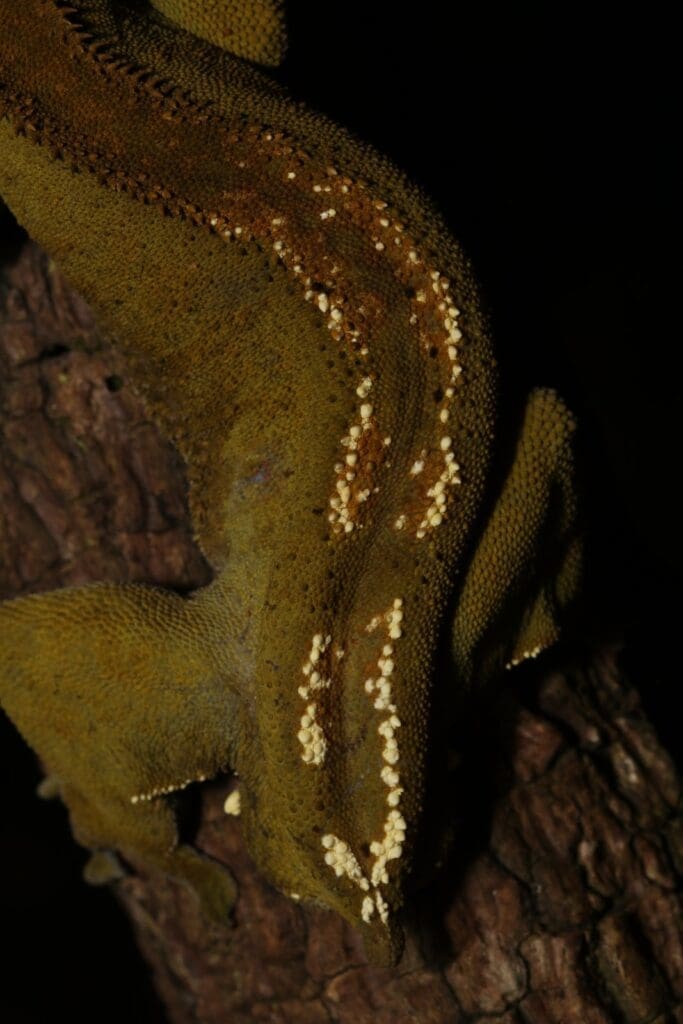
Upon visiting some old and new locations (thanks to the support of local landowners and farmers), we began finding Crested Geckos quite quickly and eventually saw more animals in the dry season than in the wet.
There are several ways to interpret this. One may believe that the dry season offers more favourable conditions for Crested Geckos and thus, we should keep our animals drier and cooler. However, we believe that sightings are not directly correlated to the species’ environmental preferences.
Across both seasons, we found crested geckos in conditions of 70 – 85% humidity and 20 – 26℃. In dry season, this only occurs late in the evening, whereas in wet season, there are often full 24-hour cycles within these parameters.
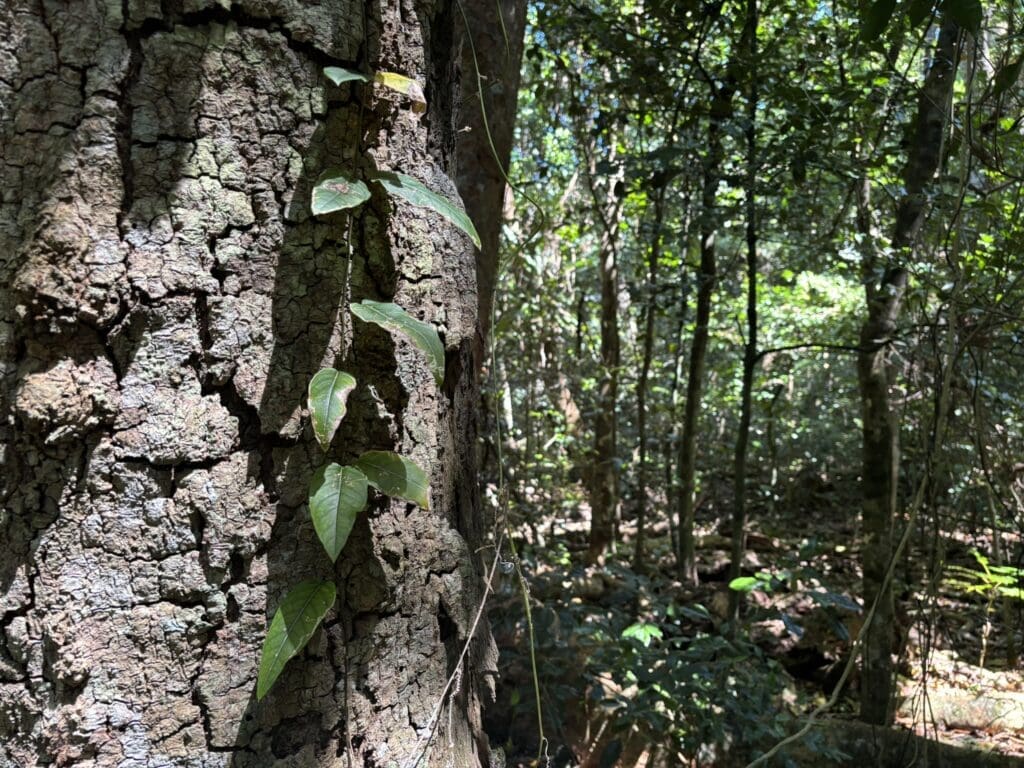
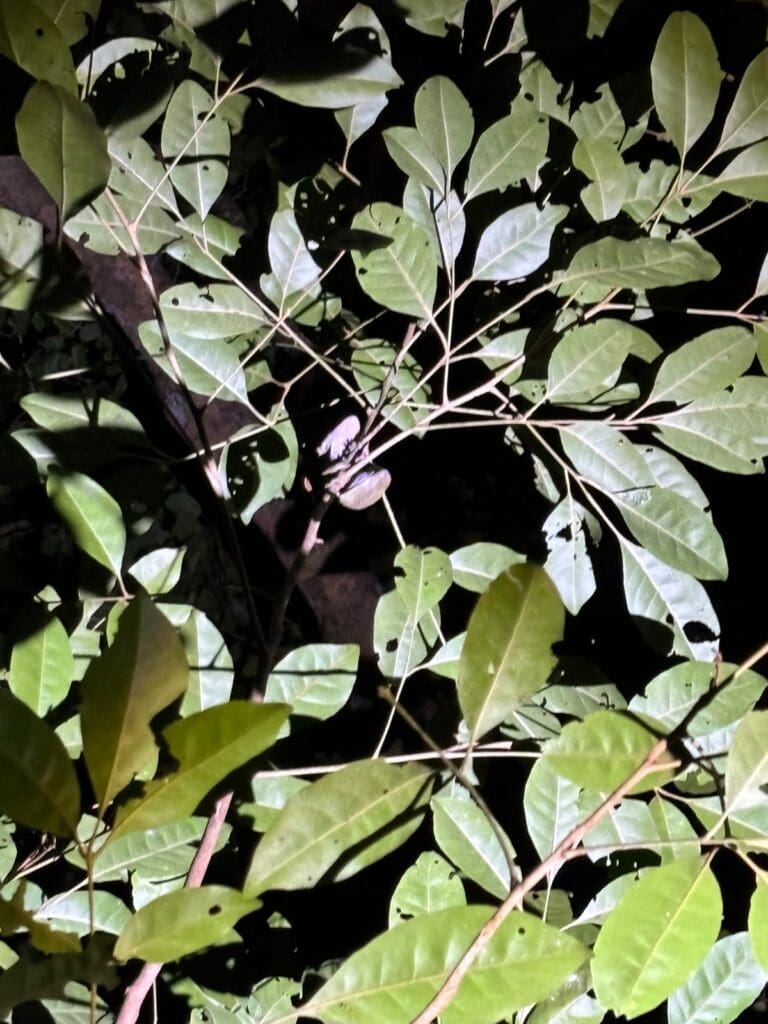
Furthermore, in the dry season, geckos were found much later into the night and generally higher up in the trees where humidity is at its highest. Perhaps the greater number of observations indicates more concentrated activity hours during this period, which allowed us to observe more animals.
What this means for your crested gecko
Learning that the geckos we keep in captivity are being provided with optimal conditions for activity in the wild was initially very reassuring. However, it is important to consider that these fluctuations guide the animals’ behaviour. Dry, sunny days are a trigger for geckos to rest and find shelter. Warm, humid nights tell the gecko that insects will be abundant and it’s worth risking shelter for hunting opportunities. Whilst captive crested geckos may not need to hide from predators, they are still finely tuned to their surroundings. Allowing a terrarium to sway from 18℃ at night to (short periods of) 30℃ at midday might be healthy, providing the animal has a cooler microclimate to retreat to. Humidity is equally important. It should exceed 75% at least once every 24 hours to trigger activity. However, an artificial “wet season” that sees constant humidity of +80% may be a natural trigger for diurnal behaviours and basking.
UVI
A key area of controversy around the management of Correlophus ciliatus is the need for UV. To be clear, we believe that all captive reptiles and amphibians deserve UV. It is a key component of sunlight, and even nocturnal animals will respond to sunlight in some way. However, our wet season expedition did raise some questions.
During the wet season, UVI was less than 1 at almost all times, except for two occasions when the clouds parted, and it shot up to 10. Essentially, Crested Geckos would only receive very low levels of highly fragmented UV during this season. Yet, we did find a gecko exposed and seemingly basking on the side of a tree trunk at 3PM during this time, suggesting UV is actively sought out when conditions are right.
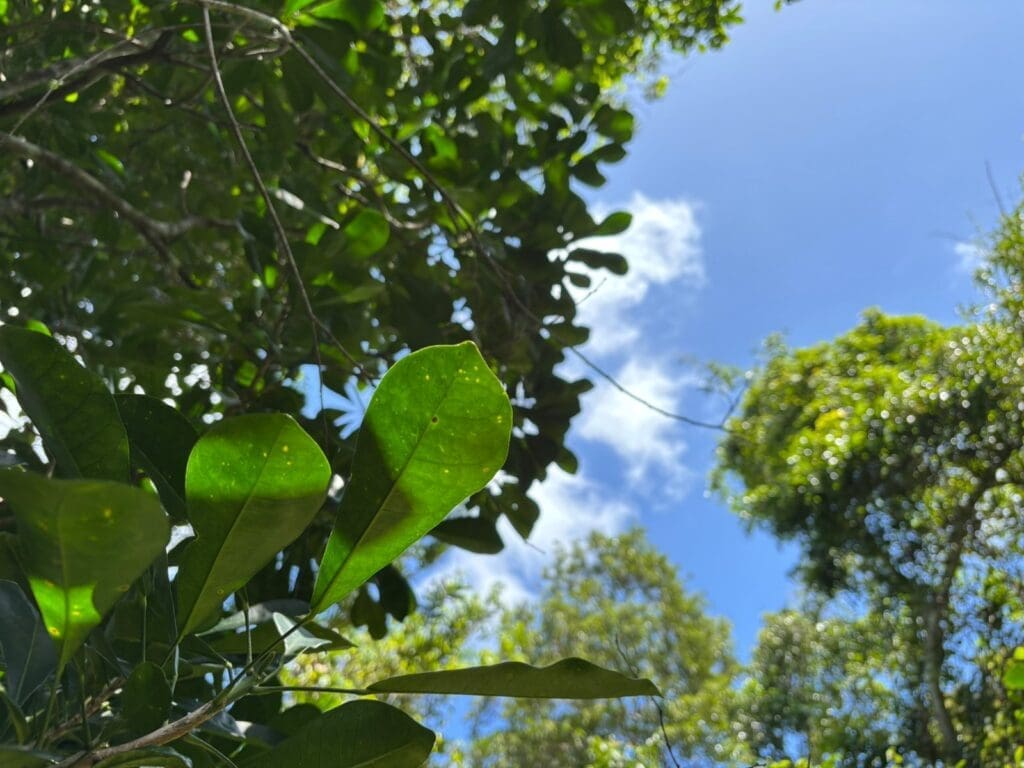
In contrast, the clear skies of dry season gave us a much more notable UVI arc. UVI would increase sharply from sunrise and reach an average of 6.7 by 11AM. This would then gradually reduce until 5PM. Sunset would typically take place around 6PM. On this expedition, we did not find any geckos during the day. Intense sunlight may be actively avoided.
Gecko Abundance
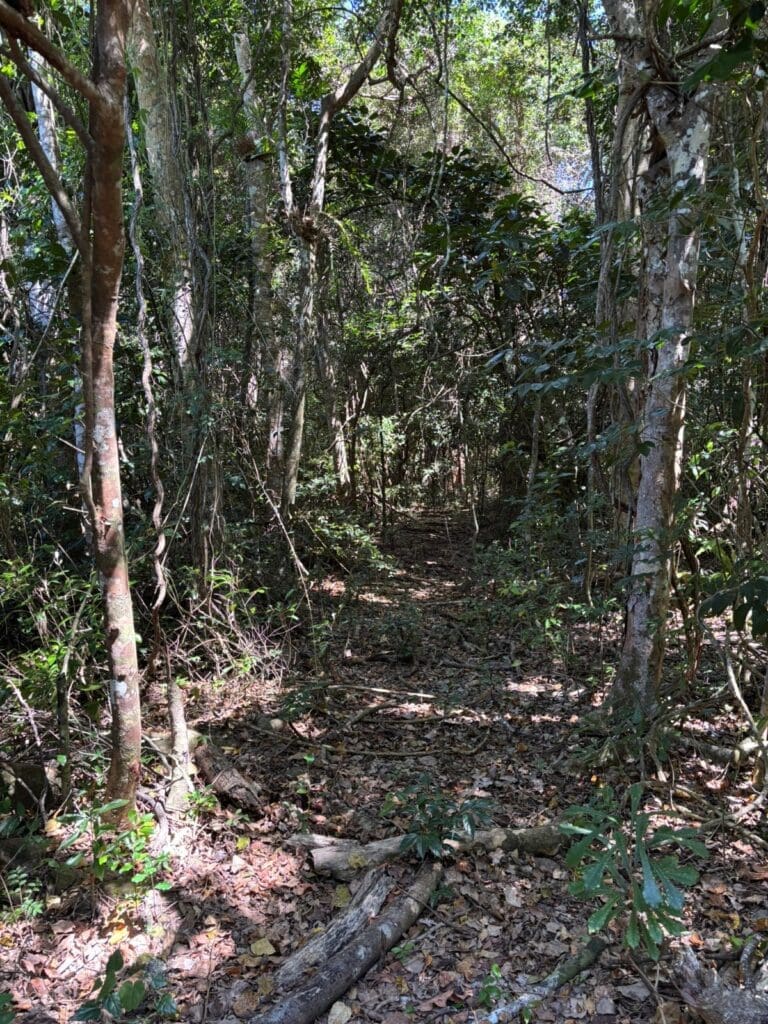
During our time on the Isle of Pines we recorded very different herpetofauna diversity across the two expeditions. In the wet season, we frequently saw Bavaiya robusa and Nactus pelagicus. These small, insectivorous geckos could be seen on the tree trunks and darting between bark and refugia. We did not count the number of these small geckos, but we would generally see 2 – 5 animals each evening. In the dry season, we saw none.
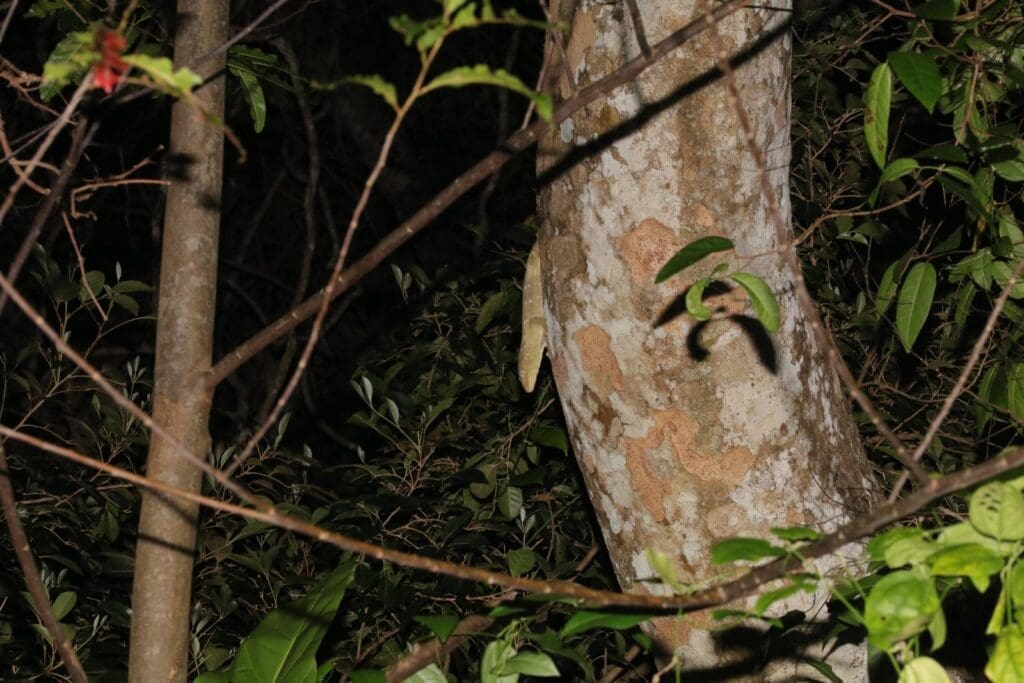
However, we did observe at least four Rhacodactylus leachianus and one Rhacodactylus chahoua. These new observations may have been the result of better observational skills in new areas, but they did seem to align with another observation we made regarding gecko diets.
Fruit and Insect Abundance
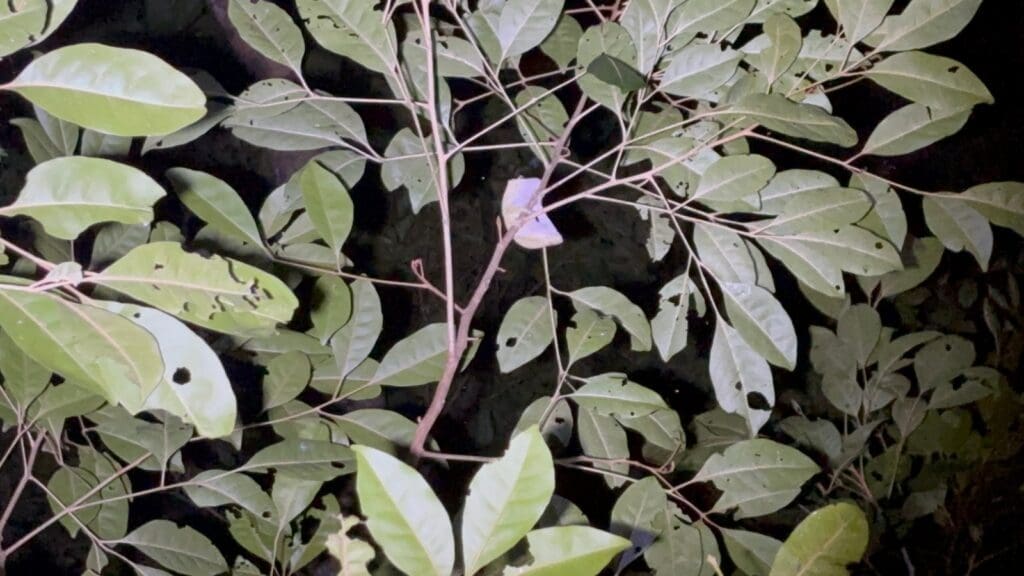
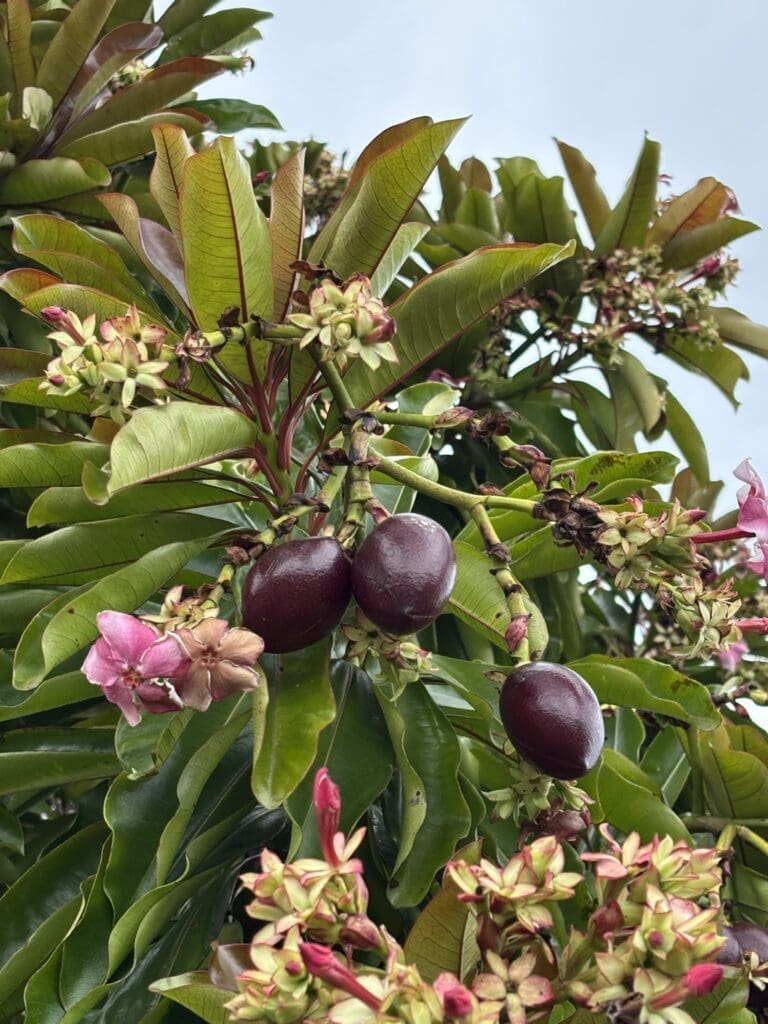
Insect activity appeared to be directly linked to humidity and rainfall. In the wet season, flying insects such as moths, cicadas and flies would relentlessly hit our headtorches. In the dry season, this was not an issue. Although only observational, insects certainly seemed more prevalent in the wet season. Likewise, nocturnal flying insect abundance rose on humid evenings and after rainfall.
What this means for your crested gecko
Offering a more diverse range of live foods within an artificial “wet season” and introducing them after spraying the enclosure may be a more natural feeding regime. To take this one step further, adding live foods when it is raining outside and the barometric pressure is low might also be an easy trick to align with the gecko’s natural feeding instincts.
Plants
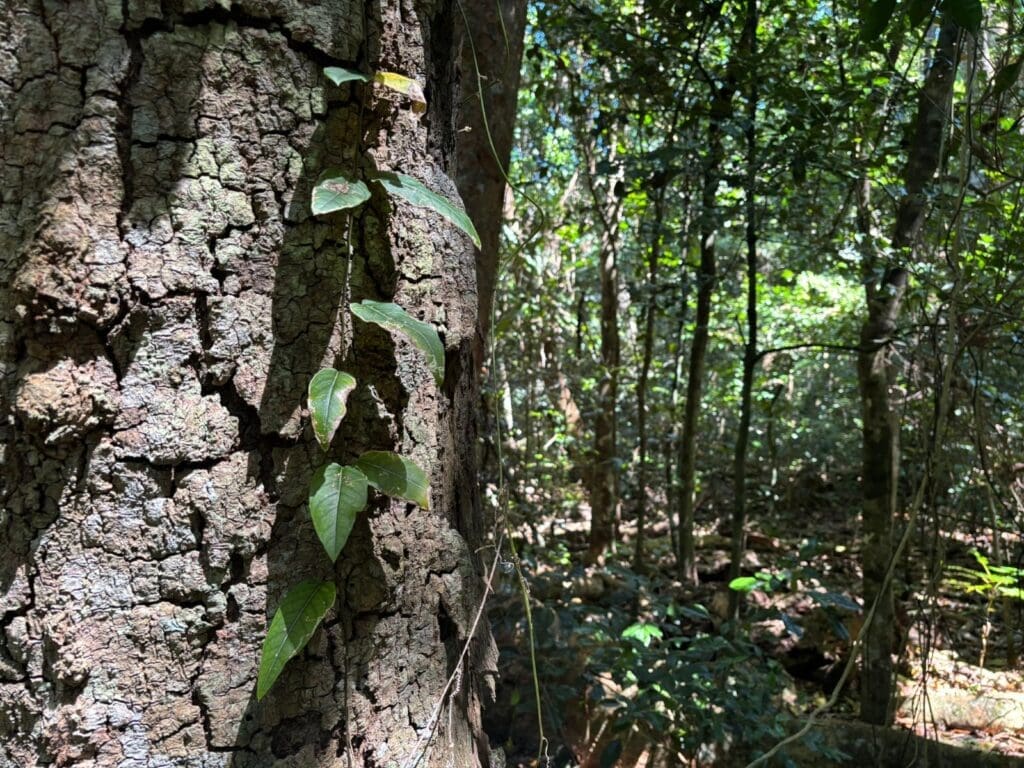
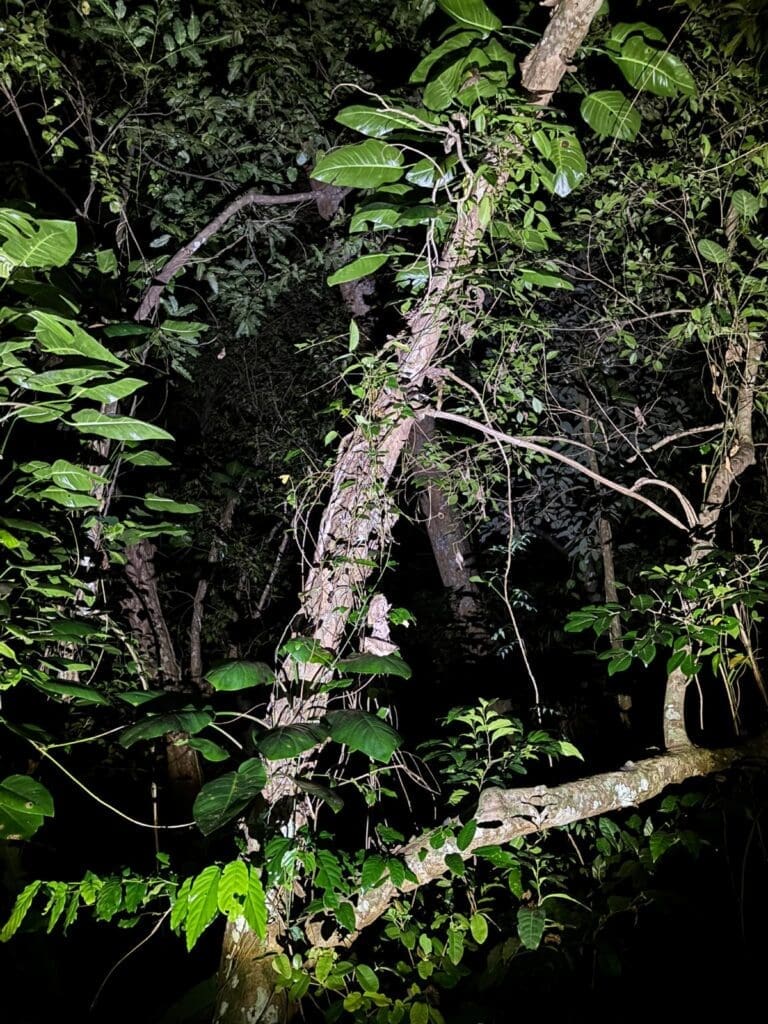
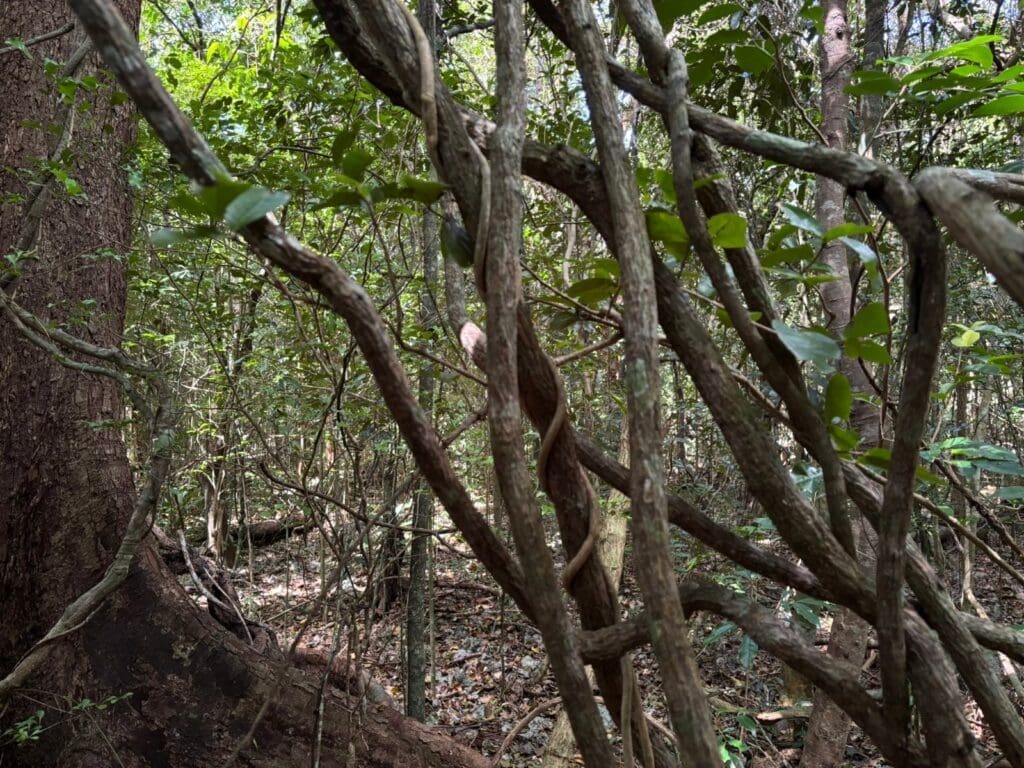
Plant diversity remained similar to our first expedition. However, we have identified more species and worked with professional botanists to suggest alternative readily-available species for use in the terrarium in our ultimate plant guide.
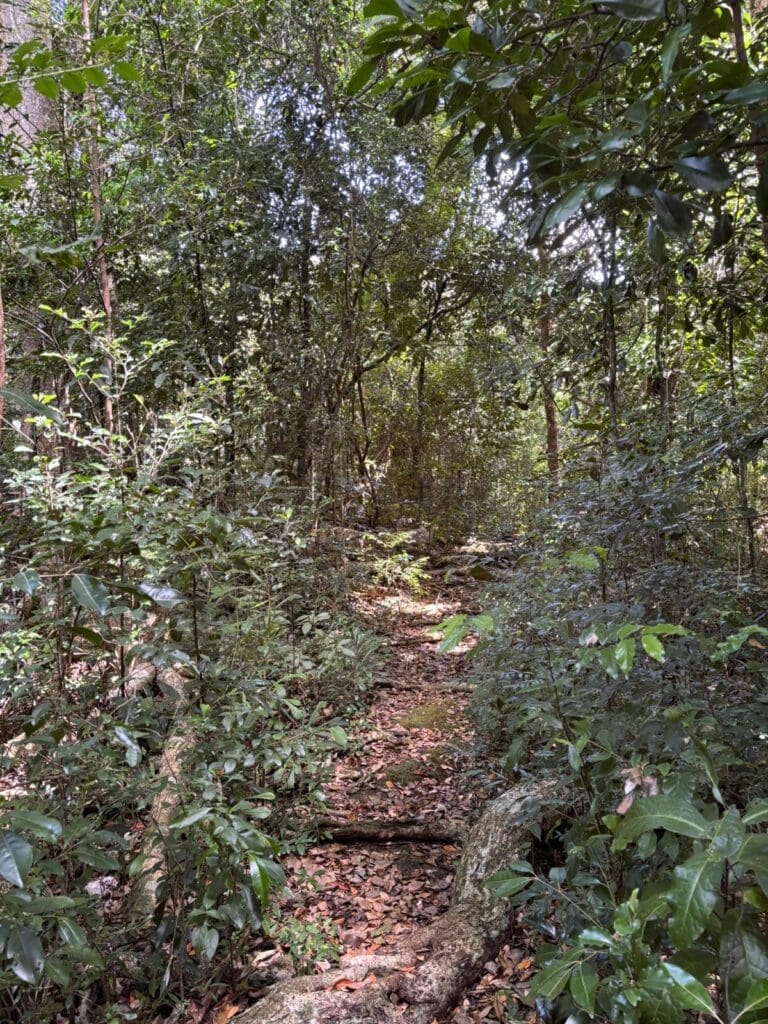
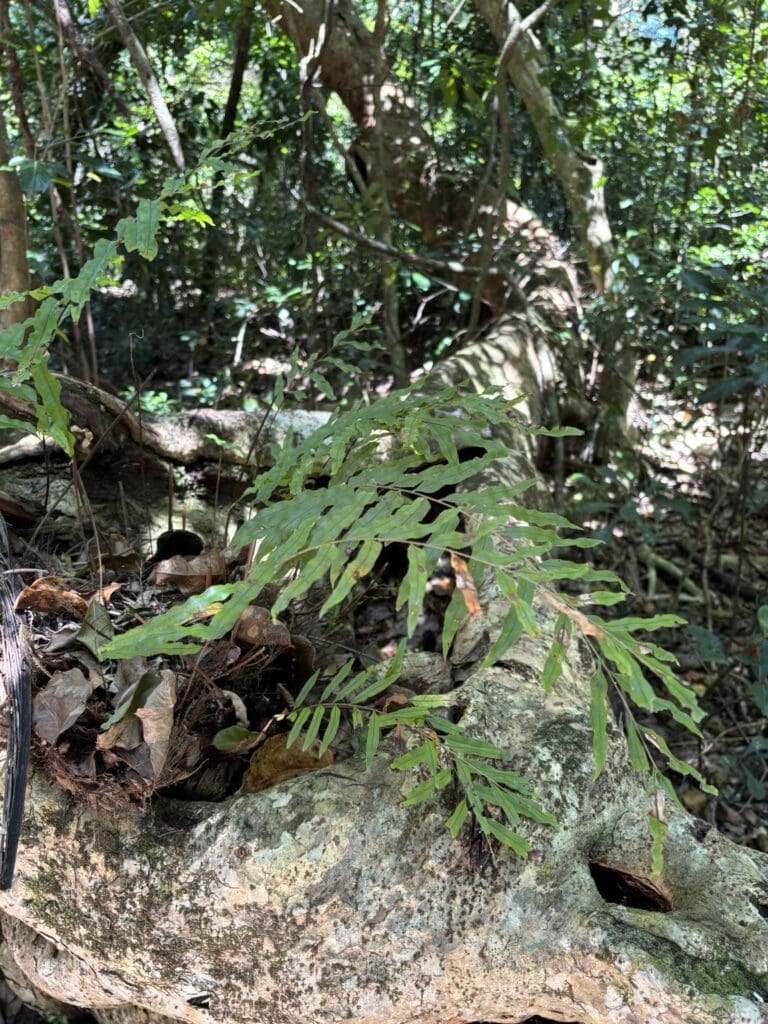
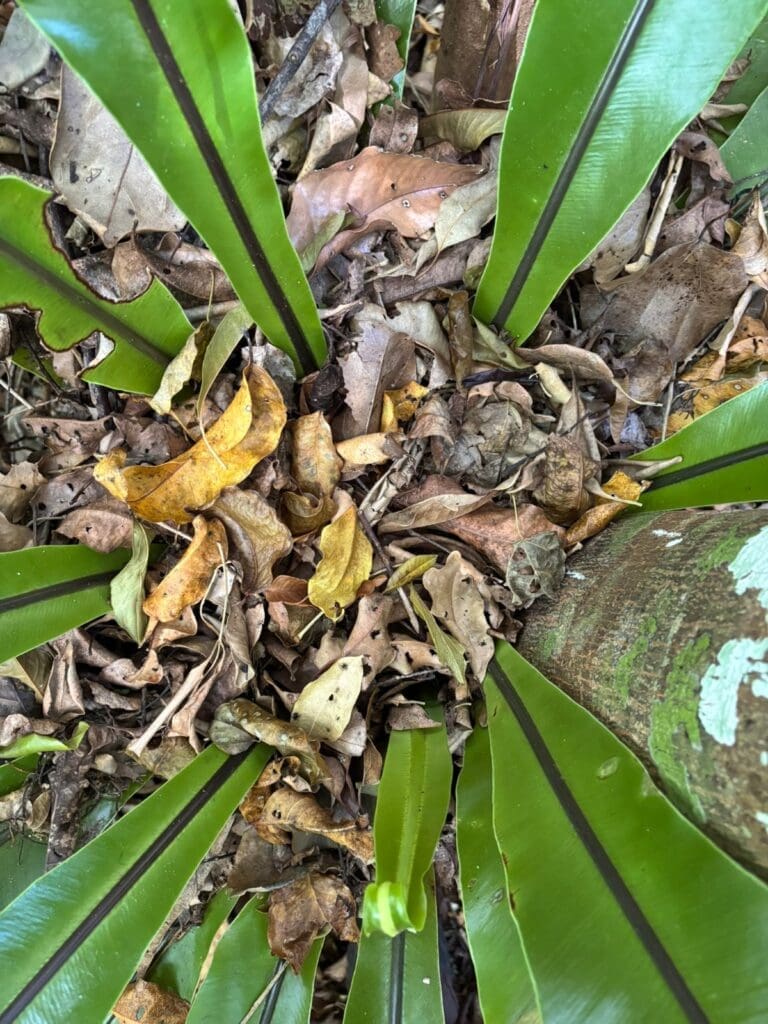
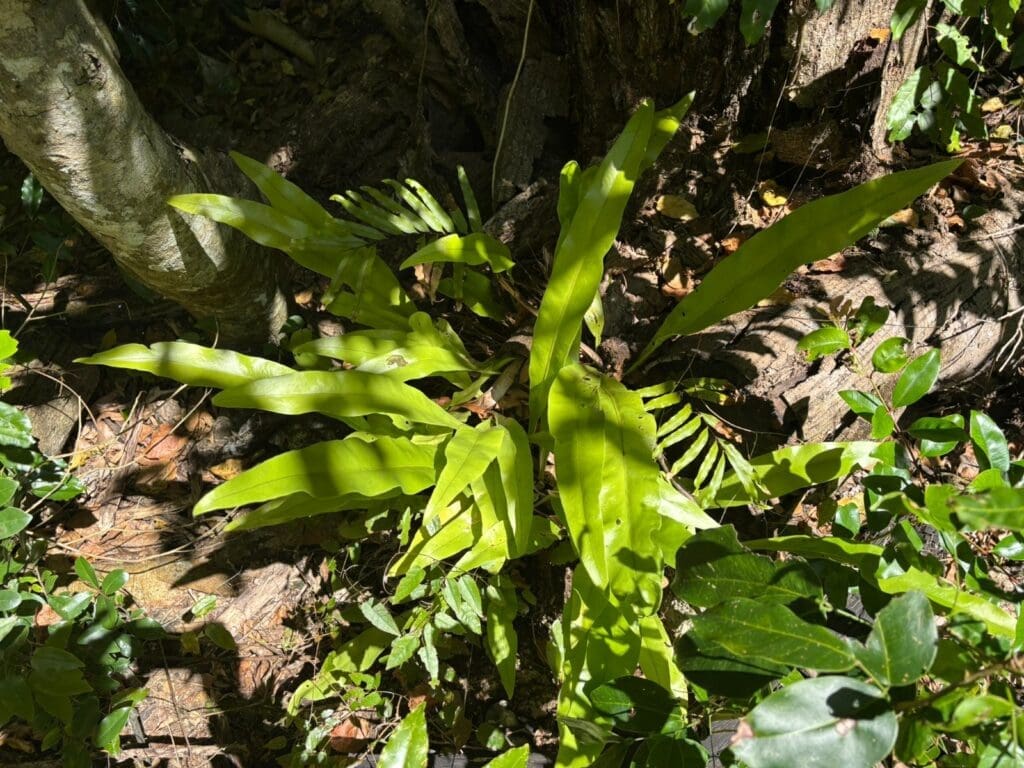
Since returning from New Caledonia on our first expedition, we began exploring the idea that Crested Geckos may utilise epiphytic ferns to lay their eggs. Other herpetologists have found Correlophus ciliatus utilising fern axels to rest during the day. Although we did not make the same observations, we decided to investigate the decaying leaves that were caught within the plants. This leaflitter created a perfectly dry and well-protected area, excellent for egg-laying. There was no discernible difference between the temperature and humidity within the leaves and outside of the leaves. But, in wet season when it’s always warm and humid and conditions are stable, a dry location is the most important feature.
Of the epiphytic ferns, Bird’s Nest Ferns and Basket Ferns were most obvious. Some measured easily +2m in width, with the centre axels capturing leaf litter of at least 45 – 60cm2, a similar size to the base of a terrarium. Could it be that captive geckos lay on the “ground” not because it’s the most natural place, but because it is the only suitable substrate for them? With Birds Nest Ferns frequently available in the hobby, we intend to explore this topic further.
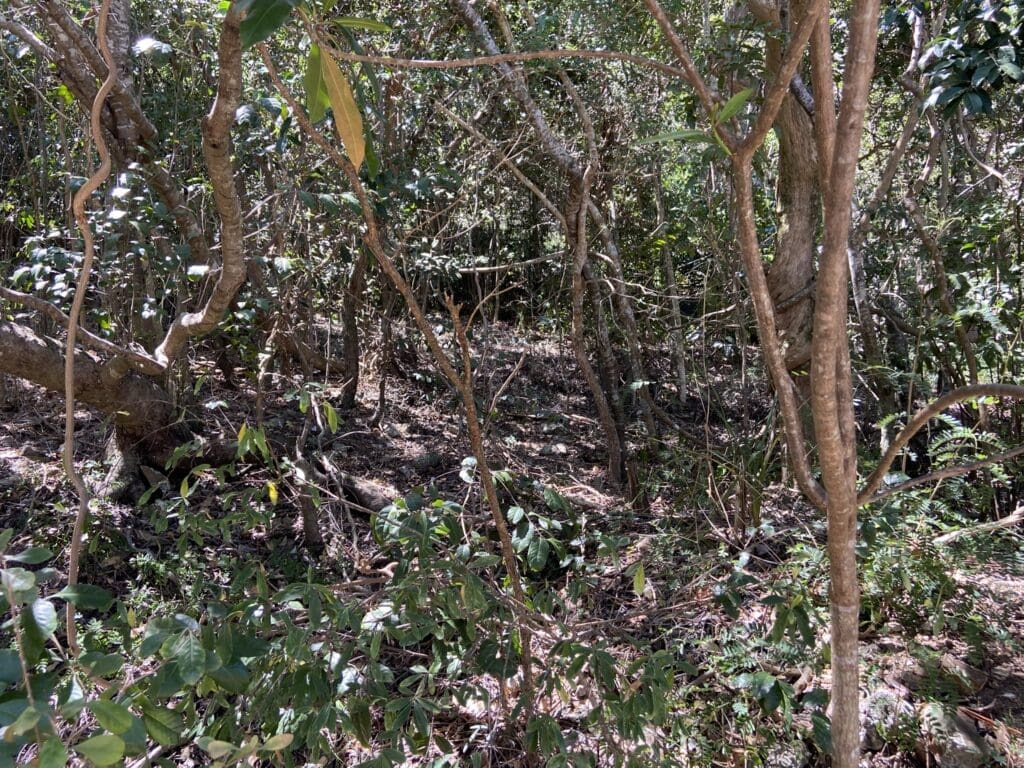
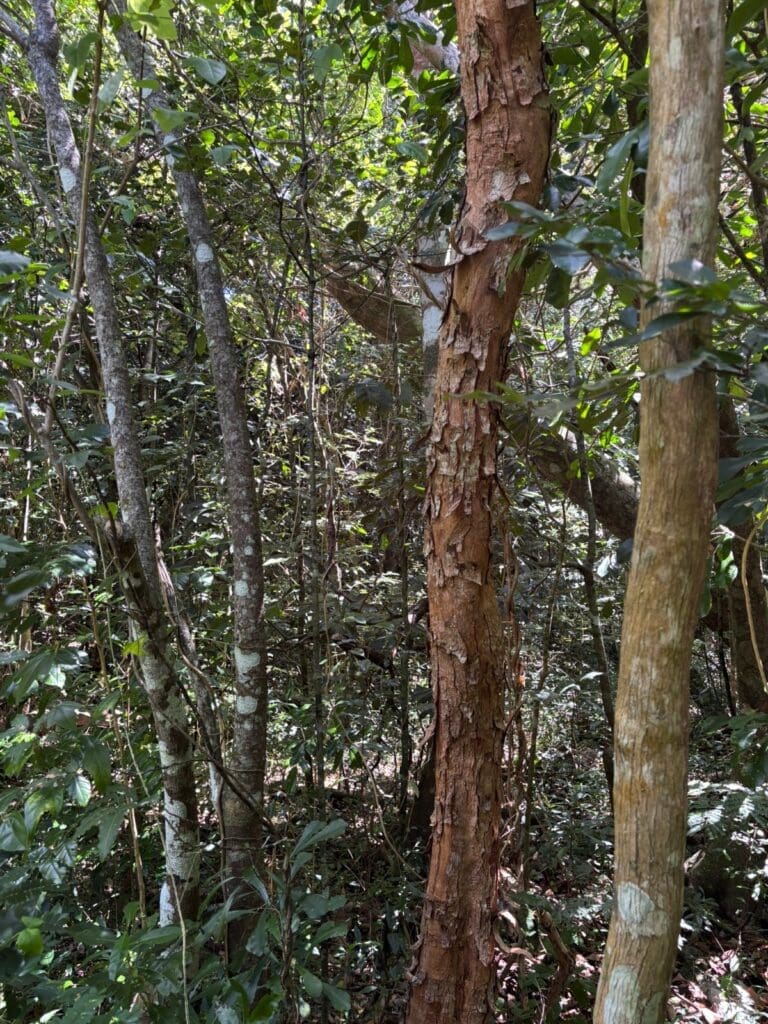
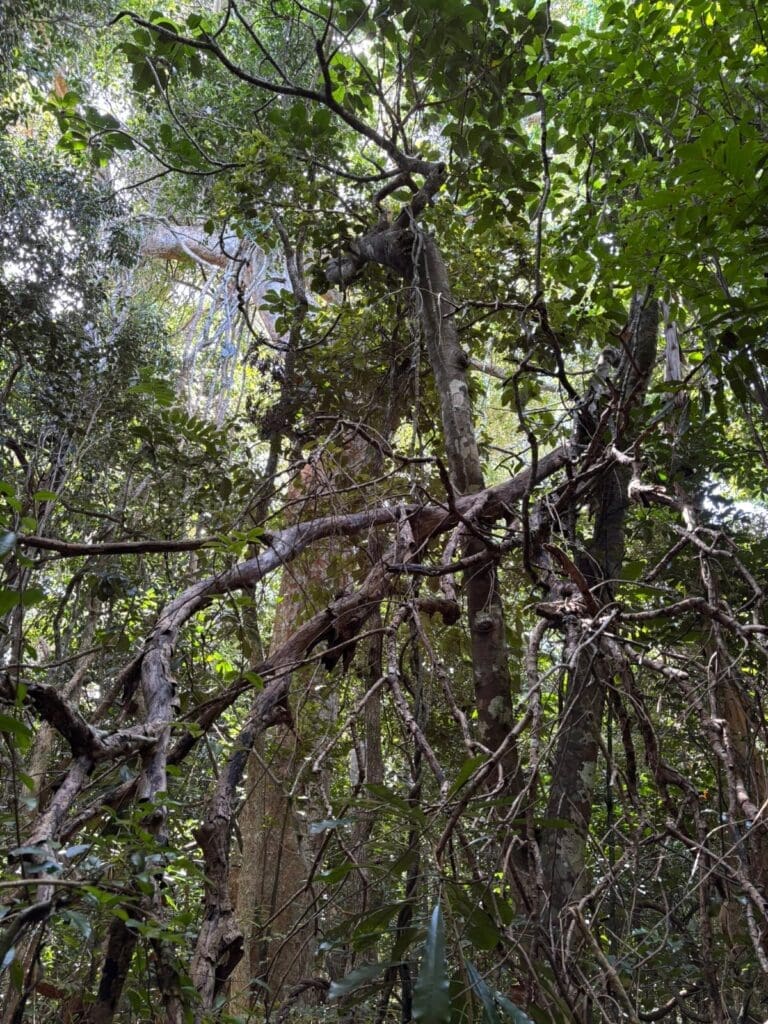
Dry Season Exploration
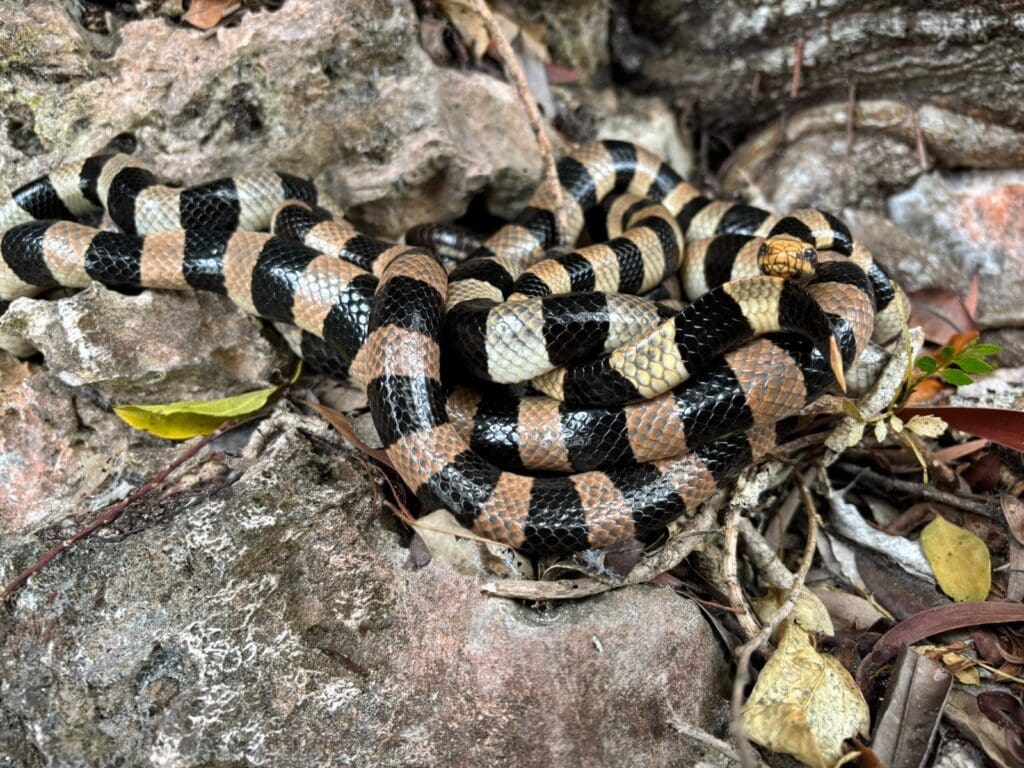
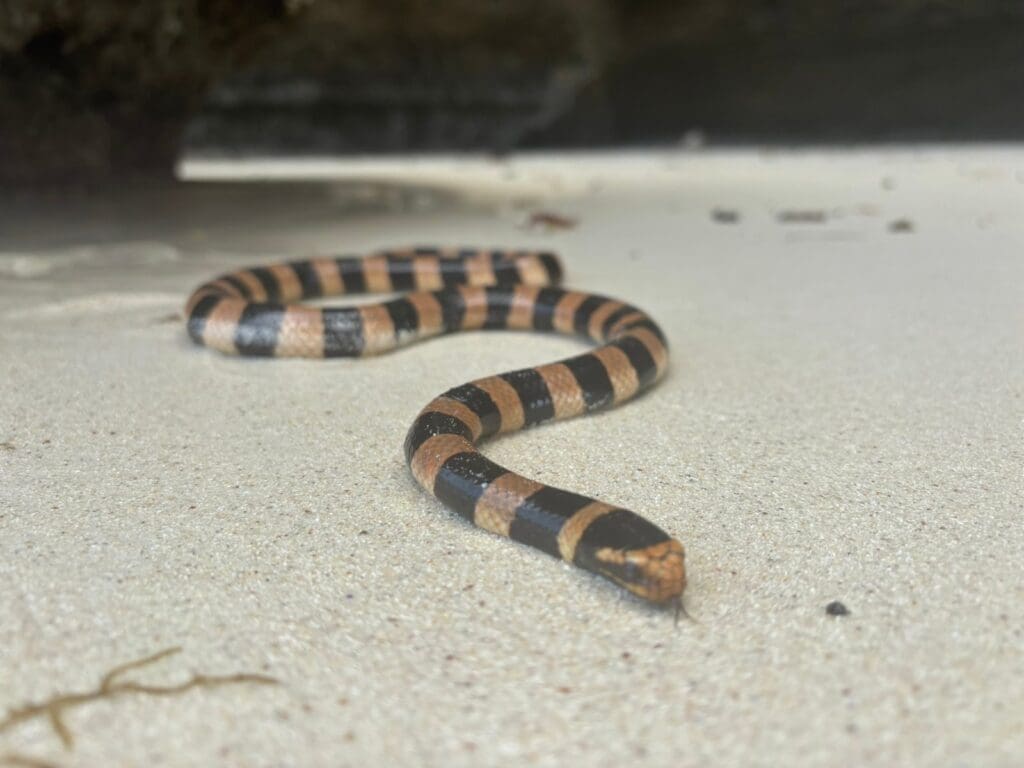
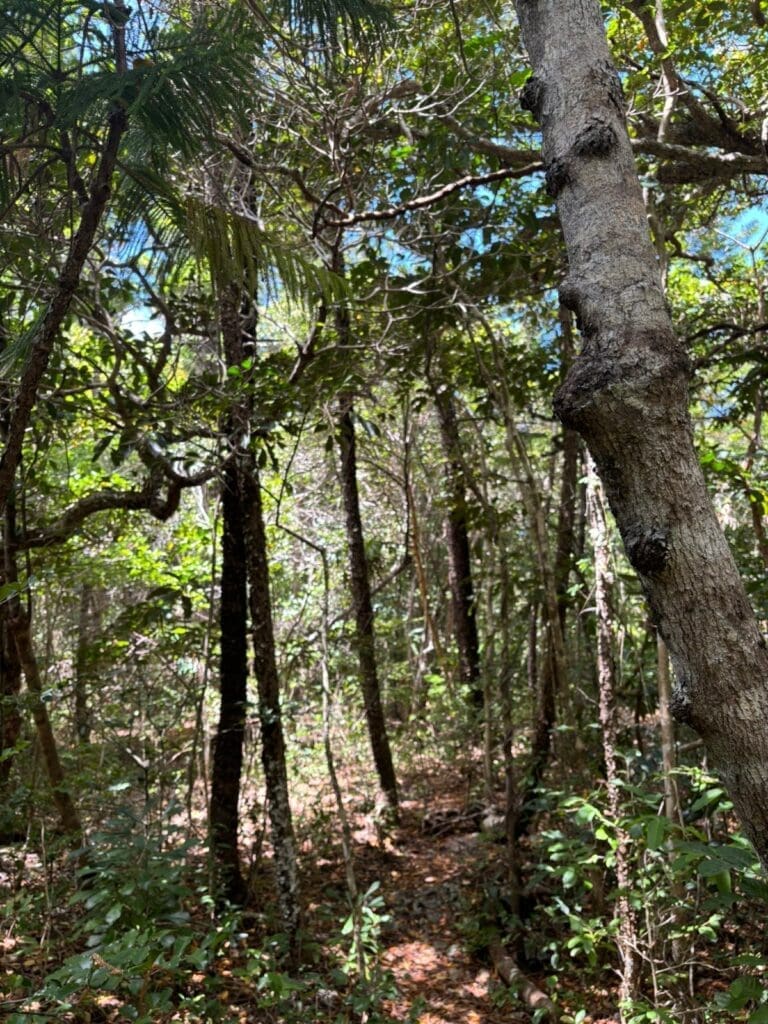
With much better conditions for exploring the islands of Ile De Pins, we were able to visit more locations, including Ilot Brosse and the village of Vao. Sunny mornings and strolls across the beach also delivered some excellent observations of the endemic New Caledonian Sea Krait (Laticauda saintgironsi).
Although there are no native land snakes in New Caledonia (except one possible population of the Solomon Island Boa on one of the Loyalty Islands), sea snakes are extremely common.
Sea Kraits regularly visit rocky outcrops to bask and breed. In October, we found numerous ‘breeding balls.’ These events see receptive females chased by numerous males in an attempt to breed. Up to half a dozen snakes can surround the female, which makes for an interesting observation.
Other Sea Krait species, such as the Blue-Lipped (L. laticauda) and Yellow-Lipped (L. colubrinus) Sea Kraits can also be found on New Caledonia’s beaches. In the ocean, reptile diversity is abundant. Most mornings we would see green sea turtles (Chelonia mydas) and Hawsbill Sea Turtles (Eretmochelys imbricata) in the bay. A short snorkel from the shore also produced Turtle-Headed Sea Snakes (Emmydocephalus annulatus) and Reef Shallows Sea Snakes (Aipysurus duboisii).
Despite most of these marine reptiles having a huge distribution, all are protected, including all five species of visiting sea turtles. However, some tribal communities are given special permission to hunt sea turtles for consumption around particularly important tribal events. Balancing this respect for indigenous cultures with preservation of natural resources is a delicate act from New Caledonian authorities.
Grand Terre
Visiting during the dry season also allowed us to visit more locations on the main island of Grand Terre. We were only on this island for around five days with a vehicle to explore, but that still allowed us time in Yate and Blue River Provincial Park.
Crested Geckos are extremely cryptic animals and scientists still know very little about their distribution on the “main island.” One population discovered in 2015 in the far northern reaches of Grand Terre suggests that they might be more abundant than previously thought. However, for a long time, they were thought to be restricted to the cool, higher elevation reaches of the central highlands.
Blue River Provincial Park is a major tourist attraction in New Caledonia. The 54,000 acre reserve hosts a whole plethora of habitats. It is also home to a wide variety of gecko species. In the lower elevation maquis shrubland, gargoyle geckos (Rhacodactylus auriculatus) are common. Hike for just an hour uphill, and the humid forests showcase species like Correlophus sarasinorum and Rhacodactlus leachianus and even further still, tropical rainforest becomes home to Correlophus ciliatus.
Whilst we only spent a short time in mainland Crested Gecko habitat, the temperature was at least 3℃ cooler in the forest than the campsite at the base of the mountain and possibly 5 – 10℃ cooler than at sea level. Humidity also sat around 80% during the middle of the day. This is more humid than any reading within the Isle of Pines habitat.
Reflecting on this, we questioned whether a more holistic study should be done. However, the Isle of Pines is the location where the very first Crested Geckos were exported from. The population there are well adapted to the wide swings in temperature and humidity. In fact, researching this population is not only the closest relative to our captive geckos but also possibly the most important of all Correlophus ciliatus populations, as it provides the most comprehensive understanding of the wider parameters within which the species survives.
Wet Season vs Dry Season
The two expeditions took place at opposite ends of New Caledonia’s seasonal cycle. This is how the Isle of Pines habitat compared across both visits.
When
Wet season 2024: March (end of the wet season)
Dry season 2025: October (dry season, before the wet)
Daytime humidity
Wet season 2024: Rarely below 85%; around 80–85% at midday
Dry season 2025: Around 50%, rising to 75% late at night
Temperature
Wet season 2024: Around 24℃ average, up to 28℃
Dry season 2025: Over 30℃ by midday
UVI
Wet season 2024: Below 1 almost all the time, with brief peaks of 10–11 when the cloud broke
Dry season 2025: Rising sharply from sunrise to an average of 6.7 by 11am
Crested geckos
Wet season 2024: Fewer sightings; one found exposed during the day
Dry season 2025: More sightings, later at night and higher in the trees; none by day
Flying insects
Wet season 2024: Abundant at night
Dry season 2025: Far fewer
Small geckos (Bavaiya, Nactus)
Wet season 2024: 2–5 seen most evenings
Dry season 2025: None seen
Giant geckos
Wet season 2024: Not recorded
Dry season 2025: At least four R. leachianus and one R. chahoua
Keep exploring
- Expedition New Caledonia: 2024 Wet Season – the first expedition, at the height of the wet season
- Expedition Plant Reference – the plants we recorded in crested gecko habitat
- Crested Gecko Planting Guide – turning these observations into a planted enclosure